

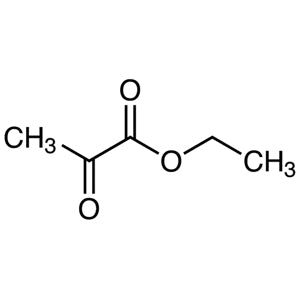
Ethyl Pyruvate (TCI P0891), with CAS number 617-35-6, is a chemical compound widely used in laboratory settings as a fundamental building block in organic synthesis. It serves as a versatile reagent that enables the creation of a variety of organic compounds, including esters, aldehydes, and aromatic derivatives. Its role in chemical reactions is crucial, particularly in the modification of molecular structures and the development of complex chemical systems. This compound is essential for researchers working in organic chemistry, especially those focused on synthetic pathways and functional group transformations.
Ethyl Pyruvate is valued for its chemical stability and reactivity, making it a preferred choice in various synthetic processes. It acts as a donor of the carboxylate group, facilitating substitution and redox reactions. Its volatility and characteristic aroma require careful handling, but these properties also make it useful in certain analytical techniques. The compound’s ability to participate in multiple reaction types enhances its utility in both academic and industrial research environments. Its reliability and consistency contribute to its popularity among chemists.
In Indonesian laboratories, Ethyl Pyruvate is commonly used in organic chemistry research, particularly in pharmaceutical and biochemical applications. It plays a key role in the development of new compounds with potential therapeutic or industrial applications. Its availability and chemical properties make it an essential reagent for researchers aiming to explore new synthetic routes and molecular structures.
- Organic synthesis applications benefit from Ethyl Pyruvate’s ability to act as a carboxylate donor, enabling efficient functional group transformations in complex molecule construction.
- Pharmaceutical research utilizes Ethyl Pyruvate to develop new drug compounds through esterification and other synthetic pathways, enhancing the diversity of potential therapeutic agents.
- Biochemical studies incorporate Ethyl Pyruvate in the modification of biomolecules, supporting research into metabolic pathways and enzyme mechanisms.
- Analytical chemistry uses Ethyl Pyruvate as a reference standard in chromatographic and spectroscopic analyses due to its well-defined chemical properties.
- Industrial chemical processes leverage Ethyl Pyruvate for the production of specialty chemicals, contributing to the development of high-value products.
| Brand | TCI |
|---|---|
| CAS number | 617-35-6 |
| Molecular formula | — |
| Purity | — |
| Category | Chemistry > Building Blocks > Non-Heterocyclic Building Blocks |
| Pack sizes | Available in various quantities as per supplier specifications |
| Physical form | Liquid |
| Storage | Store in a cool, dry place away from direct sunlight |
Ethyl Pyruvate should be stored in a cool, dry environment, away from direct sunlight and sources of heat. It is recommended to use airtight containers to prevent evaporation and contamination. Due to its volatility, it is important to handle the compound in a well-ventilated area, preferably under a fume hood. Personal protective equipment such as gloves, goggles, and a lab coat should be worn when handling this material to ensure safety. Avoid contact with skin and eyes, and ensure proper disposal of any waste in accordance with local regulations. Regular monitoring of storage conditions is advised to maintain the compound’s integrity and ensure safe laboratory practices.
—
Produk Terkait
-
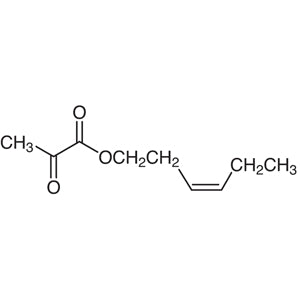
cis-3-HexenylPyruvate TCI P0894
Regular price Rp 2.545.200,00Regular price -
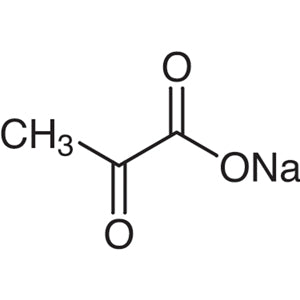
SodiumPyruvate TCI P0582
Regular price From Rp 505.050,00Regular price -
MethylPyruvate TCI P0580
Regular price From Rp 505.050,00Regular price -
LithiumPyruvateMonohydrate[GuaranteedforStandardtoGOT,GPT] TCI P0659
Regular price Rp 2.094.750,00Regular price

![2922-61-4 Lithium Pyruvate Monohydrate [Guaranteed for Standard to GOT, GPT] - AMI Scientific](http://amiscientific.com/cdn/shop/files/TCI2510P0659.jpg?v=1767133566&width=533)