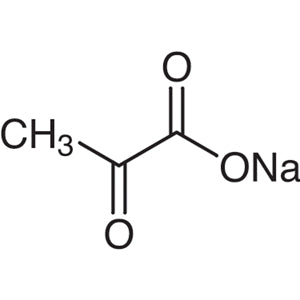
Sodium Pyruvate (TCI P0582), with the CAS number 113-24-6, is a chemical compound widely utilized in laboratory experiments, particularly in organic and biochemical research. As a sodium salt of pyruvic acid, it serves as a fundamental building block in the synthesis of more complex organic molecules. Its versatility makes it a key reagent in various chemical processes, supporting both analytical and synthetic applications. Due to its chemical stability and solubility in water, it is an essential component in many laboratory workflows.
The chemical properties of Sodium Pyruvate make it a preferred choice for researchers. Its ability to participate in redox reactions and its role as a pH buffer enhance its utility in biochemical assays. The presence of the sodium ion contributes to its solubility and reactivity, allowing it to be used in a wide range of experimental setups. These characteristics ensure that Sodium Pyruvate remains a reliable and adaptable material in both academic and industrial laboratory environments.
In Indonesian laboratories, Sodium Pyruvate is commonly used in studies related to cellular metabolism, drug development, and biochemical research. It is also an important teaching tool in chemistry education, helping students gain hands-on experience with chemical synthesis and reaction mechanisms. Its consistent performance and broad applicability make it a trusted material for both research and educational purposes.
TCI brochures (PDF)
- Regenerative Medicine Research Reagents 2016-03-18 · p. 2
- Cellular metabolism studies benefit from Sodium Pyruvate as it is a key intermediate in glycolytic pathways, supporting metabolic research in biochemistry.
- Drug development laboratories use Sodium Pyruvate to synthesize and test compounds, leveraging its role in organic synthesis and redox reactions.
- Biochemical assays often incorporate Sodium Pyruvate due to its buffering capacity and ability to participate in enzymatic reactions, enhancing experimental accuracy.
- Educational institutions utilize Sodium Pyruvate to teach synthetic chemistry techniques and reaction mechanisms, providing students with practical laboratory experience.
- Environmental research may employ Sodium Pyruvate in studies involving microbial metabolism and biodegradation processes, offering insights into natural biochemical cycles.
| Brand | TCI |
|---|---|
| CAS number | 113-24-6 |
| Molecular formula | — |
| Purity | — |
| Category | Chemistry > Building Blocks > Non-Heterocyclic Building Blocks |
| Pack sizes | Available in various quantities as per standard laboratory supply |
| Physical form | White crystalline solid |
| Storage | Store in a cool, dry place away from moisture and light |
Sodium Pyruvate should be stored in a cool, dry place, away from moisture and direct light to maintain its chemical integrity. It is recommended to use airtight containers to prevent exposure to humidity, which may affect its solubility and stability. As a water-soluble compound, it should be kept in a sealed container to avoid contamination. In laboratory settings, it is important to handle Sodium Pyruvate with care, using appropriate personal protective equipment when necessary. While it is generally stable under normal storage conditions, it should be kept away from strong oxidizing agents to prevent unwanted chemical reactions. Proper labeling and storage practices ensure the safety and effectiveness of Sodium Pyruvate in laboratory applications.
—
Product Categories
Produk Terkait
-
PyruvicAcid TCI P0579
Regular price From Rp 689.850,00Regular priceRp 497.700,00Sale price From Rp 689.850,00 -
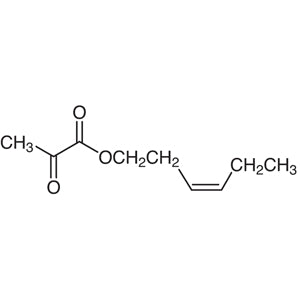
cis-3-HexenylPyruvate TCI P0894
Regular price Rp 2.597.700,00Regular priceRp 1.832.250,00Sale price Rp 2.597.700,00 -
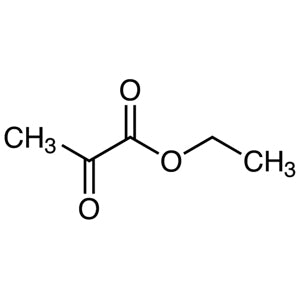
EthylPyruvate TCI P0891
Regular price From Rp 582.750,00Regular priceRp 423.150,00Sale price From Rp 582.750,00 -
MethylPyruvate TCI P0580
Regular price From Rp 557.550,00Regular priceRp 405.300,00Sale price From Rp 557.550,00 -
Progesterone TCI P0478
Regular price From Rp 1.113.000,00Regular priceRp 793.800,00Sale price From Rp 1.113.000,00 -
5-Aminoimidazole-4-carboxamide1-beta-D-Ribofuranoside TCI A2528
Regular price Rp 2.597.700,00Regular priceRp 1.832.250,00Sale price Rp 2.597.700,00 -
MetforminHydrochloride TCI M2009
Regular price From Rp 1.988.700,00Regular priceRp 1.405.950,00Sale price From Rp 1.988.700,00 -
LinolenicAcid TCI L0050
Regular price Rp 2.466.450,00Regular priceRp 1.724.100,00Sale price Rp 2.466.450,00