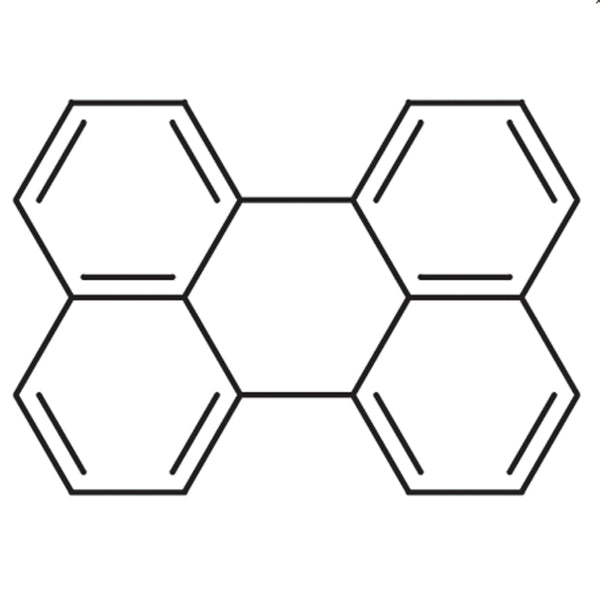
Perylene is an organic compound widely utilized in scientific and technological applications, particularly in the field of electronic materials. As a fundamental component in molecular conductor research, it plays a crucial role in the development of advanced electronic devices. Its unique molecular structure enables specific electrical conductivity, making it an essential material for studies in molecular electronics. In laboratories, perylene is often used as a starting material for the synthesis of complex compounds or as a key component in organic electronic devices. Its versatility and stability make it a valuable resource for researchers exploring new materials and technologies.
Perylene is prized for its chemical stability and resistance to unwanted chemical reactions, ensuring consistent performance in experimental settings. It also possesses the ability to absorb and emit light across various wavelengths, which makes it suitable for optical and photchemical applications. The purification process through sublimation ensures a high level of purity, minimizing interference in scientific experiments. This purity is critical for achieving accurate and reliable results, especially in research environments where precision is paramount.
In Indonesian laboratories, perylene is commonly used in electronic material research, particularly in the development of organic solar cells and electroluminescent displays. It is also employed in studies related to conductivity and molecular behavior, contributing to advancements in both academic and industrial research. Its reliability and performance make it a preferred choice for scientists working on cutting-edge material science projects.
- Molecular Conductor Research - Perylene's unique molecular structure makes it ideal for studying electrical conductivity in organic materials, supporting advancements in electronic device development.
- Organic Electronics Development - Its ability to be used as a building block in organic electronic devices aligns well with research into flexible and efficient electronic systems.
- Optical and Photonic Studies - Perylene's light absorption and emission properties are well-suited for experiments in optical and photonic applications, enhancing the accuracy of light-based research.
- Material Synthesis - As a starting material, perylene enables the synthesis of complex compounds, supporting diverse chemical and material science research initiatives.
- Conductivity Analysis - Its stable chemical properties make it a reliable material for experiments involving conductivity measurements and molecular behavior studies.
| Brand | — |
|---|---|
| CAS number | — |
| Molecular formula | — |
| Purity | — |
| Category | — |
| Pack sizes | — |
| Physical form | — |
| Storage | — |
- Brand - TCI
- CAS Number - 198-55-0
- Category - Materials Science > Electronic Materials > Molecular Conductors
- Pack Sizes - Available in various quantities as per standard laboratory supply practices
- Physical Form - Solid
- Storage Note - Store in a cool, dry place away from direct sunlight
Perylene should be stored in a cool, dry environment, away from direct sunlight and sources of heat to maintain its chemical stability. It is recommended to use airtight containers to prevent exposure to moisture and air, which could affect its purity. As a solid material, it should be handled with care to avoid contamination. In laboratory settings, it is important to ensure that storage conditions are consistent with safety protocols to prevent degradation. Proper labeling and secure storage are essential to maintain the integrity of the compound and ensure safe handling during experiments.
—
Produk Terkait
-
TCI B5774 5,10-Bis(4,4,5,5-tetramethyl-1,3,2-dioxaborolan-2-yl)naphtho[1,2-c:5,6-c']bis([1,2,5]oxadiazole)
Regular price Rp 10.255.350,00Regular price -
Dihydroiodide TCI B6569
Regular price From Rp 1.936.200,00Regular price -
Trifluoromethanesulfonate TCI B7003
Regular price From Rp 1.936.200,00Regular price
![5,10-Bis(4,4,5,5-tetramethyl-1,3,2-dioxaborolan-2-yl)naphtho[1,2-c:5,6-c']bis([1,2,5]oxadiazole) - TCI B5774 - AMI Scientific](http://amiscientific.com/cdn/shop/files/TCI2510B5774.jpg?v=1769180228&width=533)