


Pyridine Hydrobromide is a chemical compound widely used in laboratory settings, particularly in organic chemistry research. It serves as a key building block in the synthesis of heterocyclic compounds, which are essential in pharmaceutical and industrial applications. This compound plays a critical role in facilitating chemical reactions due to its unique molecular structure and reactivity. Its presence in laboratory workflows supports the development of complex molecular structures, making it a fundamental component in modern chemical research.
The compound’s high reactivity and polar nature make it a preferred choice for various chemical processes. It is capable of participating in substitution and nucleophilic reactions, which are crucial for the formation of new chemical bonds. Its solubility in organic solvents such as ethylamine and acetone further enhances its utility in synthetic procedures. These properties ensure that Pyridine Hydrobromide remains a reliable and versatile reagent in both academic and industrial laboratory environments.
In Indonesian laboratories, Pyridine Hydrobromide is commonly used in organic chemistry research, especially in educational institutions and research organizations. It is a standard component of chemical supplies, supporting a wide range of experiments and investigations. Its availability and effectiveness make it an essential material for chemists working on the synthesis of heterocyclic compounds and related chemical processes.
Related TCI products
- TCI T4400 942919-26-8 4-(4,4,5,5-Tetramethyl-1,3,2-dioxaborolan-2-yl)-1H-pyrrolo[2,3-b]pyridine
- TCI T4270 14389-12-9 4-(1H-Tetrazol-5-yl)pyridine
- TCI T3431 33893-89-9 2-(1H-Tetrazol-5-yl)pyridine
- TCI T3007 72811-73-5 4-(m-Tolylamino)pyridine-3-sulfonamide
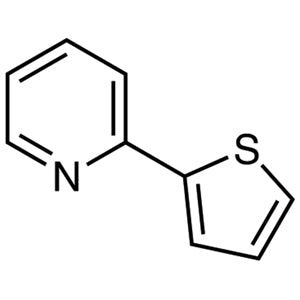
- TCI T2936 3319-99-1 2-(2-Thienyl)pyridine
- TCI T2770 28783-41-7 4,5,6,7-Tetrahydrothieno[3,2-c]pyridine Hydrochloride
- Organic synthesis of heterocyclic compounds due to its reactivity and nucleophilic properties.
- Preparation of pharmaceutical intermediates in drug development processes.
- Catalytic reactions requiring a polar and reactive reagent for bond formation.
- Analytical chemistry applications for compound identification and structural analysis.
- Teaching and research in academic institutions for chemical reaction demonstrations.
| Brand | TCI |
|---|---|
| CAS number | 18820-82-1 |
| Molecular formula | — |
| Purity | — |
| Category | Chemistry > Building Blocks > Heterocyclic Building Blocks |
| Pack sizes | Available in standard laboratory quantities |
| Physical form | Liquid at room temperature |
| Storage | Store in a cool, dry place away from light and incompatible materials |
Pyridine Hydrobromide should be stored in a cool, dry environment, away from direct sunlight and sources of heat. It is recommended to keep the compound in tightly sealed containers made of glass or high-density polyethylene to prevent contamination and evaporation. Due to its reactivity, it should be handled in a well-ventilated area, preferably under a fume hood, to minimize exposure. Avoid contact with incompatible substances such as strong oxidizers or acids. Always use appropriate personal protective equipment, including gloves and safety goggles, when handling this material. Proper storage and handling ensure the stability and effectiveness of Pyridine Hydrobromide in laboratory applications.
—
Produk Terkait
-
4-(4,4,5,5-Tetramethyl-1,3,2-dioxaborolan-2-yl)-1H-pyrrolo[2,3-b]pyridine TCI T4400
Regular price From Rp 3.630.900,00Regular price -
4-(1H-Tetrazol-5-yl)pyridine TCI T4270
Regular price From Rp 1.431.150,00Regular price -
2-(1H-Tetrazol-5-yl)pyridine TCI T3431
Regular price From Rp 1.776.600,00Regular price -
4-(m-Tolylamino)pyridine-3-sulfonamide TCI T3007
Regular price Rp 2.332.050,00Regular price -
2-(2-Thienyl)pyridine TCI T2936
Regular price From Rp 2.227.050,00Regular price -
4,5,6,7-Tetrahydrothieno[3,2-c]pyridineHydrochloride TCI T2770
Regular price From Rp 505.050,00Regular price -
4,5,6,7-Tetrahydrothieno[3,2-c]pyridine TCI T2686
Regular price From Rp 3.100.650,00Regular price -
1H-1,2,3-Triazolo[4,5-b]pyridine TCI T1367
Regular price From Rp 1.618.050,00Regular price
![942919-26-8 4-(4,4,5,5-Tetramethyl-1,3,2-dioxaborolan-2-yl)-1H-pyrrolo[2,3-b]pyridine - AMI Scientific](http://amiscientific.com/cdn/shop/files/TCI2510T4400.jpg?v=1767145178&width=533)


![28783-41-7 4,5,6,7-Tetrahydrothieno[3,2-c]pyridine Hydrochloride - AMI Scientific](http://amiscientific.com/cdn/shop/files/TCI2510T2770.jpg?v=1767143341&width=533)
![54903-50-3 4,5,6,7-Tetrahydrothieno[3,2-c]pyridine - AMI Scientific](http://amiscientific.com/cdn/shop/files/TCI2510T2686.jpg?v=1767143251&width=533)
![273-34-7 1H-1,2,3-Triazolo[4,5-b]pyridine - AMI Scientific](http://amiscientific.com/cdn/shop/files/TCI2510T1367.jpg?v=1767141507&width=533)