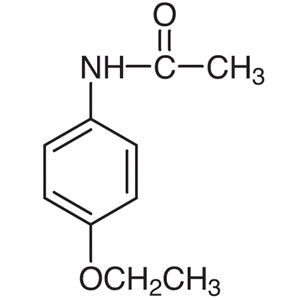
Phenacetin is a chemical compound widely used in various laboratory experiments, particularly in the synthesis of organic compounds. As a fundamental building block in chemistry, it plays a key role in the development of pharmaceuticals and other chemical substances. Its simple molecular structure makes it easy to handle and process under controlled laboratory conditions. Phenacetin is also valuable in qualitative and quantitative analysis, where it helps identify the presence of specific compounds in mixtures. Due to its stable chemical properties, it is well-suited for use in a wide range of chemical reactions. Its low reactivity with other chemicals minimizes the risk of unexpected side reactions, making it a reliable choice for laboratory work.
Phenacetin is preferred for its chemical stability and predictable behavior in laboratory settings. It is non-toxic and easy to control, ensuring a safe working environment. Its solubility in organic solvents facilitates mixing and separation processes, which are common in both educational and research laboratories. These properties make it a versatile compound that can be used in multiple applications without requiring complex handling procedures. Its reliability and consistency further enhance its value as a standard chemical in laboratory practice.
In Indonesian laboratories, phenacetin is commonly used in both educational and research contexts. It is an essential component of chemistry practical courses in higher education institutions and high schools. Its availability and ease of use make it a popular choice for students and researchers alike. Phenacetin supports hands-on learning and experimentation, contributing to the development of practical skills in chemical analysis and synthesis.
- Organic synthesis applications benefit from phenacetin due to its simple molecular structure and ease of manipulation in chemical reactions.
- Qualitative and quantitative analysis relies on phenacetin for identifying specific compounds in mixtures through its predictable chemical behavior.
- Pharmaceutical research utilizes phenacetin as a building block in the development of new drugs and chemical compounds.
- Educational institutions incorporate phenacetin into practical chemistry courses to teach fundamental concepts in synthesis and analysis.
- Analytical chemistry laboratories use phenacetin for standardization and as a reference material in various testing procedures.
| Brand | TCI |
|---|---|
| CAS number | 62-44-2 |
| Molecular formula | — |
| Purity | — |
| Category | Chemistry > Building Blocks > Non-Heterocyclic Building Blocks |
| Pack sizes | Available in standard laboratory quantities |
| Physical form | Solid |
| Storage | Store in a cool, dry place away from direct sunlight |
Phenacetin should be stored in a cool, dry place, away from direct sunlight and sources of heat. It is recommended to use airtight containers to prevent moisture absorption and contamination. Due to its chemical stability, it does not require special handling under normal laboratory conditions. However, it is important to follow standard safety protocols when working with any chemical compound. Proper labeling of containers and adherence to laboratory safety guidelines are essential to ensure safe handling and storage. Phenacetin is non-toxic and does not pose significant hazards when used as directed.
—
Produk Terkait
-
TCI B5774 5,10-Bis(4,4,5,5-tetramethyl-1,3,2-dioxaborolan-2-yl)naphtho[1,2-c:5,6-c']bis([1,2,5]oxadiazole)
Regular price Rp 10.255.350,00Regular price -
Dihydroiodide TCI B6569
Regular price From Rp 1.936.200,00Regular price -
Trifluoromethanesulfonate TCI B7003
Regular price From Rp 1.936.200,00Regular price
![5,10-Bis(4,4,5,5-tetramethyl-1,3,2-dioxaborolan-2-yl)naphtho[1,2-c:5,6-c']bis([1,2,5]oxadiazole) - TCI B5774 - AMI Scientific](http://amiscientific.com/cdn/shop/files/TCI2510B5774.jpg?v=1769180228&width=533)