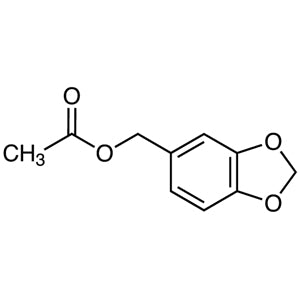
Piperonyl Acetate is a chemical compound widely used in laboratory settings, particularly in chemical analysis and organic synthesis. It serves as a key reagent in various experimental processes, playing a crucial role in reactions that require specific substrates or reactants. Its versatility makes it an essential component in both research and industrial applications. This compound is commonly utilized in the development of bioactive substances, including pesticides and fragrance compounds, due to its chemical stability and reactivity. In laboratories, it is often employed as a building block for more complex molecules, supporting the advancement of chemical and pharmaceutical research.
Piperonyl Acetate is valued for its chemical stability under certain conditions, which ensures consistent performance in laboratory experiments. Its characteristic odor and colorless appearance make it easy to identify and handle. The compound’s specific molecular structure allows it to participate effectively in substitution reactions and esterification processes, making it a preferred choice for chemists working on organic synthesis. These properties contribute to its widespread use in both academic and industrial research environments, where precision and reliability are paramount.
In Indonesian laboratories, Piperonyl Acetate is frequently used in organic chemistry research and biological activity testing. It is a common reagent in experiments aimed at evaluating the effects of chemical compounds on target organisms. Its presence in laboratory workflows highlights its importance in both analytical and synthetic applications, supporting the development of new compounds and formulations.
- Organic synthesis experiments benefit from Piperonyl Acetate due to its reactivity in esterification and substitution reactions, aiding in the creation of complex organic molecules.
- Biological activity testing often incorporates this compound to assess the effects of chemical substances on various organisms, supporting pharmacological research.
- Chemical analysis processes use Piperonyl Acetate as a standard reference material for identifying and quantifying compounds in samples.
- Aroma compound development relies on this reagent for synthesizing fragrance ingredients used in perfumery and cosmetic industries.
- Environmental testing applications utilize Piperonyl Acetate to evaluate its impact on ecological systems and its behavior in different environmental conditions.
| Brand | TCI |
|---|---|
| CAS number | 326-61-4 |
| Molecular formula | — |
| Purity | — |
| Category | TCI |
| Pack sizes | Available in various quantities as per supplier specifications |
| Physical form | Liquid |
| Storage | Store in a cool, dry place away from direct sunlight |
Piperonyl Acetate should be stored in a cool, dry location, away from direct sunlight and sources of heat. It is recommended to use airtight containers to prevent contamination and maintain its chemical stability. As a liquid, it should be kept in properly sealed glass or plastic containers to avoid evaporation and exposure to air. Laboratory personnel should handle the compound with care, using appropriate personal protective equipment such as gloves and safety goggles. It is important to ensure proper ventilation in the workspace to minimize inhalation risks. Regular monitoring of storage conditions is essential to maintain the integrity and effectiveness of the compound in laboratory applications.
—
Produk Terkait
-
TCI B5774 5,10-Bis(4,4,5,5-tetramethyl-1,3,2-dioxaborolan-2-yl)naphtho[1,2-c:5,6-c']bis([1,2,5]oxadiazole)
Regular price Rp 10.255.350,00Regular price -
Dihydroiodide TCI B6569
Regular price From Rp 1.936.200,00Regular price -
Trifluoromethanesulfonate TCI B7003
Regular price From Rp 1.936.200,00Regular price
![5,10-Bis(4,4,5,5-tetramethyl-1,3,2-dioxaborolan-2-yl)naphtho[1,2-c:5,6-c']bis([1,2,5]oxadiazole) - TCI B5774 - AMI Scientific](http://amiscientific.com/cdn/shop/files/TCI2510B5774.jpg?v=1769180228&width=533)