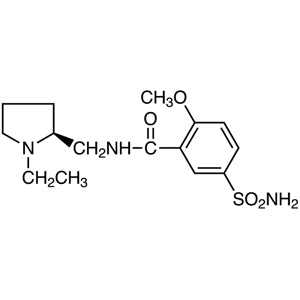
Piribedil is a chemical compound widely used in pharmacological and biochemical research. As a pharmaceutical research reagent, it plays a crucial role in the development of new drugs and the study of drug interactions. This compound is particularly valuable in experiments involving the nervous system and neurotransmitter function. In laboratory settings, Piribedil is essential for testing pharmacological effects on various biological models, including animal cells and tissues. Its versatility makes it an important tool for researchers in both academic and industrial environments.
Piribedil is known for its chemical stability and solubility in specific organic solvents, which enhances its usability in a wide range of experimental conditions. Its consistent performance across different chemical reactions makes it a preferred choice for researchers seeking reliable results. The compound's non-toxic nature and ease of control in laboratory settings further contribute to its popularity. These properties ensure that it remains a trusted material in experimental research, especially in high-precision applications.
In Indonesian laboratories, Piribedil is extensively used in health and pharmaceutical research. It is a key component in studies related to neurodegenerative diseases, mental disorders, and the development of pharmacological therapies. Its application supports both basic and applied research, making it an essential reagent for academic institutions and research centers in the country.
TCI brochures (PDF)
- Pharmaceutical Ingredients for Research and Experimental Use 2026-03-09 · p. 29
- Neuropharmacological studies benefit from Piribedil’s role in investigating neurotransmitter activity and receptor interactions.
- Drug development programs utilize Piribedil to assess pharmacological effects on biological models and evaluate therapeutic potential.
- Toxicology research incorporates Piribedil to study the safety and efficacy of new compounds in controlled environments.
- Cellular and tissue experiments rely on Piribedil to examine its impact on neural function and signal transduction pathways.
- Biochemical assays use Piribedil as a standard reagent to ensure consistency and accuracy in experimental outcomes.
| Brand | TCI |
|---|---|
| CAS number | 3605-01-4 |
| Molecular formula | — |
| Purity | — |
| Category | Life Science > Biochemicals and Reagents > Pharmaceutical Research Reagents |
| Pack sizes | Available in various quantities as per standard laboratory reagent packaging |
| Physical form | Solid or powder, depending on the specific product variant |
| Storage | Store in a cool, dry place away from direct sunlight and moisture |
Piribedil should be stored in a cool, dry environment to maintain its chemical stability. It is recommended to keep it in airtight containers to prevent exposure to moisture and contaminants. Due to its non-toxic nature, it is generally safe to handle, but standard laboratory precautions should still be followed. Avoid direct contact with skin and eyes, and ensure proper ventilation when working with it. It is advisable to use appropriate personal protective equipment, such as gloves and safety goggles, during handling. Proper storage and handling ensure the compound remains effective and safe for use in research applications.
—
Product Categories
- Biochemicals and ReagentsPharmaceutical Research Reagents (for Experimental Use)Neurotransmitter Agent Ingredients (for Research and Experimental Use)
- Pharmaceutical Development and Drug Discovery ResearchPharmaceutical Research Reagents (for Experimental Use)Neurotransmitter Agent Ingredients (for Research and Experimental Use)
Produk Terkait
-
4-AminobutyricAcid TCI A0282
Regular price From Rp 505.050,00Regular price -
(S)-(-)-Sulpiride TCI I0821
Regular price Rp 2.199.750,00Regular price -
IpratropiumBromideMonohydrate TCI I0907
Regular price Rp 2.625.000,00Regular price -
AtropineSulfateMonohydrate TCI A0550
Regular price From Rp 1.856.400,00Regular price -
Zotepine TCI Z0054
Regular price Rp 6.704.250,00Regular price -
AcetylcholineChloride TCI A0084
Regular price From Rp 1.353.450,00Regular price -
ZiprasidoneHydrochlorideMonohydrate TCI Z0032
Regular price From Rp 955.500,00Regular price -
Zolmitriptan TCI Z0024
Regular price From Rp 1.724.100,00Regular price