


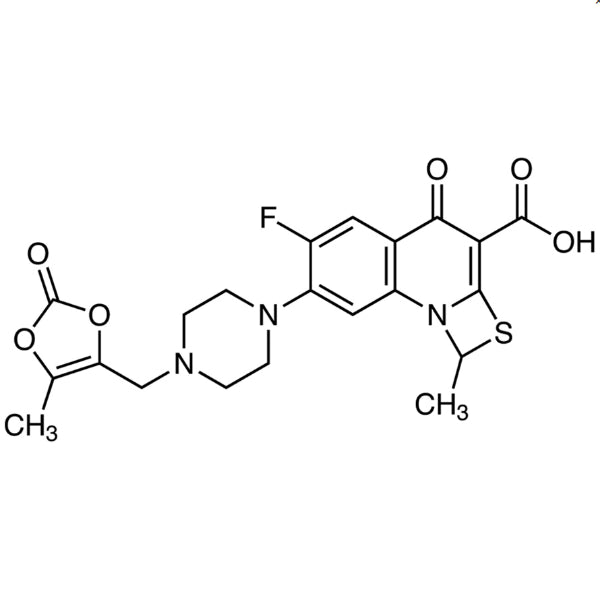
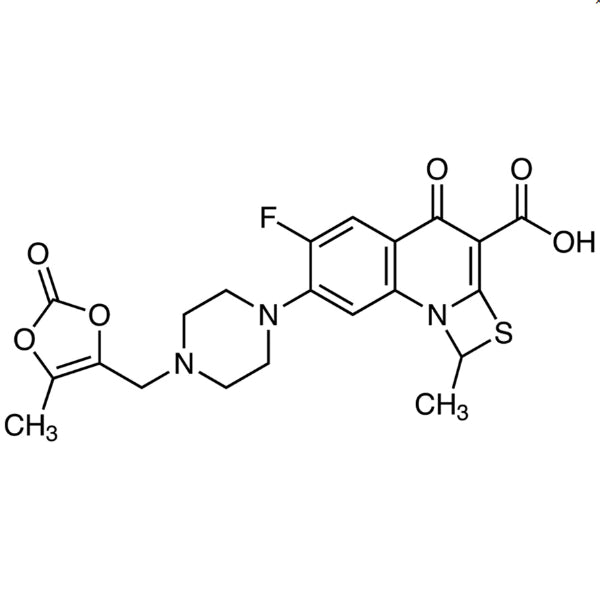
Prulifloxacin is a chemical compound classified under the fluoroquinolone antibiotic category. It is widely utilized in laboratory settings for its ability to inhibit bacterial growth, particularly effective against gram-negative bacteria. As a key reagent in microbiological research, Prulifloxacin serves as an essential tool for testing bacterial sensitivity to various antibiotics. Its role extends beyond basic research, contributing to drug development, clinical trials, and studies on bacterial resistance mechanisms. Due to its stability and solubility in organic solvents, it is a versatile compound that supports multiple experimental approaches.
Prulifloxacin is preferred for its strong antibacterial activity and chemical stability. It dissolves well in solvents such as ethyl acetate and acetone, making it suitable for a wide range of chemical reactions and purification processes. Its high purity ensures accurate and reliable results in experimental applications, which is crucial for scientific research. The compound’s effectiveness in inhibiting bacterial growth makes it ideal for experiments requiring high precision and reproducibility. Its chemical properties also allow it to be used in diverse laboratory settings without compromising its performance.
In Indonesian laboratories, Prulifloxacin is commonly used in public health, pharmaceutical, and microbiological research. It is a vital component in studies related to bacterial control and resistance mechanisms. Its application supports both academic and industrial research, contributing to advancements in medical science and drug development. The compound is also integral to programs focused on disease prevention and treatment strategies, reinforcing its importance in the scientific community.
TCI brochures (PDF)
- Antimicrobials and Antitumor Agents for Research and Experimental Use 2025-04-24 · p. 6
- Pharmaceutical Ingredients for Research and Experimental Use 2026-03-09 · p. 6
- Microbiological research for testing bacterial sensitivity to antibiotics due to its strong antibacterial activity.
- Drug development and clinical trials as a model compound for evaluating antibiotic efficacy and resistance.
- Bacterial resistance studies to understand the mechanisms of antibiotic resistance in pathogenic organisms.
- Chemical synthesis and purification processes because of its solubility in organic solvents and chemical stability.
- Public health research for monitoring and controlling bacterial infections in community and clinical settings.
| Brand | TCI |
|---|---|
| CAS number | 123447-62-1 |
| Molecular formula | — |
| Purity | — |
| Category | Life Science > Biochemicals and Reagents > Antibiotics |
| Pack sizes | Available in standard laboratory quantities as per supplier specifications |
| Physical form | Solid powder |
| Storage | Store in a cool, dry place away from direct light and moisture |
Prulifloxacin should be stored in a cool, dry environment, away from direct sunlight and moisture to maintain its chemical stability. It is recommended to use airtight containers to prevent contamination and degradation. Due to its chemical nature, it should be handled with care, using appropriate personal protective equipment such as gloves and safety goggles. It is important to ensure that the compound is stored separately from incompatible substances to avoid any potential chemical interactions. In laboratory settings, proper ventilation should be maintained when handling the compound to minimize exposure risks. Following these guidelines ensures the safety of laboratory personnel and the integrity of the compound for experimental use.
—
Product Categories
- Biochemicals and ReagentsAntibioticsAntibiotics (Chemical Structure Class)
- Biochemicals and ReagentsPharmaceutical Research Reagents (for Experimental Use)Antimicrobial Ingredients (for Research and Experimental Use)
- MicrobiologyAntibioticsAntibiotics (Chemical Structure Class)
- Pharmaceutical Development and Drug Discovery ResearchPharmaceutical Research Reagents (for Experimental Use)Antimicrobial Ingredients (for Research and Experimental Use)
- Pharmaceutical Development and Drug Discovery ResearchAntibioticsAntibiotics (Chemical Structure Class)
Produk Terkait
-
Orbifloxacin TCI O0516
Regular price From Rp 2.969.400,00Regular priceRp 2.091.600,00Sale price From Rp 2.969.400,00 -
MoxifloxacinHydrochlorideMonohydrate TCI M2479
Regular price From Rp 3.048.150,00Regular priceRp 2.147.250,00Sale price From Rp 3.048.150,00 -
GemifloxacinMesylate TCI G0617
Regular price Rp 3.207.750,00Regular priceRp 2.258.550,00Sale price Rp 3.207.750,00 -
GatifloxacinSesquihydrate TCI G0627
Regular price Rp 2.439.150,00Regular priceRp 1.720.950,00Sale price Rp 2.439.150,00 -
4-AminosalicylicAcid TCI A0420
Regular price From Rp 822.150,00Regular priceRp 590.100,00Sale price From Rp 822.150,00 -
Sodium4-AminosalicylateDihydrate TCI A0423
Regular price From Rp 928.200,00Regular priceRp 664.650,00Sale price From Rp 928.200,00 -
Wortmannin TCI W0007
Regular price Rp 11.632.950,00Regular priceRp 8.150.100,00Sale price Rp 11.632.950,00 -
ValganciclovirHydrochloride TCI V0158
Regular price From Rp 1.618.050,00Regular priceRp 1.146.600,00Sale price From Rp 1.618.050,00


