

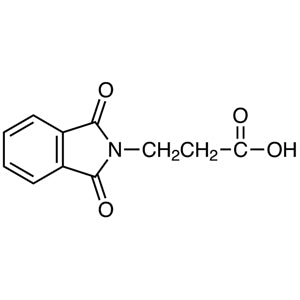
3-Phthalimidopropionic Acid is a chemical compound widely used as a building block in the synthesis of complex organic molecules. Its versatile chemical structure enables participation in various types of chemical reactions, including substitution, condensation, and reactions with different reagents. In the laboratory, this compound is essential for constructing molecules with specific functional groups, such as enzyme inhibitors or protein-binding agents. Due to its stable structure and good reactivity, it is a preferred choice for a wide range of chemical reactions.
The compound exhibits excellent solubility in organic solvents like ethyl acetate and methanol, which simplifies mixing and reaction processes. This solubility makes it highly practical for use in various experimental scales. Its chemical stability and reactivity ensure consistent performance in different laboratory settings. These properties make it a reliable and efficient reagent for both academic and industrial research.
In Indonesian laboratories, 3-Phthalimidopropionic Acid is highly relevant for research in pharmaceuticals, organic chemistry, and biochemistry. It is commonly used in the development of new drugs, the study of biological mechanisms, and the testing of chemical reactivity. Its application in enzyme inhibitor synthesis is particularly significant for pharmacological research, contributing to the advancement of scientific knowledge in the region.
- Enzyme Inhibitor Synthesis: This compound is ideal for creating enzyme inhibitors due to its ability to form stable functional groups that interact with enzyme active sites.
- Organic Compound Development: Its versatile structure allows for the synthesis of a wide range of organic compounds, making it a key reagent in compound development.
- Protein Binding Agent Research: The compound's reactivity enables it to form bonds with proteins, supporting research into protein interactions and functional studies.
- Biochemical Reagent Testing: Its chemical stability and solubility make it suitable for testing the reactivity of various biochemical compounds in controlled environments.
- Pharmaceutical Research: It is frequently used in drug development to design molecules with targeted biological activities and improved therapeutic effects.
| Brand | TCI |
|---|---|
| CAS number | 3339-73-9 |
| Molecular formula | — |
| Purity | — |
| Category | Chemistry > Building Blocks > Non-Heterocyclic Building Blocks |
| Pack sizes | Available in various sizes as per standard laboratory supply |
| Physical form | Solid |
| Storage | Store in a cool, dry place away from direct sunlight |
This compound should be stored in a cool, dry place, away from direct sunlight and moisture. It is recommended to use airtight containers to prevent exposure to air and humidity, which could affect its chemical stability. Due to its reactivity, it should be handled with care, using appropriate personal protective equipment such as gloves and safety goggles. It is important to ensure that the storage area is well-ventilated to minimize any potential risks associated with chemical exposure. Proper labeling of containers is essential to ensure safe handling and prevent accidental misuse in the laboratory environment.
—
Product Categories
Produk Terkait
-
N-(4-Bromophenyl)phthalimide TCI B2707
Regular price From Rp 2.730.000,00Regular price -
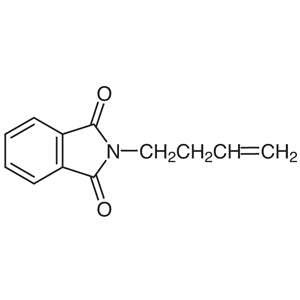
N-(3-Buten-1-yl)phthalimide TCI B1881
Regular price Rp 7.897.050,00Regular price -
PhthalimidePotassiumSalt TCI P0403
Regular price From Rp 557.550,00Regular price -
Phthalimide TCI P0402
Regular price From Rp 530.250,00Regular price -
N-(2-Hydroxyethyl)phthalimide TCI H0245
Regular price From Rp 689.850,00Regular price -
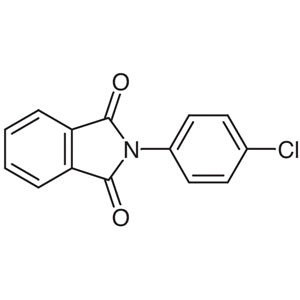
N-(4-Chlorophenyl)phthalimide TCI C1958
Regular price From Rp 1.378.650,00Regular price -
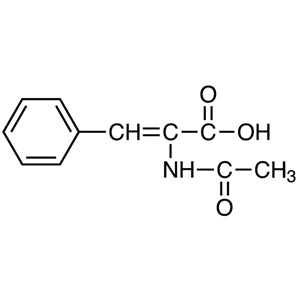
alpha-AcetamidocinnamicAcid TCI A0014
Regular price Rp 1.087.800,00Regular price -
1-[(tert-Butoxycarbonyl)amino]cyclopropanecarboxylicAcid TCI B3138
Regular price From Rp 3.155.250,00Regular price



![88950-64-5 1-[(tert-Butoxycarbonyl)amino]cyclopropanecarboxylic Acid - AMI Scientific](http://amiscientific.com/cdn/shop/files/TCI2510B3138_3da4dad5-c988-4e8e-86d8-9751f23eec24.jpg?v=1767431495&width=533)