


TCI P2393 Dodecahydrofluorene (mixture of isomers) is a saturated tricyclic hydrocarbon and the fully hydrogenated form of fluorene, which is why it is also called perhydrofluorene. Every aromatic ring in fluorene has been saturated with hydrogen, which gives an alicyclic framework with several stereocentres, so the product is supplied as a mixture of isomers. In the laboratory, it is used as a non-heterocyclic building block, as a model compound for saturated polycyclic hydrocarbons, and as a study material in energy research, particularly on liquid organic hydrogen carriers.
The compound is of interest mainly because of the hydrogenation–dehydrogenation pair formed by fluorene and dodecahydrofluorene. Researchers study this pair under the Liquid Organic Hydrogen Carrier (LOHC) concept, in which hydrogen is stored chemically in an organic molecule and later released by catalysis. As a saturated hydrocarbon with no functional groups, dodecahydrofluorene is relatively inert and nonpolar. This makes it a useful reference compound for fuel analysis, studies of dehydrogenation catalysts, and research on the physical properties of high-energy-density polycyclic hydrocarbons.
In Indonesian laboratories, this material fits well in university chemistry departments, energy and catalysis research groups, and analytical laboratories working on fuels and hydrocarbons. Indonesia's growing interest in hydrogen and cleaner energy technologies supports research into chemical hydrogen storage systems such as LOHC. Researchers can use dodecahydrofluorene to evaluate catalysts, compare hydrogenated and dehydrogenated forms, and build reference datasets for hydrocarbon analysis. It also suits synthetic chemistry groups that need a saturated, non-heterocyclic tricyclic scaffold.
Related TCI products
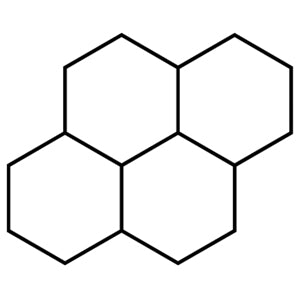
- TCI H1576 2435-85-0 Hexadecahydropyrene (mixture of isomers)
- TCI D1207 922-28-1 3,4-Dimethylheptane (mixture of isomers)
- TCI D0988 25265-78-5 Dodecylbenzene (hard type) (mixture of branched chain isomers)
- TCI V0195 106-87-6 3-(Oxiran-2-yl)-7-oxabicyclo[410]heptane (mixture of isomers)
- TCI U0062 16356-11-9 1,3,5-Undecatriene (mixture of isomers)
- TCI T4428 13929-58-3 1,4,4a,5,8,8a-Hexahydro-1,4:5,8-dimethanonaphthalene (mixture of isomers) (stabilized with BHT)
- Liquid Organic Hydrogen Carrier (LOHC) research: as the hydrogen-rich partner of fluorene, it lets researchers study how hydrogen is chemically stored in and catalytically released from an organic carrier molecule.
- Dehydrogenation catalyst studies: its fully saturated tricyclic framework makes it a suitable substrate for testing catalyst activity, selectivity, and conversion back toward fluorene under controlled reaction conditions.
- Reference compound in fuel analysis: its relatively inert, nonpolar hydrocarbon character makes it useful as a comparison standard when analysing fuels and other complex hydrocarbon mixtures.
- Physical property studies of polycyclic hydrocarbons: as a saturated polycyclic hydrocarbon, it serves as a model compound for research on high-energy-density hydrocarbons and their behaviour.
- Non-heterocyclic building block in synthesis: its alicyclic tricyclic scaffold without heteroatoms provides a saturated core for synthetic and structural chemistry studies that need a hydrocarbon framework.
| Brand | TCI (product code P2393) |
|---|---|
| CAS number | 5744-03-6 |
| Molecular formula | — |
| Purity | — |
| Category | Chemistry > Building Blocks > Non-Heterocyclic Building Blocks |
| Pack sizes | available in the pack sizes offered by TCI; please contact us for current options |
| Physical form | — |
| Storage | keep tightly closed in a cool, dry, well-ventilated place, as stated on the product label and Safety Data Sheet |
- Composition: mixture of isomers (fully hydrogenated fluorene, also known as perhydrofluorene)
Store Dodecahydrofluorene in its original, tightly sealed container in a cool, dry, well-ventilated area, away from heat sources, open flames, and strong oxidising agents, as is standard for organic hydrocarbons. Use clean glass or other chemically compatible containers when transferring or dividing the material. Handle it in a fume hood or a well-ventilated workspace, and wear safety glasses, chemical-resistant gloves, and a lab coat. Avoid breathing vapours and avoid contact with skin and eyes. Always check the TCI Safety Data Sheet for specific hazard, storage, and disposal instructions before use, and dispose of waste according to local regulations.
—
Produk Terkait
-
Hexadecahydropyrene(mixtureofisomers) TCI H1576
Regular price Rp 5.114.550,00Regular price -
3,4-Dimethylheptane(mixtureofisomers) TCI D1207
Regular price Rp 11.846.100,00Regular price -
Dodecylbenzene(hardtype)(mixtureofbranchedchainisomers) TCI D0988
Regular price From Rp 637.350,00Regular price -
3-(Oxiran-2-yl)-7-oxabicyclo[410]heptane(mixtureofisomers) TCI V0195
Regular price From Rp 3.870.300,00Regular price -
1,3,5-Undecatriene(mixtureofisomers) TCI U0062
Regular price From Rp 3.155.250,00Regular price -
1,4,4a,5,8,8a-Hexahydro-1,4:5,8-dimethanonaphthalene(mixtureofisomers)(stabilizedwithBHT) TCI T4428
Regular price From Rp 4.056.150,00Regular price -
Tricyclo[5210~2,6~]decanedimethanolDiacrylate(mixtureofisomers)(stabilizedwithMEHQ) TCI T4002
Regular price From Rp 1.273.650,00Regular price -
Teprenone[mixtureof(5E,9E,13E)-and(5Z,9E,13E)-isomers] TCI T2701
Regular price From Rp 2.147.250,00Regular price

![106-87-6 3-(Oxiran-2-yl)-7-oxabicyclo[4.1.0]heptane (mixture of isomers) - AMI Scientific](http://amiscientific.com/cdn/shop/files/TCI2510V0195.jpg?v=1767145750&width=533)


![42594-17-2 Tricyclo[5.2.1.0~2,6~]decanedimethanol Diacrylate (mixture of isomers) (stabilized with MEHQ) - AMI Scientific](http://amiscientific.com/cdn/shop/files/TCI2510T4002.jpg?v=1767144579&width=533)
![6809-52-5 Teprenone [mixture of (5E,9E,13E)- and (5Z,9E,13E)- isomers] - AMI Scientific](http://amiscientific.com/cdn/shop/files/TCI2510T2701.jpg?v=1767143256&width=533)