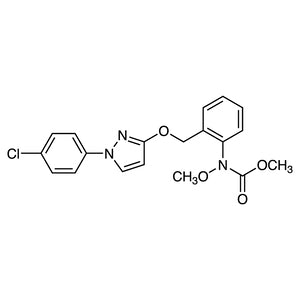
Pyraclostrobin from TCI (product code P2933) is a strobilurin compound. Strobilurins are a class of synthetic fungicides whose structures are modelled on natural fungal metabolites. In agriculture, pyraclostrobin is a well-known broad-spectrum fungicide. In the laboratory, the pure compound has three main uses. It serves as an analytical standard for pesticide residue testing and as a reference compound in food safety and nutrition research. It is also a research tool for studying mitochondrial function and cellular respiration, which links it to cell biology and nutrition research workflows.
Researchers choose pyraclostrobin because its mechanism of action is well defined. It is a Qo (quinone outside) inhibitor that acts on complex III of the mitochondrial electron transport chain, known as the cytochrome bc1 complex. Blocking this site disrupts cellular respiration and energy production. This makes the compound a useful comparator in studies of cellular bioenergetics and toxicology. For analytical work, a standard of clearly defined quality from a trusted manufacturer such as TCI is important for building reliable calibration curves. The 25g and 100g pack sizes suit laboratories that run routine testing.
Indonesia is an agricultural country, and fungicides are widely used on food crops and horticultural produce. This creates steady demand for pesticide residue monitoring. Indonesian food testing laboratories, university research groups and agricultural research institutions can use pyraclostrobin as a reference material for residue analysis of crops and food products. Cell biology and toxicology laboratories can use it to study mitochondrial inhibition and its effects on cellular energy metabolism.
TCI brochures (PDF)
- Agrochemical Ingredients for Research and Experimental Use 2026-01-08 · p. 5
- Plant Research Reagents 2026-02-24 · p. 11
- Pesticide residue analysis: as an analytical standard, pyraclostrobin lets laboratories build reliable calibration curves for measuring fungicide residues in food crops and horticultural produce.
- Food safety research: the compound serves as a well-characterised reference material when studying fungicide residues and their relevance to the safety of the food supply.
- Nutrition research: pyraclostrobin acts as a reference compound in nutrition-related studies that need a defined strobilurin standard with a clearly understood biological mechanism.
- Mitochondrial function studies: as a Qo inhibitor of the cytochrome bc1 complex (complex III), it is a targeted tool for probing the electron transport chain and cellular respiration.
- Toxicology and cell bioenergetics: because it disrupts cellular energy production through a defined mechanism, pyraclostrobin is a useful comparator in toxicological assessments and in studies of how cells respond to respiratory inhibition.
| Brand | TCI (product code P2933) |
|---|---|
| CAS number | 175013-18-0 |
| Molecular formula | — |
| Purity | — |
| Category | Life Science > Cell Biology > Nutrition Research |
| Pack sizes | 25g and 100g |
| Physical form | not stated here; see the TCI product documentation |
| Storage | follow the conditions on the TCI label and Safety Data Sheet (SDS) |
Store pyraclostrobin in its original, tightly closed manufacturer's container. Keep it in a cool, dry, well-ventilated area away from direct sunlight, heat sources and incompatible substances, and follow any storage conditions on the TCI label or SDS. Pyraclostrobin is a biologically active fungicide and respiratory inhibitor, so handle it only in a fume hood or another well-ventilated area. Wear suitable personal protective equipment, including gloves, safety glasses and a lab coat. Avoid creating dust and avoid contact with skin and eyes. Label all working solutions clearly. Dispose of waste according to local regulations for chemical and pesticide-containing materials.
—
Produk Terkait
-
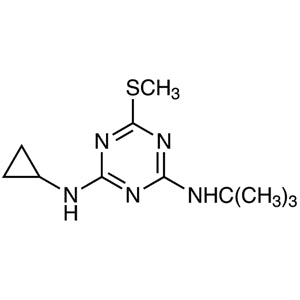
2-(tert-Butylamino)-4-(cyclopropylamino)-6-(methylthio)-1,3,5-triazine TCI I0842
Regular price From Rp 1.644.300,00Regular price -
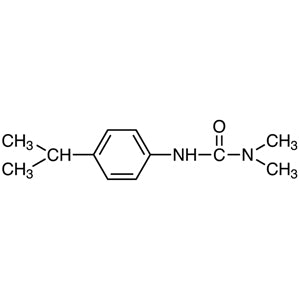
Isoproturon TCI I0843
Regular price From Rp 1.298.850,00Regular price -
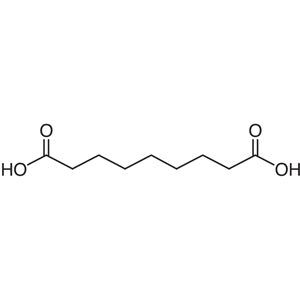
AzelaicAcid TCI A0561
Regular price From Rp 505.050,00Regular price -
AbieticAcid TCI A0001
Regular price From Rp 1.510.950,00Regular price -
Sulfentrazone TCI U0110
Regular price From Rp 2.411.850,00Regular price -
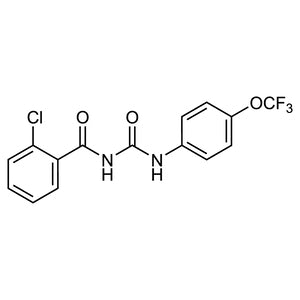
Triflumuron TCI T4364
Regular price From Rp 1.220.100,00Regular price -
Tralopyril TCI T4109
Regular price From Rp 2.730.000,00Regular price -
Tribenuron-methyl TCI T4085
Regular price From Rp 2.359.350,00Regular price