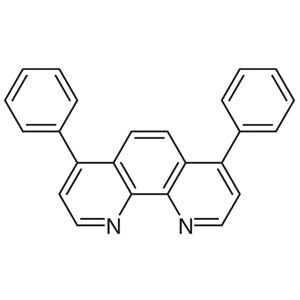
TCI P2995, with CAS number 20999-36-4, is a chemical compound used in perovskite solar cell (PSC) research. It serves as an essential component in the active layer structure of PSCs, acting as an electron transport material. In the laboratory, this compound is crucial for constructing and optimizing the performance of perovskite solar cells, which are a key focus in renewable energy research. Its role is vital in ensuring efficient charge transport and overall device stability.
The chemical and physical properties of TCI P2995 make it a preferred choice for researchers. It exhibits stability under various conditions and can effectively interact with other materials in the solar cell structure. Its resistance to degradation and good thermal stability make it ideal for use in precise and consistent laboratory environments. These characteristics ensure reliable performance and reproducibility in experimental setups.
In Indonesian laboratories, TCI P2995 is highly relevant due to its application in the development of renewable energy technologies. Many research institutions in Indonesia are actively working on perovskite solar cell advancements, and this material is a key component in their processes. Its availability and performance make it a valuable resource for local scientific communities.
TCI brochures (PDF)
- Hole-selective SAM Forming Agent Contributing to Improved Performance of OPVs Cl-2PACz 2024-01-26 · p. 1
- For Highly Efficient Solar Cells, Hole-Selective, Self-Assembled Monolayer (SAM)-Forming Agents 2024-09-02 · p. 1
- n-Type SAM Forming Agent Enabling Efficient Perovskite Solar Cell PANDI 2026-09-10 · p. 2
- SAM Forming Agent Enabling a Superwetting Layer for Uniform Perovskite Formation: MPA-CPA 2026-07-07 · p. 2
- SAM-Forming Agent for Efficient NBG-Type Perovskite Solar Cells: BrNH3-4PACz 2025-10-22 · p. 2
- Carbazoles 2025-06-27 · p. 4
Related TCI products
- TCI Z0037 14320-04-8 Zinc Phthalocyanine (purified by sublimation)
- TCI T3656 952431-34-4 N,N,N',N'-Tetra([1,1'-biphenyl]-4-yl)[1,1':4',1''-terphenyl]-4,4''-diamine
- TCI T3634 189363-47-1 2,2',7,7'-Tetrakis(diphenylamino)-9,9'-spirobi[9H-fluorene]
- TCI T3266 15546-43-7 N,N,N',N'-Tetraphenylbenzidine (purified by sublimation)
- TCI T2233 517-51-1 5,6,11,12-Tetraphenylnaphthacene (purified by sublimation)
- TCI T1812 15546-43-7 N,N,N',N'-Tetraphenylbenzidine
- Perovskite Solar Cell Fabrication: TCI P2995 is used to construct the active layer of perovskite solar cells, where it facilitates efficient electron transport and contributes to overall device performance.
- Material Compatibility Testing: The compound is ideal for testing compatibility with other materials in the solar cell structure, ensuring stable and effective interactions.
- Device Optimization Studies: Researchers use TCI P2995 to fine-tune the performance of perovskite solar cells, aiming to improve efficiency and stability under various conditions.
- Electronic Material Characterization: Its stable properties make it suitable for analytical studies that require consistent and reliable results in material characterization.
- Renewable Energy Research Projects: TCI P2995 supports ongoing research initiatives focused on advancing sustainable energy solutions through perovskite technology.
| Brand | TCI |
|---|---|
| CAS number | 20999-36-4 |
| Molecular formula | — |
| Purity | — |
| Category | Materials Science > Electronic Materials > Perovskite Solar Cell (PSC) Materials |
| Pack sizes | — |
| Physical form | — |
| Storage | Store in a cool, dry place away from direct sunlight |
TCI P2995 should be stored in a cool, dry environment to maintain its chemical stability and prevent degradation. It is recommended to keep the material in a sealed container to minimize exposure to moisture and air. Proper labeling of storage containers is essential for safety and traceability. In laboratory settings, it is important to handle the compound with care, using appropriate personal protective equipment such as gloves and safety goggles. Avoiding direct contact with skin and inhalation of vapors is crucial for maintaining a safe working environment. Regular inspection of storage conditions ensures that the material remains in optimal condition for research applications.
—
Produk Terkait
-
ZincPhthalocyanine(purifiedbysublimation) TCI Z0037
Regular price Rp 4.902.450,00Regular price -
N,N,N',N'-Tetra([1,1'-biphenyl]-4-yl)[1,1':4',1''-terphenyl]-4,4''-diamine TCI T3656
Regular price Rp 3.949.050,00Regular price -
2,2',7,7'-Tetrakis(diphenylamino)-9,9'-spirobi[9H-fluorene] TCI T3634
Regular price Rp 4.479.300,00Regular price -
N,N,N',N'-Tetraphenylbenzidine(purifiedbysublimation) TCI T3266
Regular price From Rp 2.121.000,00Regular price -
5,6,11,12-Tetraphenylnaphthacene(purifiedbysublimation) TCI T2233
Regular price From Rp 2.279.550,00Regular price -
N,N,N',N'-Tetraphenylbenzidine TCI T1812
Regular price From Rp 2.121.000,00Regular price -
Bis-PCBM(mixtureofisomers) TCI B4576
Regular price Rp 6.545.700,00Regular price -
Bathophenanthroline(purifiedbysublimation) TCI B2695
Regular price Rp 5.432.700,00Regular price

![952431-34-4 N,N,N',N'-Tetra([1,1'-biphenyl]-4-yl)[1,1':4',1''-terphenyl]-4,4''-diamine - AMI Scientific](http://amiscientific.com/cdn/shop/files/TCI2510T3656.jpg?v=1769143755&width=533)
![189363-47-1 2,2',7,7'-Tetrakis(diphenylamino)-9,9'-spirobi[9H-fluorene] - AMI Scientific](http://amiscientific.com/cdn/shop/files/TCI2510T3634.jpg?v=1768819793&width=533)