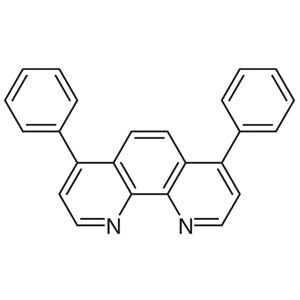
TCI P3172 3PATAT-C3 is a chemical material widely used in the research and development of perovskite solar cells (PSCs). It plays a crucial role in the synthesis and testing of perovskite materials, which are gaining significant attention due to their high efficiency and low production costs. This compound is essential for creating the active layers in solar cells, contributing to the overall performance and stability of the final product. Its application spans across various stages of material development, making it a vital component in modern photovoltaic research.
The material is known for its stable chemical properties and precise controllability under laboratory conditions. These characteristics make it a preferred choice for researchers aiming to optimize the optical and electronic properties of perovskite materials. Its ability to interact effectively with other components during synthesis and characterization processes ensures reliable and consistent results. This makes TCI P3172 3PATAT-C3 an indispensable tool for achieving high-quality outcomes in perovskite solar cell research.
In Indonesian laboratories, TCI P3172 3PATAT-C3 is extensively used by researchers and educational institutions in the fields of materials science and energy. It is a key component in numerous studies focused on the development of perovskite solar cells, enabling accurate and reproducible experimental results. Its availability and reliability have made it a standard material in both academic and industrial research settings.
Advantages (TCI brochure)
- Strongly binds to the ITO layer via three phosphonic acid groups
- Covers the ITO layer with high coverage
- Efficient charge collection from the perovskite layer
- Available with high purity / in large quantities
TCI brochures (PDF)
- SAM Formation Reagent with Face-on Orientation to Substrate Surface 3PATAT-C3 2025-12-16 · p. 1
- SAM Formation Reagent with Three Carboxylic Acid Moieties as Anchors 3CATAT-C3 2025-10-31 · p. 1
- n-Type SAM Forming Agent Enabling Efficient Perovskite Solar Cell PANDI 2026-09-10 · p. 2
- SAM Forming Agent Enabling a Superwetting Layer for Uniform Perovskite Formation: MPA-CPA 2026-07-07 · p. 2
- SAM-Forming Agent for Efficient NBG-Type Perovskite Solar Cells: BrNH3-4PACz 2025-10-22 · p. 2
- Carbazoles 2025-06-27 · p. 4
Related TCI products
- TCI Z0037 14320-04-8 Zinc Phthalocyanine (purified by sublimation)
- TCI T3656 952431-34-4 N,N,N',N'-Tetra([1,1'-biphenyl]-4-yl)[1,1':4',1''-terphenyl]-4,4''-diamine
- TCI T3634 189363-47-1 2,2',7,7'-Tetrakis(diphenylamino)-9,9'-spirobi[9H-fluorene]
- TCI T3266 15546-43-7 N,N,N',N'-Tetraphenylbenzidine (purified by sublimation)
- TCI T2233 517-51-1 5,6,11,12-Tetraphenylnaphthacene (purified by sublimation)
- TCI T1812 15546-43-7 N,N,N',N'-Tetraphenylbenzidine
- Perovskite Solar Cell Synthesis: This material is ideal for creating the active layers in perovskite solar cells due to its chemical stability and compatibility with other components.
- Material Characterization Studies: Its well-defined properties make it suitable for testing and analyzing the optical and electronic behavior of perovskite materials.
- Photovoltaic Efficiency Testing: It is frequently used in experiments to evaluate the performance and efficiency of perovskite-based solar cells under various conditions.
- Research and Development Projects: Its versatility supports a wide range of R&D activities aimed at improving the efficiency and stability of perovskite solar cells.
- Educational Laboratory Work: It is commonly used in teaching environments to demonstrate the synthesis and application of perovskite materials in solar technology.
From the TCI brochure
- Hole collecting material for inverted perovskite solar cells
| Brand | TCI |
|---|---|
| CAS number | Not provided |
| Molecular formula | — |
| Purity | — |
| Category | Materials Science > Electronic Materials > Perovskite Solar Cell (PSC) Materials |
| Pack sizes | — |
| Physical form | — |
| Storage | Store in a cool, dry place away from direct sunlight and moisture |
Data from the TCI brochure
| JSC | 24.5 mA·cm-2 |
|---|---|
| VOC | 1.13 V |
| FF | 0.83 |
| PCE | 23.0 % |
Source: TCI brochure FF169 (2025-12-16)
TCI P3172 3PATAT-C3 should be stored in a cool, dry environment to maintain its chemical stability and prevent degradation. It is recommended to use sealed containers to protect the material from moisture and contaminants. In laboratory settings, it is important to handle the material with appropriate personal protective equipment, such as gloves and safety goggles, to ensure safety. The material should be kept away from incompatible substances to avoid any potential chemical reactions. Regular monitoring of storage conditions is advised to ensure optimal performance and safety during use. Proper labeling and storage practices are essential to maintain the integrity of the material and support safe laboratory operations.
—
Produk Terkait
-
ZincPhthalocyanine(purifiedbysublimation) TCI Z0037
Regular price Rp 4.902.450,00Regular price -
N,N,N',N'-Tetra([1,1'-biphenyl]-4-yl)[1,1':4',1''-terphenyl]-4,4''-diamine TCI T3656
Regular price Rp 3.949.050,00Regular price -
2,2',7,7'-Tetrakis(diphenylamino)-9,9'-spirobi[9H-fluorene] TCI T3634
Regular price Rp 4.479.300,00Regular price -
N,N,N',N'-Tetraphenylbenzidine(purifiedbysublimation) TCI T3266
Regular price From Rp 2.121.000,00Regular price -
5,6,11,12-Tetraphenylnaphthacene(purifiedbysublimation) TCI T2233
Regular price From Rp 2.279.550,00Regular price -
N,N,N',N'-Tetraphenylbenzidine TCI T1812
Regular price From Rp 2.121.000,00Regular price -
Bis-PCBM(mixtureofisomers) TCI B4576
Regular price Rp 6.545.700,00Regular price -
Bathophenanthroline(purifiedbysublimation) TCI B2695
Regular price Rp 5.432.700,00Regular price

![952431-34-4 N,N,N',N'-Tetra([1,1'-biphenyl]-4-yl)[1,1':4',1''-terphenyl]-4,4''-diamine - AMI Scientific](http://amiscientific.com/cdn/shop/files/TCI2510T3656.jpg?v=1769143755&width=533)
![189363-47-1 2,2',7,7'-Tetrakis(diphenylamino)-9,9'-spirobi[9H-fluorene] - AMI Scientific](http://amiscientific.com/cdn/shop/files/TCI2510T3634.jpg?v=1768819793&width=533)