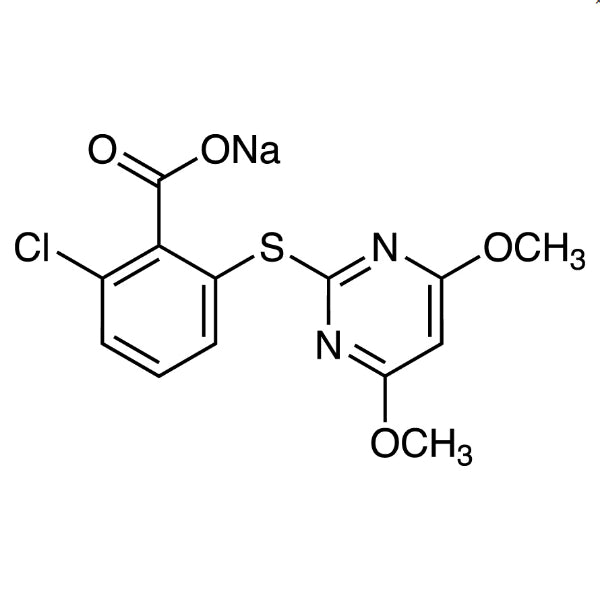
Pyrithiobac Sodium is a chemical compound widely used in life science research, particularly in the fields of cell biology and nutrition. As a key reagent in laboratory settings, it plays a vital role in the synthesis of various compounds and serves as a test material for studies related to health and environmental science. Its presence in microbiological environments makes it an essential component for understanding biological processes and their implications in both research and industrial applications. This compound is frequently utilized by scientists to explore the effects of nutritional factors on cellular growth and development.
The chemical properties of Pyrithiobac Sodium make it a preferred choice for laboratory use. It exhibits stability under specific conditions and is soluble in organic solvents, which facilitates its use in a wide range of chemical and biochemical experiments. Its good reactivity ensures that it can participate effectively in chemical reactions that require speed and precision. These characteristics make it a reliable and versatile material for researchers working in diverse scientific disciplines. Additionally, its stability allows for longer storage and extended use without significant degradation, enhancing its practicality in laboratory environments.
In Indonesian laboratories, Pyrithiobac Sodium is commonly used in research focused on nutrition and cell biology. Local researchers employ this compound to study the impact of nutrients on cellular growth and to develop nutritional supplements. Its role in supporting scientific inquiry in these areas highlights its importance in advancing both academic and applied research in Indonesia.
- Nutritional Research: Pyrithiobac Sodium is used to investigate the effects of nutrients on cellular metabolism and growth, aiding in the development of dietary supplements.
- Cell Biology Studies: It serves as a reagent in experiments examining cellular responses to various biochemical stimuli and environmental factors.
- Environmental Toxicology: The compound is utilized to assess the impact of chemical substances on microbial communities and ecological systems.
- Pharmaceutical Development: It is incorporated into the synthesis of pharmaceutical compounds and is used to test the efficacy of new drug formulations.
- Biochemical Analysis: Its reactivity and solubility make it suitable for use in biochemical assays and analytical procedures requiring precise chemical interactions.
| Brand | TCI |
|---|---|
| CAS number | 123343-16-8 |
| Molecular formula | — |
| Purity | — |
| Category | Life Science > Cell Biology > Nutrition Research |
| Pack sizes | Available in various quantities as per supplier specifications |
| Physical form | Solid or powder, depending on the specific product variant |
| Storage | Store in a cool, dry place away from direct sunlight and moisture |
Pyrithiobac Sodium should be stored in a cool, dry environment, away from direct sunlight and moisture to maintain its chemical stability. It is recommended to use airtight containers made of glass or high-density polyethylene to prevent contamination and degradation. In laboratory settings, it is important to handle the compound with appropriate personal protective equipment, such as gloves and safety goggles, to ensure safe handling. Due to its reactivity, it should be stored separately from strong oxidizing agents or incompatible substances. Regular monitoring of storage conditions is advised to ensure the compound remains in optimal condition for use in research applications.
—
Produk Terkait
-
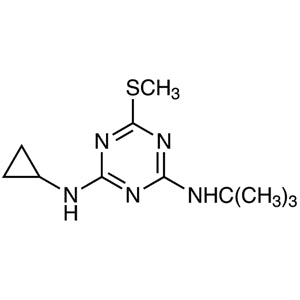
2-(tert-Butylamino)-4-(cyclopropylamino)-6-(methylthio)-1,3,5-triazine TCI I0842
Regular price From Rp 1.644.300,00Regular price -
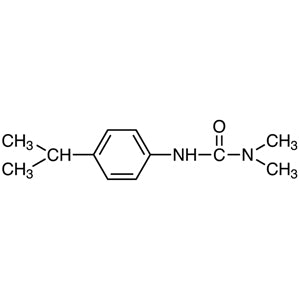
Isoproturon TCI I0843
Regular price From Rp 1.298.850,00Regular price -
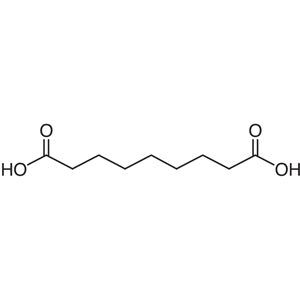
AzelaicAcid TCI A0561
Regular price From Rp 505.050,00Regular price -
AbieticAcid TCI A0001
Regular price From Rp 1.510.950,00Regular price -
Sulfentrazone TCI U0110
Regular price From Rp 2.411.850,00Regular price -
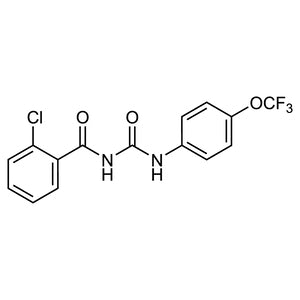
Triflumuron TCI T4364
Regular price From Rp 1.220.100,00Regular price -
Tralopyril TCI T4109
Regular price From Rp 2.730.000,00Regular price -
Tribenuron-methyl TCI T4085
Regular price From Rp 2.359.350,00Regular price