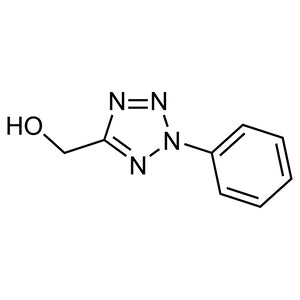
(2-Phenyl-2H-tetrazol-5-yl)methanol is a chemical compound widely used in research applications within the field of chemical biology. This compound serves as a versatile linker and crosslinker, enabling the connection of various biological molecules such as proteins, nucleic acids, and other functional groups. Its unique molecular structure, featuring a tetrazole ring, provides reactivity and specificity, making it an essential tool for molecular modification and synthesis. In laboratory settings, it plays a crucial role in the development of bioactive compounds and the study of molecular interactions.
The compound is valued for its ability to form stable bonds with multiple functional groups, allowing for precise molecular modifications. Its reactivity under specific conditions makes it suitable for targeted chemical reactions, enhancing the efficiency of synthetic processes. Additionally, its chemical stability under controlled environments ensures reliable performance in experimental protocols. These properties make it a preferred choice for researchers working on complex molecular structures and bioactive compound development.
In Indonesian laboratories, (2-Phenyl-2H-tetrazol-5-yl)methanol is commonly used in academic and research institutions. It supports studies in biochemistry, pharmacology, and biotechnology, contributing to the advancement of scientific knowledge. Its application in molecular modification and crosslinking makes it a valuable resource for researchers aiming to develop new therapeutic agents and understand biological systems.
Related TCI products
- TCI T4270 14389-12-9 4-(1H-Tetrazol-5-yl)pyridine
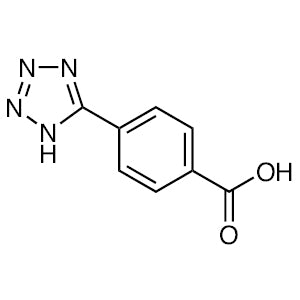
- TCI T3917 34114-12-0 4-(1H-Tetrazol-5-yl)benzoic Acid
- TCI T3431 33893-89-9 2-(1H-Tetrazol-5-yl)pyridine
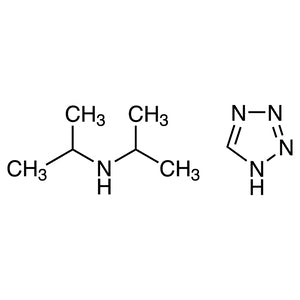
- TCI D6204 93183-36-9 Diisopropylammonium Tetrazol-1-ide
- TCI T3797 74205-82-6 (1H-1,2,4-Triazol-1-yl)methanol
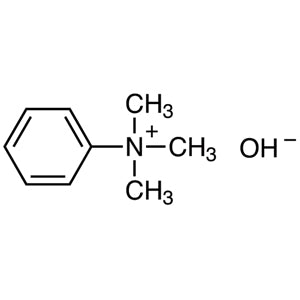
- TCI T3610 1899-02-1 Trimethylphenylammonium Hydroxide (ca. 8.5% in Methanol)
- Bioconjugation studies benefit from this compound's ability to link biomolecules with high specificity and stability.
- Drug development projects utilize its reactivity to create novel therapeutic agents with tailored molecular structures.
- Molecular imaging research employs it to attach fluorescent or radioactive tags to biological targets for tracking.
- Peptide and protein modification experiments rely on its crosslinking properties to create stable molecular complexes.
- Synthetic biology applications use it to construct complex molecular architectures for functional studies.
| Brand | TCI |
|---|---|
| CAS number | 55408-42-9 |
| Molecular formula | — |
| Purity | — |
| Category | Chemistry > Chemical Biology > Linkers and Crosslinkers |
| Pack sizes | Available in various quantities as per standard laboratory supply |
| Physical form | Solid or liquid depending on formulation |
| Storage | Store in a cool, dry place away from light and moisture |
This compound should be stored in a cool, dry environment, away from direct light and moisture to maintain its chemical stability. It is recommended to use airtight containers to prevent exposure to air and humidity, which may affect its reactivity. In laboratory settings, proper personal protective equipment, such as gloves and safety goggles, should be worn when handling the compound to ensure safety. It is important to store it separately from incompatible substances to avoid any potential chemical reactions. Regular monitoring of storage conditions ensures the compound remains effective for research applications.
—
Product Categories
Produk Terkait
-
4-(1H-Tetrazol-5-yl)pyridine TCI T4270
Regular price From Rp 1.431.150,00Regular price -
4-(1H-Tetrazol-5-yl)benzoicAcid TCI T3917
Regular price From Rp 2.016.000,00Regular price -
2-(1H-Tetrazol-5-yl)pyridine TCI T3431
Regular price From Rp 1.776.600,00Regular price -
DiisopropylammoniumTetrazol-1-ide TCI D6204
Regular price From Rp 2.411.850,00Regular price -
(1H-1,2,4-Triazol-1-yl)methanol TCI T3797
Regular price Rp 3.738.000,00Regular price -
TrimethylphenylammoniumHydroxide(ca.8.5%inMethanol) TCI T3610
Regular price From Rp 1.035.300,00Regular price -
TrifluoroacetaldehydeMethylHemiacetal(containsca.10%Methanol) TCI T3247
Regular price From Rp 980.700,00Regular price -
Tetrahydropyran-4-methanol TCI T2965
Regular price From Rp 1.856.400,00Regular price