


p-Quinquephenyl (TCI Q0018) is an aromatic hydrocarbon made of five benzene rings joined in a straight line at the para positions. It belongs to the oligophenylenes, a family of rigid, rod-shaped conjugated molecules. Unlike most other building blocks in this category, p-quinquephenyl contains no heteroatoms. Its value in the laboratory comes mainly from its optical and electronic properties. Researchers use it in organic materials research and photophysics, and as a model compound for studying extended conjugated systems.
The π-electron conjugation runs along all five rings, which makes the compound fluorescent and gives it the ability to transport charge. For these reasons, oligophenylenes are studied as scintillator materials, as laser dyes in the ultraviolet region and as organic semiconductors. The rigid, symmetrical structure also helps the molecules pack in an orderly way in the solid state. This ordering matters for studies of organic crystals and thin films. Because the compound has low solubility in many common solvents, researchers should take this into account when they design experiments.
In Indonesia, p-quinquephenyl is relevant to university and research-institute groups working in materials physics, materials chemistry and optoelectronics. These groups can use it as a reference material for fluorescence and charge-transport measurements, as a model system when studying conjugation length, and as a candidate material for thin films and organic crystals. Because it comes from TCI, laboratories can expect consistent product identity and documentation, which helps when comparing results across experiments and publishing research.
- Organic semiconductor research: the conjugation along its five linked rings allows charge transport, so it suits studies of charge mobility in organic electronic materials.
- Scintillator studies: oligophenylenes are fluorescent, which makes this compound a useful candidate in research on materials that convert radiation into detectable light.
- Ultraviolet laser dye research: its extended π-conjugation and fluorescence are why oligophenylenes are studied as laser dyes for the ultraviolet region.
- Photophysics and model-compound studies: the well-defined, linear five-ring structure makes it a clear model for studying how optical behaviour changes with conjugation length.
- Organic crystal and thin-film studies: its rigid, symmetrical shape helps the molecules pack in an orderly way in the solid state, which suits research on crystal packing and film morphology.
| Brand | TCI (product code Q0018) |
|---|---|
| CAS number | 3073-05-0 |
| Molecular formula | — |
| Purity | — |
| Category | Chemistry > Building Blocks > Non-Heterocyclic Building Blocks |
| Pack sizes | as listed on the product page; contact AMI Scientific for available options |
| Physical form | solid; see TCI product documentation for details |
| Storage | keep in a tightly closed container in a cool, dry place, following the TCI label and SDS |
Store p-quinquephenyl in its original, tightly closed container in a cool, dry, well-ventilated place. Keep it away from direct sunlight, heat sources and strong oxidizing agents. Glass or other chemically resistant containers with secure closures are suitable for repackaged portions, and each one should be clearly labelled. Handle the compound with standard laboratory precautions, including gloves, safety glasses and a lab coat. Avoid breathing dust and avoid contact with skin and eyes, and work in a fume hood or well-ventilated area when weighing or transferring it. Always check the TCI Safety Data Sheet for specific hazard, storage and disposal guidance before use.
—
Produk Terkait
-
Anthracene TCI A0495
Regular price From Rp 584.850,00Regular price -
Acenaphthylene TCI A0005
Regular price From Rp 769.650,00Regular price -
Triphenylene(purifiedbysublimation) TCI T3267
Regular price From Rp 3.367.350,00Regular price -
p-Terphenyl(purifiedbysublimation) TCI T3263
Regular price From Rp 1.510.950,00Regular price -
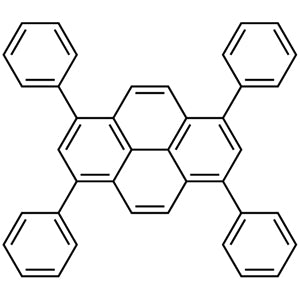
1,3,6,8-Tetraphenylpyrene TCI T3042
Regular price From Rp 2.837.100,00Regular price -
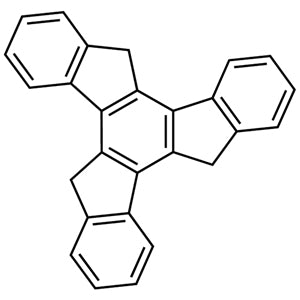
Truxene TCI T2752
Regular price From Rp 1.246.350,00Regular price -
9,9'-Bianthracene TCI B4095
Regular price From Rp 2.625.000,00Regular price -
Benzo[ghi]perylene TCI B2983
Regular price Rp 7.394.100,00Regular price



![191-24-2 Benzo[ghi]perylene - AMI Scientific](http://amiscientific.com/cdn/shop/files/TCI2510B2983.jpg?v=1767089217&width=533)