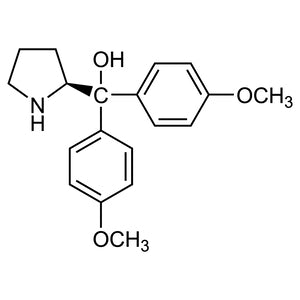
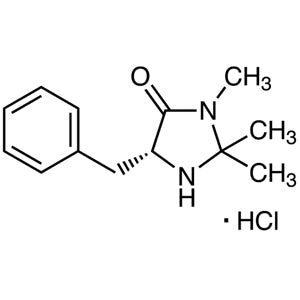
Quincoridine is a chemical compound classified under the heterocyclic category, commonly used as a building block in the synthesis of complex molecules. It plays a crucial role in laboratory settings by serving as a foundational material for creating compounds with specific biological activities. Its unique molecular structure enables it to participate in various chemical reactions, making it an essential component in organic synthesis. Due to its versatility, Quincoridine is widely utilized in research aimed at developing new therapeutic agents and understanding molecular interactions.
The chemical stability of Quincoridine under certain conditions enhances its usability in laboratory experiments. Its complex molecular structure allows for the design of novel compounds with potential pharmaceutical applications. Researchers prefer Quincoridine because of its predictable behavior in chemical reactions and its ability to be manipulated with precision. These properties make it a reliable choice for scientists working in diverse fields such as pharmacology and biochemistry.
In Indonesian laboratories, Quincoridine is frequently used in scientific research, particularly in pharmaceutical and organic chemistry studies. It is an integral part of the synthesis process for active compounds that may lead to the development of new drugs. Its availability in small quantities, such as 100mg, facilitates its use in both academic and industrial research settings. The compound’s unique characteristics make it a valuable resource for researchers aiming to explore new chemical pathways and biological activities.
TCI brochures (PDF)
- Asymmetric Organocatalysts 2025-06-12 · p. 9
- Asymmetric Synthesis 2026-03-18 · p. 7
Related TCI products
- TCI T4195 67123-97-1 H-DL-Tic-OH
- TCI B6927 131180-57-9 (S)-Bis(4-methoxyphenyl)(pyrrolidin-2-yl)methanol
- TCI T3080 1089663-51-3 N-(2-Thiophenesulfonyl)-L-prolinamide
- TCI T2991 278173-23-2 (S)-(-)-5-Benzyl-2,2,3-trimethyl-4-imidazolidinone Hydrochloride
- TCI T2990 323196-43-6 (R)-(+)-5-Benzyl-2,2,3-trimethyl-4-imidazolidinone Hydrochloride
- TCI T1515 74163-81-8 (S)-(-)-1,2,3,4-Tetrahydroisoquinoline-3-carboxylic Acid
- Organic synthesis research utilizes Quincoridine as a key building block for creating complex molecules with specific biological activities.
- Pharmaceutical development benefits from Quincoridine due to its potential in designing new therapeutic agents with targeted biological effects.
- Biochemical studies rely on Quincoridine to investigate molecular interactions and biological mechanisms in various systems.
- Academic research in chemistry employs Quincoridine to explore its structural properties and reactivity in different chemical environments.
- Drug discovery initiatives use Quincoridine to develop compounds with potential applications in treating diseases and health conditions.
| Brand | TCI |
|---|---|
| CAS number | 207129-36-0 |
| Molecular formula | — |
| Purity | — |
| Category | Chemistry > Building Blocks > Heterocyclic Building Blocks |
| Pack sizes | 100mg |
| Physical form | Solid |
| Storage | Store in a cool, dry place away from light and moisture |
Quincoridine should be stored in a cool, dry place, away from direct light and moisture to maintain its chemical stability. It is recommended to keep it in a tightly sealed container to prevent exposure to air and humidity. Due to its potential reactivity, it should be handled with care in a well-ventilated laboratory environment. Proper personal protective equipment, such as gloves and safety goggles, should be worn when handling the compound. Avoid contact with skin and eyes, and ensure that spillage is promptly cleaned using appropriate safety protocols. Regular monitoring of storage conditions is essential to ensure the integrity and usability of the material in research applications.
—
Produk Terkait
-
H-DL-Tic-OH TCI T4195
Regular price Rp 2.359.350,00Regular price -
(S)-Bis(4-methoxyphenyl)(pyrrolidin-2-yl)methanol TCI B6927
Regular price Rp 9.406.950,00Regular price -
N-(2-Thiophenesulfonyl)-L-prolinamide TCI T3080
Regular price Rp 3.155.250,00Regular price -
(S)-(-)-5-Benzyl-2,2,3-trimethyl-4-imidazolidinoneHydrochloride TCI T2991
Regular price From Rp 1.220.100,00Regular price -
(R)-(+)-5-Benzyl-2,2,3-trimethyl-4-imidazolidinoneHydrochloride TCI T2990
Regular price From Rp 1.087.800,00Regular price -
(S)-(-)-1,2,3,4-Tetrahydroisoquinoline-3-carboxylicAcid TCI T1515
Regular price From Rp 743.400,00Regular price -
LevamisoleHydrochloride TCI T1215
Regular price From Rp 1.749.300,00Regular price -
(2S,5S)-(-)-2-tert-Butyl-3-methyl-5-benzyl-4-imidazolidinone TCI B4138
Regular price From Rp 2.466.450,00Regular price