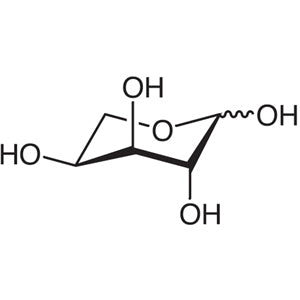
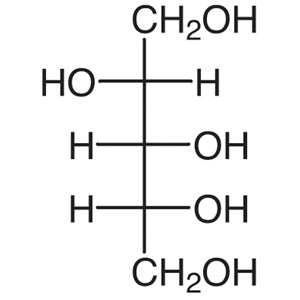
L-(+)-Rhamnose Monohydrate is a carbohydrate compound widely utilized in chemical and biochemical experiments within laboratory settings. As a monosaccharide, it plays a crucial role in studying carbohydrate metabolism, particularly in enzyme activity and biochemical processes. This compound is essential for researchers exploring the structural and functional aspects of carbohydrates, including their interactions with proteins and lipids. Its presence in various scientific studies underscores its importance in both fundamental and applied research.
The chemical properties of L-(+)-Rhamnose Monohydrate make it a preferred choice for laboratory use. It is chemically stable and highly soluble in water, which facilitates its use in a wide range of experimental applications. The high purity level ensures accurate and reliable results, making it suitable for rigorous scientific investigations. Additionally, its non-toxic and odorless nature enhances its safety profile, allowing for safe handling in diverse laboratory environments.
In Indonesian laboratories, L-(+)-Rhamnose Monohydrate is commonly used in research related to chemistry, biochemistry, and pharmaceutical sciences. It supports studies on enzyme mechanisms, metabolic pathways, and molecular interactions. Its availability and reliability make it a valuable resource for academic and industrial research institutions in Indonesia.
TCI brochures (PDF)
- Enzyme Kinetics Studies: This compound is ideal for studying enzyme-substrate interactions due to its role as a substrate in metabolic pathways.
- Carbohydrate Metabolism Research: It is widely used to investigate how carbohydrates are processed in biological systems and their impact on cellular functions.
- Glycoscience Investigations: Its structural properties make it suitable for studying the role of carbohydrates in molecular recognition and signaling processes.
- Biochemical Reactions: It serves as a reagent in various biochemical reactions, particularly those involving glycosylation and carbohydrate-based synthesis.
- Pharmaceutical Development: It is used in drug discovery to understand how carbohydrates interact with biological targets and influence therapeutic outcomes.
| Brand | TCI |
|---|---|
| CAS number | 10030-85-0 |
| Molecular formula | — |
| Purity | — |
| Category | Chemistry > Chemical Biology > Glycoscience |
| Pack sizes | Available in standard laboratory quantities |
| Physical form | White crystalline powder |
| Storage | Store in a cool, dry place away from moisture and light |
L-(+)-Rhamnose Monohydrate should be stored in a cool, dry environment to maintain its chemical stability and prevent degradation. It is recommended to keep the compound in a sealed container to avoid moisture exposure, which could affect its purity and usability. Due to its high solubility in water, it should be stored away from sources of water vapor. General laboratory precautions include proper labeling of containers and ensuring that it is handled in a well-ventilated area. Since it is non-toxic and odorless, it poses minimal risk during routine handling, making it safe for use in various experimental setups. Regular inspection of storage conditions ensures the integrity of the compound remains intact for long-term research applications.
—
Product Categories
Produk Terkait
-
D-(-)-Arabinose TCI A0513
Regular price From Rp 1.192.800,00Regular priceRp 849.450,00Sale price From Rp 1.192.800,00 -
L-(+)-Arabinose TCI A0515
Regular price From Rp 1.167.600,00Regular priceRp 831.600,00Sale price From Rp 1.167.600,00 -
D-(+)-Arabitol TCI A0516
Regular price Rp 769.650,00Regular priceRp 553.350,00Sale price Rp 769.650,00 -
L-(-)-Arabitol TCI A0518
Regular price From Rp 610.050,00Regular priceRp 442.050,00Sale price From Rp 610.050,00 -
N-Acetyl-D-glucosamine TCI A0092
Regular price From Rp 980.700,00Regular priceRp 701.400,00Sale price From Rp 980.700,00 -
L-(-)-Xylose TCI X0021
Regular price From Rp 1.510.950,00Regular priceRp 1.072.050,00Sale price From Rp 1.510.950,00 -
D-(+)-Xylose TCI X0019
Regular price From Rp 505.050,00Regular priceRp 368.550,00Sale price From Rp 505.050,00 -
Xylitol TCI X0018
Regular price From Rp 505.050,00Regular priceRp 368.550,00Sale price From Rp 505.050,00