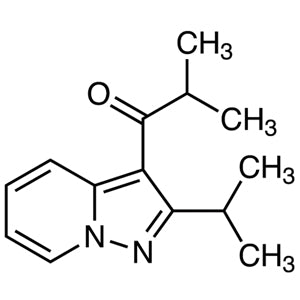
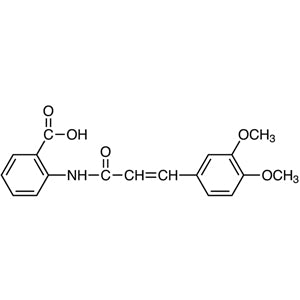
Ramatroban is a chemical compound widely used in pharmacological and biochemical research. It serves as an essential reagent in experimental studies aimed at understanding the mechanisms of neurological and psychotropic effects. As an active compound, it plays a crucial role in drug development, particularly in exploring the interactions between neurotransmitters and their receptors. Its relevance extends to the study of various neurological and psychological disorders, making it a valuable tool for researchers in life sciences.
Ramatroban is known for its chemical stability and solubility in organic solvents such as ethyl acetate and acetone. These properties make it highly versatile for use in a variety of laboratory procedures, including the synthesis of complex compounds, biological activity testing, and quantitative analysis. Its non-toxic nature and relative safety in experimental settings further enhance its appeal. The compound’s consistent performance and reliability in laboratory conditions contribute to its popularity among researchers.
In Indonesian laboratories, Ramatroban is commonly used by scientists in pharmacology, neurology, and biochemistry. It supports research efforts focused on understanding the mechanisms of neurological diseases and developing therapeutic strategies. Its availability and ease of use make it a preferred choice for experimental studies in both academic and research institutions across Indonesia.
TCI brochures (PDF)
- Carbazoles 2025-06-27 · p. 2
- Immune System, Inflammation, Allergy Research Reagents 2025-05-26 · p. 4
- Immunology Research Reagents 2026-06-03 · p. 6
- Pharmaceutical Ingredients for Research and Experimental Use 2026-03-09 · p. 30
- Pharmacological research utilizes Ramatroban to study the effects of neuroactive compounds on the central nervous system and their potential therapeutic applications.
- Neurological studies benefit from Ramatroban’s role in investigating the modulation of GABA receptors, which is critical in understanding conditions like epilepsy and anxiety disorders.
- Biochemical experiments often incorporate Ramatroban to explore its interactions with various neurotransmitter systems and its impact on cellular signaling pathways.
- Drug development programs use Ramatroban as a model compound to test new formulations and evaluate their efficacy and safety profiles.
- Quantitative analysis in research laboratories relies on Ramatroban’s solubility and stability for accurate measurement and data interpretation.
| Brand | TCI |
|---|---|
| CAS number | 116649-85-5 |
| Molecular formula | — |
| Purity | — |
| Category | Life Science > Biochemicals and Reagents > Pharmaceutical Research Reagents |
| Pack sizes | Available in various quantities as per standard laboratory reagent packaging |
| Physical form | Solid powder |
| Storage | Store in a cool, dry place away from direct sunlight and moisture |
Ramatroban should be stored in a cool, dry environment to maintain its chemical stability and prevent degradation. It is recommended to keep it in airtight containers to avoid exposure to moisture and contaminants. Due to its non-toxic nature, it is generally safe to handle, but standard laboratory safety practices should still be followed. Avoid contact with skin and eyes, and ensure proper ventilation when working with the compound. It is suitable for use in controlled laboratory settings where appropriate safety measures are in place. Proper labeling and storage conditions are essential to ensure the integrity and usability of the compound over time.
—
Product Categories
- Biochemicals and ReagentsPharmaceutical Research Reagents (for Experimental Use)Neurotransmitter Agent Ingredients (for Research and Experimental Use)
- Biochemicals and ReagentsPharmaceutical Research Reagents (for Experimental Use)Anti-allergic Ingredients (for Research and Experimental Use)
- Cell BiologyImmune System, Inflammation, Allergy ResearchThromboxane Synthase (TBXS) Inhibitors
- Pharmaceutical Development and Drug Discovery ResearchPharmaceutical Research Reagents (for Experimental Use)Neurotransmitter Agent Ingredients (for Research and Experimental Use)
- Pharmaceutical Development and Drug Discovery ResearchPharmaceutical Research Reagents (for Experimental Use)Anti-allergic Ingredients (for Research and Experimental Use)
Produk Terkait
-
OzagrelHydrochloride TCI O0419
Regular price From Rp 1.326.150,00Regular priceRp 942.900,00Sale price From Rp 1.326.150,00 -
1-[4-(1H-Imidazol-1-yl)phenyl]ethan-1-one TCI I1252
Regular price Rp 2.359.350,00Regular priceRp 1.665.300,00Sale price Rp 2.359.350,00 -
4-AminobutyricAcid TCI A0282
Regular price From Rp 505.050,00Regular priceRp 352.800,00Sale price From Rp 505.050,00 -
Ibudilast TCI I0740
Regular price From Rp 1.961.400,00Regular priceRp 1.387.050,00Sale price From Rp 1.961.400,00 -
AcetylcholineChloride TCI A0084
Regular price From Rp 1.405.950,00Regular priceRp 998.550,00Sale price From Rp 1.405.950,00 -
Zafirlukast TCI Z0029
Regular price Rp 5.194.350,00Regular priceRp 3.647.700,00Sale price Rp 5.194.350,00 -
Tranilast TCI T2935
Regular price From Rp 3.285.450,00Regular priceRp 2.313.150,00Sale price From Rp 3.285.450,00 -
Thiocolchicoside TCI T2919
Regular price Rp 1.087.800,00Regular priceRp 775.950,00Sale price Rp 1.087.800,00