


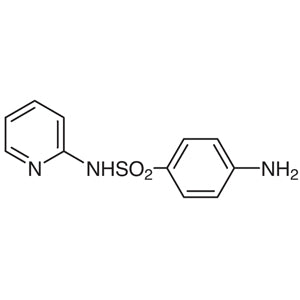
Sulfapyridine from TCI is a sulfonamide compound. The sulfonamides are one of the earliest classes of synthetic antibacterial agents in the history of pharmacology. In the laboratory, this material serves as a reference compound for studying how sulfonamide antibiotics work. It inhibits folic acid synthesis in bacteria by competing with para-aminobenzoic acid (PABA). Sulfapyridine is also known as one of the main metabolites of sulfasalazine, so it appears often in pharmacokinetic studies, drug metabolism research, and residue analysis of veterinary and human drugs.
Researchers choose Sulfapyridine because its mechanism of action is well documented in the scientific literature. This makes it a suitable positive control or comparison standard in antibacterial activity assays. Its structure combines a sulfonamide group with a pyridine ring, which makes it a useful model for structure-activity relationship studies. As a TCI product, it comes with a clear chemical identity and supporting documentation from the manufacturer. This helps laboratories keep their data traceable, especially in analytical work that requires a reliable reference material.
In Indonesia, Sulfapyridine is relevant to university research laboratories, pharmaceutical quality control facilities, and analytical laboratories that test food and animal products for drug residues. Microbiology and pharmacology teaching laboratories also use it to show the classic mechanism of competitive enzyme inhibition. Teams working on method development for chromatographic analysis of sulfonamides benefit from a well-characterized compound with a defined identity. AMI Scientific supplies this TCI reagent to support these research, testing, and educational needs.
TCI brochures (PDF)
- Antimicrobials and Antitumor Agents for Research and Experimental Use 2025-04-24 · p. 6
- Pharmaceutical Ingredients for Research and Experimental Use 2026-03-09 · p. 6
- Antibacterial activity assays: Sulfapyridine works as a positive control or comparison compound because its folate-pathway inhibition mechanism is well documented and widely cited.
- Pharmacokinetic and drug metabolism studies: As a major metabolite of sulfasalazine, it is a relevant reference for tracking metabolic pathways and measuring metabolite levels in biological samples.
- Drug residue analysis: Laboratories that test veterinary and human drug residues can use this compound as a reference material when identifying and quantifying sulfonamides.
- Structure-activity relationship research: Its combination of a sulfonamide group and a pyridine ring makes it a useful model for comparing structural features with antibacterial activity.
- Teaching and demonstrating antibiotic mechanisms: In academic laboratories, it shows clearly how sulfonamides compete with PABA to block bacterial folic acid synthesis.
| Brand | TCI (product code S0071) |
|---|---|
| CAS number | 144-83-2 |
| Molecular formula | — |
| Purity | — |
| Category | Life Science > Biochemicals and Reagents > Antibiotics |
| Pack sizes | see the available options on the product listing |
| Physical form | solid; see the manufacturer's documentation for details |
| Storage | follow the storage conditions on the TCI label and safety data sheet |
Store Sulfapyridine in its original, tightly closed container in a cool, dry, well-ventilated place, away from direct sunlight and moisture. Always follow the storage conditions stated on the TCI label and safety data sheet. Keep it away from strong oxidizing agents and incompatible materials. When handling, wear standard laboratory protective equipment, including gloves, safety glasses, and a lab coat. Avoid creating or breathing in dust, and weigh the material in a fume hood or another ventilated area. Label all working solutions clearly and dispose of waste according to institutional and local regulations. Read the safety data sheet before first use.
—
Product Categories
- Biochemicals and ReagentsAntibioticsAntibiotics (Chemical Structure Class)
- Biochemicals and ReagentsPharmaceutical Research Reagents (for Experimental Use)Antimicrobial Ingredients (for Research and Experimental Use)
- MicrobiologyAntibioticsAntibiotics (Chemical Structure Class)
- Pharmaceutical Development and Drug Discovery ResearchPharmaceutical Research Reagents (for Experimental Use)Antimicrobial Ingredients (for Research and Experimental Use)
- Pharmaceutical Development and Drug Discovery ResearchAntibioticsAntibiotics (Chemical Structure Class)
Produk Terkait
-
4-AminosalicylicAcid TCI A0420
Regular price From Rp 822.150,00Regular priceRp 590.100,00Sale price From Rp 822.150,00 -
Sodium4-AminosalicylateDihydrate TCI A0423
Regular price From Rp 928.200,00Regular priceRp 664.650,00Sale price From Rp 928.200,00 -
Wortmannin TCI W0007
Regular price Rp 11.632.950,00Regular priceRp 8.150.100,00Sale price Rp 11.632.950,00 -
ValganciclovirHydrochloride TCI V0158
Regular price From Rp 1.618.050,00Regular priceRp 1.146.600,00Sale price From Rp 1.618.050,00 -
ValnemulinHydrochloride TCI V0144
Regular price From Rp 4.982.250,00Regular priceRp 3.499.650,00Sale price From Rp 4.982.250,00 -
Sulfamerazine TCI U0176
Regular price From Rp 2.411.850,00Regular priceRp 1.702.050,00Sale price From Rp 2.411.850,00 -
SulfadiazineSodium TCI U0171
Regular price Rp 1.220.100,00Regular priceRp 868.350,00Sale price Rp 1.220.100,00 -
Sulfaphenazole TCI U0170
Regular price Rp 3.445.050,00Regular priceRp 2.424.450,00Sale price Rp 3.445.050,00


