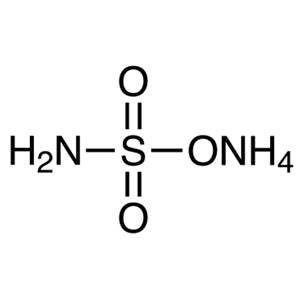
Ammonium Amidosulfate (TCI S0117), with CAS number 7773-06-0, is a chemical compound widely used in laboratory settings as a synthetic reagent. It serves as a versatile source of nitrogen and sulfur, making it essential in various chemical reactions, particularly in organic synthesis. This compound is commonly employed in the formation of amides, amino acids, and other nitrogen-containing compounds, contributing to the development of complex chemical structures. Its role in laboratory research is critical, especially in the field of synthetic chemistry where precise reagents are required for successful reactions.
One of the key properties that make Ammonium Amidosulfate a preferred choice is its solubility in water, which simplifies its use in aqueous-based experiments. Its chemical stability under controlled conditions ensures reliable results in laboratory procedures. Additionally, its ability to react with both organic and inorganic compounds makes it adaptable to a wide range of experimental setups. These characteristics make it an ideal reagent for researchers seeking consistent and reproducible outcomes in their chemical processes.
In Indonesian laboratories, Ammonium Amidosulfate is extensively used in chemical research, particularly in organic synthesis and analytical chemistry. Its availability, combined with its effectiveness in various reactions, makes it a popular choice among scientists and researchers. The compound's role in supporting both basic and advanced chemical investigations underscores its importance in the scientific community within Indonesia.
- Organic synthesis is a key application where Ammonium Amidosulfate is used to facilitate the formation of amides and amino acids due to its nitrogen and sulfur content.
- Analytical chemistry benefits from this compound as it is used in the preparation of reagents for qualitative and quantitative analysis of nitrogen-containing compounds.
- Industrial chemical processes often incorporate this reagent for the production of nitrogen-based compounds, leveraging its reactivity and solubility.
- Environmental testing utilizes Ammonium Amidosulfate in the analysis of soil and water samples for nitrogen and sulfur content.
- Pharmaceutical research employs this compound in the development of drug compounds, particularly those involving nitrogen and sulfur functionalities.
| Brand | TCI |
|---|---|
| CAS number | 7773-06-0 |
| Molecular formula | — |
| Purity | — |
| Category | Chemistry > Synthetic Reagents > Inorganic Salts |
| Pack sizes | Available in various quantities as per supplier specifications |
| Physical form | Solid powder |
| Storage | Store in a cool, dry place away from moisture and heat |
Ammonium Amidosulfate should be stored in a cool, dry environment to prevent degradation due to moisture and high temperatures. It is recommended to use airtight containers to maintain its chemical stability and prevent contamination. As a hygroscopic substance, it should be kept away from sources of humidity to avoid clumping or decomposition. In laboratory settings, it should be handled with appropriate personal protective equipment, including gloves and safety goggles, to ensure safe usage. Proper labeling and storage conditions are essential to maintain its effectiveness and safety during experimental procedures.
—
Product Categories
Produk Terkait
-
TCI B5774 5,10-Bis(4,4,5,5-tetramethyl-1,3,2-dioxaborolan-2-yl)naphtho[1,2-c:5,6-c']bis([1,2,5]oxadiazole)
Regular price Rp 10.255.350,00Regular price -
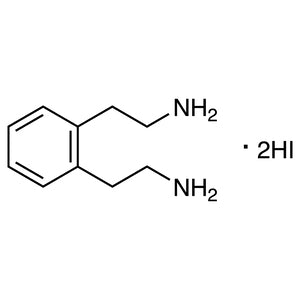
Dihydroiodide TCI B6569
Regular price From Rp 1.936.200,00Regular price -
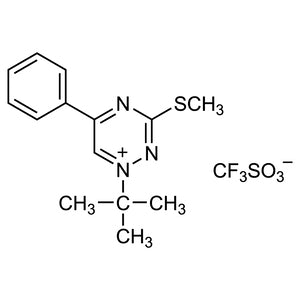
Trifluoromethanesulfonate TCI B7003
Regular price From Rp 1.936.200,00Regular price
![5,10-Bis(4,4,5,5-tetramethyl-1,3,2-dioxaborolan-2-yl)naphtho[1,2-c:5,6-c']bis([1,2,5]oxadiazole) - TCI B5774 - AMI Scientific](http://amiscientific.com/cdn/shop/files/TCI2510B5774.jpg?v=1769180228&width=533)