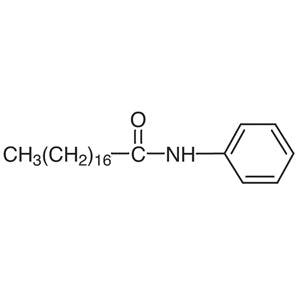
Stearanilide (TCI S0314, CAS 637-54-7) is a chemical compound widely used in laboratory settings as a building block for organic synthesis. It is a non-heterocyclic compound with a molecular structure that features an anilide group attached to a saturated hydrocarbon chain. This structure provides Stearanilide with both stability and reactivity, making it a versatile reagent in synthetic chemistry. Its chemical properties allow it to participate in various reactions, including substitution and polymerization, which are essential in the development of complex organic molecules.
The key properties of Stearanilide that make it a preferred choice include its high purity, relatively high melting point, and non-polar nature. These characteristics ensure that it remains stable under a range of experimental conditions and can dissolve in common organic solvents such as ethers and chloroform. Its non-polar nature also facilitates its use in reactions where solubility and compatibility are critical. Additionally, its chemical stability ensures that it does not degrade significantly during storage or use, enhancing its reliability in laboratory applications.
In Indonesian laboratories, Stearanilide is commonly used in both fundamental and applied chemical research. It is frequently found in academic and research institutions that focus on organic synthesis, pharmaceutical development, and materials science. Its role in these areas is crucial for the creation of new compounds and the advancement of scientific knowledge. Its availability and reliability make it a standard reagent in many Indonesian research facilities.
- Organic Synthesis: Stearanilide is widely used in the synthesis of complex organic molecules due to its reactivity and structural versatility.
- Pharmaceutical Research: It serves as a building block in the development of new drug compounds, particularly in the synthesis of aromatic derivatives.
- Polymer Chemistry: Stearanilide can participate in polymerization reactions, making it valuable in the study of synthetic polymers and materials.
- Analytical Chemistry: Its stability and purity make it suitable for use as a reference standard in analytical procedures.
- Material Science: It is utilized in the creation of new materials, especially those requiring specific chemical functionalities and structural properties.
| Brand | TCI |
|---|---|
| CAS number | 637-54-7 |
| Molecular formula | — |
| Purity | — |
| Category | Chemistry > Building Blocks > Non-Heterocyclic Building Blocks |
| Pack sizes | Available in various quantities as per standard laboratory supply |
| Physical form | Solid |
| Storage | Store in a cool, dry place away from direct sunlight and moisture |
Stearanilide should be stored in a cool, dry environment to maintain its chemical stability and prevent degradation. It is recommended to keep it in airtight containers to avoid exposure to moisture and air, which could affect its purity. Due to its non-polar nature, it is best stored in glass or plastic containers that are resistant to organic solvents. In laboratory settings, it is important to handle Stearanilide with care, ensuring that it is kept away from incompatible substances. Proper labeling and storage conditions help ensure its safe and effective use in research applications. Always follow standard laboratory safety protocols when handling and storing chemical compounds.
—
Produk Terkait
-
TCI B5774 5,10-Bis(4,4,5,5-tetramethyl-1,3,2-dioxaborolan-2-yl)naphtho[1,2-c:5,6-c']bis([1,2,5]oxadiazole)
Regular price Rp 10.255.350,00Regular price -
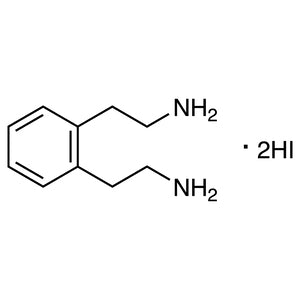
Dihydroiodide TCI B6569
Regular price From Rp 1.936.200,00Regular price -
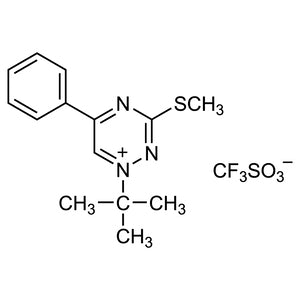
Trifluoromethanesulfonate TCI B7003
Regular price From Rp 1.936.200,00Regular price
![5,10-Bis(4,4,5,5-tetramethyl-1,3,2-dioxaborolan-2-yl)naphtho[1,2-c:5,6-c']bis([1,2,5]oxadiazole) - TCI B5774 - AMI Scientific](http://amiscientific.com/cdn/shop/files/TCI2510B5774.jpg?v=1769180228&width=533)