

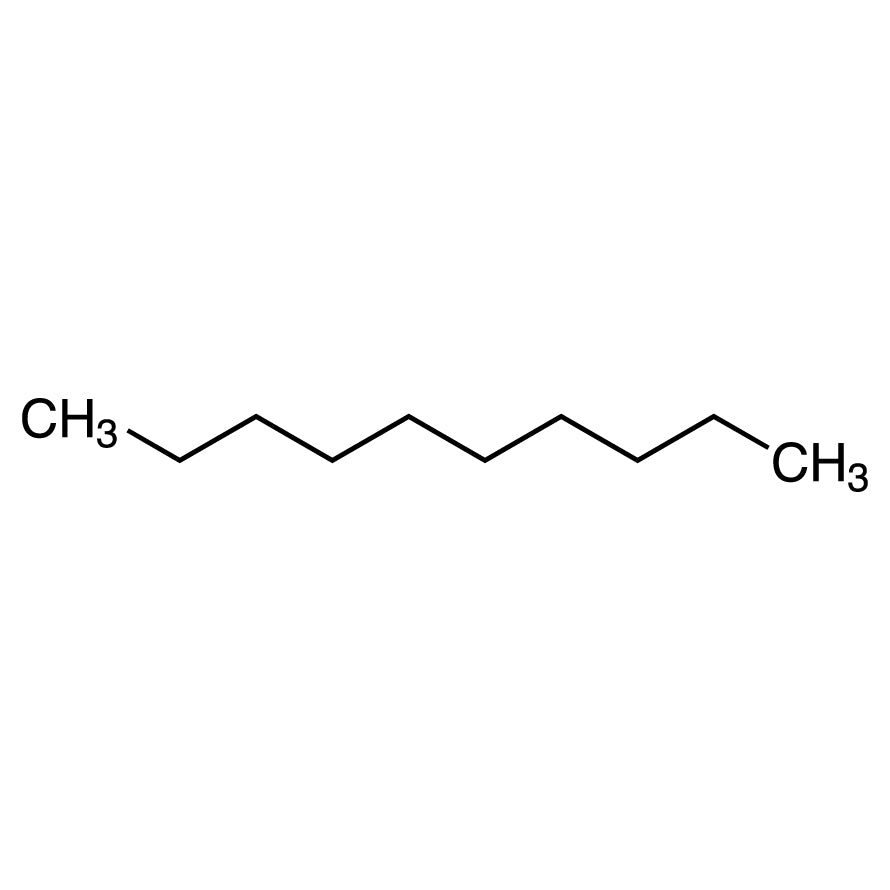
This reference material is a certified flash point standard used in analytical chemistry to determine the flash point of petroleum-based materials. Certified by the Japan Petroleum Institute, it serves as a reliable benchmark for quality control and testing in laboratories. The material is specifically formulated as decane, a straight-chain hydrocarbon, which ensures consistent and accurate measurements during flash point testing. Its stability and purity make it an essential tool for laboratories that require precise and repeatable results in their analytical workflows.
Decane is preferred due to its chemical stability, inertness, and high purity. It does not react with common laboratory reagents, ensuring that test results remain unaffected by external factors. The certification by the Japan Petroleum Institute guarantees its accuracy and consistency, making it a trusted standard for laboratories worldwide. Its formulation is designed to meet international standards, allowing for reliable comparisons across different testing environments and laboratories.
In Indonesian laboratories, this material is widely used in the oil, energy, and manufacturing sectors. It plays a critical role in ensuring the quality of fuels, crude oil, and other petroleum products. Its application supports compliance with international standards and enhances the reliability of analytical data. The 250mL packaging is ideal for laboratory use, providing sufficient quantity for multiple tests without compromising quality.
Related TCI products
- TCI S0555 544-76-3 Reference Material for Flash Point Certified by The Japan Petroleum Institute, Hexadecane
- TCI X0044 106-42-3 p-Xylene [Tag Closed Flash Point Check Fluid]
- TCI S0282 124-18-5 Decane [Standard Material for GC]
- TCI D1738 91-17-8 Decahydronaphthalene (cis- and trans- mixture) [Testing Methods for Sulfur in Crude Oil and Petroleum Products]
- TCI S0821 7631-86-9 Silica Gel (Spherical, 60micro m) [for Flash Chromatography]
- TCI B2937 13048-34-5 1,10-Bis(acryloyloxy)decane (stabilized with MEHQ)
- Flash Point Analysis – This material is ideal for determining the flash point of petroleum products, ensuring compliance with international safety and quality standards.
- Quality Control Testing – It serves as a reference standard for verifying the accuracy of analytical instruments and procedures in laboratories.
- Petroleum Product Evaluation – Used in testing crude oil, fuels, and other hydrocarbon-based materials to ensure they meet industry specifications.
- Calibration of Analytical Instruments – Provides a stable and consistent reference for calibrating equipment used in flash point testing.
- Research and Development – Supports the development of new petroleum-based products by offering a reliable standard for testing and comparison.
| Brand | TCI |
|---|---|
| CAS number | 124-18-5 |
| Molecular formula | — |
| Purity | — |
| Category | Analytical Chemistry > Analytical Standards > Petrochemical Standards |
| Pack sizes | 250mL |
| Physical form | Liquid |
| Storage | — |
This material should be stored in a cool, dry, and well-ventilated area away from direct sunlight and sources of heat. It is recommended to use airtight containers made of glass or polyethylene to prevent contamination and evaporation. As a stable hydrocarbon, it does not react with common laboratory reagents, but it is advisable to avoid contact with strong oxidizing agents. The material should be handled with care to prevent spills and ensure safe laboratory practices. Regular inspection of storage conditions is recommended to maintain its integrity and ensure it remains suitable for analytical use.
—
Produk Terkait
-
ReferenceMaterialforFlashPointCertifiedbyTheJapanPetroleumInstitute,Hexadecane TCI S0555
Regular price Rp 4.161.150,00Regular priceRp 2.909.550,00Sale price Rp 4.161.150,00 -
p-Xylene[TagClosedFlashPointCheckFluid] TCI X0044
Regular price Rp 1.670.550,00Regular priceRp 1.167.600,00Sale price Rp 1.670.550,00 -
Decane[StandardMaterialforGC] TCI S0282
Regular price Rp 1.510.950,00Regular priceRp 1.056.300,00Sale price Rp 1.510.950,00 -
Decahydronaphthalene(cis-andtrans-mixture)[TestingMethodsforSulfurinCrudeOilandPetroleumProducts] TCI D1738
Regular price Rp 795.900,00Regular priceRp 556.500,00Sale price Rp 795.900,00 -
SilicaGel(Spherical,60microm)[forFlashChromatography] TCI S0821
Regular price Rp 3.658.200,00Regular priceRp 2.557.800,00Sale price Rp 3.658.200,00 -
1,10-Bis(acryloyloxy)decane(stabilizedwithMEHQ) TCI B2937
Regular price From Rp 1.724.100,00Regular priceRp 1.205.400,00Sale price From Rp 1.724.100,00 -
1-Oxa-8-azaspiro[4.5]decaneHydrochloride TCI O0679
Regular price Rp 7.234.500,00Regular priceRp 5.074.650,00Sale price Rp 7.234.500,00 -
Methyl1,4-Dioxaspiro[45]decane-8-carboxylate TCI M3273
Regular price From Rp 1.590.750,00Regular priceRp 1.127.700,00Sale price From Rp 1.590.750,00


