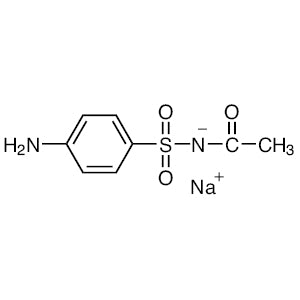
Sulfacetamide is a chemical compound widely used in various chemical and pharmacological experiments. As a fundamental building block in chemistry, it plays a crucial role in the synthesis of other compounds, particularly in the field of organic chemistry. This compound is commonly utilized in the development of pharmaceuticals, antiseptics, and medicinal products. In laboratory settings, sulfacetamide is applied to test the reactivity of specific compounds or as an auxiliary material in complex chemical reactions. Its chemical stability allows it to participate in reactions under controlled conditions, making it a versatile reagent for researchers and students alike.
Sulfacetamide is a white, solid substance that is easy to store and handle. Its chemical properties make it resistant to certain reactions, which is beneficial for experiments requiring compound stability during the reaction process. The compound’s inert nature and predictable behavior under various conditions make it a preferred choice for both basic and advanced laboratory applications. Its ability to remain intact during chemical processes ensures reliable results and reduces the risk of unexpected side reactions.
In Indonesian laboratories, sulfacetamide is frequently used by chemists, students, and pharmaceutical industries. It is a fundamental component of laboratory requirements, supporting research and development in both academic and industrial settings. Its availability and reliability make it an essential material for a wide range of chemical and pharmaceutical applications in the region.
TCI brochures (PDF)
- Immunology Research Reagents 2026-06-03 · p. 10
- Antimicrobials and Antitumor Agents for Research and Experimental Use 2025-04-24 · p. 6
- Pharmaceutical Ingredients for Research and Experimental Use 2026-03-09 · p. 6
- Pharmaceutical synthesis for the development of antibiotics and antiseptics due to its chemical stability and reactivity.
- Organic chemistry experiments as a building block for the synthesis of more complex molecules.
- Drug formulation processes in the pharmaceutical industry for testing and production of medicinal compounds.
- Analytical chemistry applications for testing the reactivity of specific compounds under controlled conditions.
- Research and development in academic institutions for teaching and experimental purposes in chemistry courses.
| Brand | TCI |
|---|---|
| CAS number | 144-80-9 |
| Molecular formula | — |
| Purity | — |
| Category | Chemistry > Building Blocks > Non-Heterocyclic Building Blocks |
| Pack sizes | Available in standard laboratory quantities as per supplier specifications |
| Physical form | Solid, white in color |
| Storage | Store in a cool, dry place away from direct sunlight and moisture |
Sulfacetamide should be stored in a cool, dry environment to maintain its chemical stability. It is recommended to keep it in a sealed container to prevent moisture absorption and contamination. Due to its solid form, it is best stored in airtight containers made of glass or polyethylene to ensure long-term preservation. Laboratory personnel should handle the compound with care, using appropriate personal protective equipment such as gloves and safety goggles. It is important to avoid exposure to extreme temperatures and direct sunlight to prevent degradation. Proper storage conditions help ensure the compound remains effective and safe for use in various experimental applications.
—
Product Categories
- Biochemicals and ReagentsAntibioticsAntibiotics (Chemical Structure Class)
- Biochemicals and ReagentsPharmaceutical Research Reagents (for Experimental Use)Antimicrobial Ingredients (for Research and Experimental Use)
- Biochemicals and Reagents
- MicrobiologyAntibioticsAntibiotics (Chemical Structure Class)
- Pharmaceutical Development and Drug Discovery ResearchPharmaceutical Research Reagents (for Experimental Use)Antimicrobial Ingredients (for Research and Experimental Use)
- Pharmaceutical Development and Drug Discovery ResearchAntibioticsAntibiotics (Chemical Structure Class)
Produk Terkait
-
SulfacetamideSodiumSalt TCI S0578
Regular price From Rp 1.618.050,00Regular priceRp 1.146.600,00Sale price From Rp 1.618.050,00 -
Sulfabenz TCI U0157
Regular price From Rp 2.147.250,00Regular priceRp 1.517.250,00Sale price From Rp 2.147.250,00 -
Tigecycline TCI T3589
Regular price From Rp 2.464.350,00Regular priceRp 1.738.800,00Sale price From Rp 2.464.350,00 -
Tinidazole TCI T3058
Regular price From Rp 795.900,00Regular priceRp 572.250,00Sale price From Rp 795.900,00 -
TetracyclineHydrochloride TCI T2525
Regular price From Rp 1.220.100,00Regular priceRp 868.350,00Sale price From Rp 1.220.100,00 -
Tobramycin TCI T2503
Regular price From Rp 2.942.100,00Regular priceRp 2.072.700,00Sale price From Rp 2.942.100,00 -
Trimethoprim TCI T2286
Regular price From Rp 2.041.200,00Regular priceRp 1.442.700,00Sale price From Rp 2.041.200,00 -
Aztreonam TCI A2466
Regular price From Rp 3.021.900,00Regular priceRp 2.128.350,00Sale price From Rp 3.021.900,00