

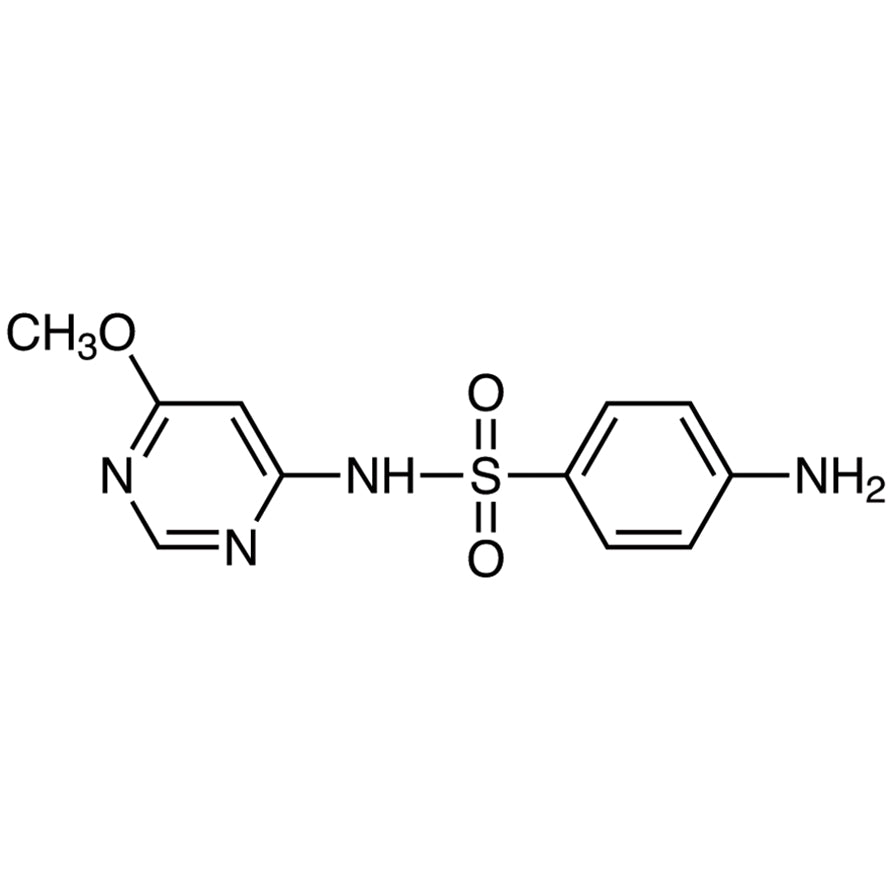
Sulfamonomethoxine is an antibiotic belonging to the sulfonamide class, widely used in biochemical and pharmacological experiments within laboratories. As a key reagent, it plays a crucial role in microbiological research, particularly in the study of bacterial resistance and the mechanisms of antibiotic action. Its broad-spectrum antibacterial activity against both gram-positive and gram-negative bacteria makes it a valuable tool for researchers seeking to evaluate the effectiveness of various antimicrobial agents. This compound is also frequently employed in the development of new chemical compounds, such as sulfonamide derivatives and intermediate substances for drug synthesis.
The chemical stability of sulfamonomethoxine under specific conditions, along with its solubility in organic solvents like ethylamine and ethanol, makes it a preferred choice for a variety of laboratory applications. These properties allow for easy integration into chemical reactions and separation processes, enhancing its utility in synthetic and analytical procedures. Additionally, its high reactivity ensures that it can participate effectively in experiments requiring active chemical interactions.
In Indonesian laboratories, sulfamonomethoxine is commonly used in antibiotic activity testing, bacterial sensitivity assays, and studies on the mechanisms of antibiotic action. Its role in both basic and applied research underscores its importance in the scientific community. The compound’s relative safety in controlled dosages further supports its use in routine laboratory settings, provided proper handling protocols are followed.
TCI brochures (PDF)
- Antimicrobials and Antitumor Agents for Research and Experimental Use 2025-04-24 · p. 6
- Pharmaceutical Ingredients for Research and Experimental Use 2026-03-09 · p. 6
- Antibiotic Activity Testing: Sulfamonomethoxine is used to assess the effectiveness of antibiotics against various bacterial strains, helping researchers determine their therapeutic potential.
- Bacterial Sensitivity Assays: It is employed in determining how susceptible different bacteria are to sulfonamide-based compounds, aiding in the development of new antimicrobial strategies.
- Mechanism of Action Studies: This compound is essential for investigating how sulfonamides interact with bacterial enzymes, contributing to the understanding of antibiotic resistance.
- Drug Synthesis Intermediate: Its chemical structure makes it a useful starting material for the synthesis of other pharmaceutical compounds and sulfonamide derivatives.
- Chemical Reaction Medium: Due to its solubility and reactivity, it is often used as a reagent in organic synthesis and analytical chemistry experiments.
| Brand | TCI |
|---|---|
| CAS number | 1220-83-3 |
| Molecular formula | — |
| Purity | — |
| Category | Life Science > Biochemicals and Reagents > Antibiotics |
| Pack sizes | Available in various quantities as per standard laboratory supply |
| Physical form | Solid powder |
| Storage | Store in a cool, dry place away from direct sunlight |
Sulfamonomethoxine should be stored in a cool, dry environment to maintain its chemical stability. It is recommended to keep it in a tightly sealed container to prevent moisture absorption and contamination. Due to its reactivity, it should be handled with care, using appropriate personal protective equipment such as gloves and safety goggles. It is advisable to store it away from incompatible substances to avoid any chemical interactions. Regular monitoring of storage conditions ensures the compound remains effective for laboratory use. Proper labeling and storage practices are essential to ensure safety and maintain the integrity of the material.
—
Product Categories
- Biochemicals and ReagentsAntibioticsAntibiotics (Chemical Structure Class)
- Biochemicals and ReagentsPharmaceutical Research Reagents (for Experimental Use)Antimicrobial Ingredients (for Research and Experimental Use)
- MicrobiologyAntibioticsAntibiotics (Chemical Structure Class)
- Pharmaceutical Development and Drug Discovery ResearchPharmaceutical Research Reagents (for Experimental Use)Antimicrobial Ingredients (for Research and Experimental Use)
- Pharmaceutical Development and Drug Discovery ResearchAntibioticsAntibiotics (Chemical Structure Class)
Produk Terkait
-
4-AminosalicylicAcid TCI A0420
Regular price From Rp 822.150,00Regular priceRp 590.100,00Sale price From Rp 822.150,00 -
Sodium4-AminosalicylateDihydrate TCI A0423
Regular price From Rp 928.200,00Regular priceRp 664.650,00Sale price From Rp 928.200,00 -
Wortmannin TCI W0007
Regular price Rp 11.632.950,00Regular priceRp 8.150.100,00Sale price Rp 11.632.950,00 -
ValganciclovirHydrochloride TCI V0158
Regular price From Rp 1.618.050,00Regular priceRp 1.146.600,00Sale price From Rp 1.618.050,00 -
ValnemulinHydrochloride TCI V0144
Regular price From Rp 4.982.250,00Regular priceRp 3.499.650,00Sale price From Rp 4.982.250,00 -
Sulfamerazine TCI U0176
Regular price From Rp 2.411.850,00Regular priceRp 1.702.050,00Sale price From Rp 2.411.850,00 -
SulfadiazineSodium TCI U0171
Regular price Rp 1.220.100,00Regular priceRp 868.350,00Sale price Rp 1.220.100,00 -
Sulfaphenazole TCI U0170
Regular price Rp 3.445.050,00Regular priceRp 2.424.450,00Sale price Rp 3.445.050,00


