Sumanene is a chemical compound classified under nanocarbon materials, known for its unique molecular structure and intriguing physical properties. This material plays a vital role in scientific research, particularly in the study of nanocarbon structures and their chemical and physical behaviors. In laboratory settings, Sumanene is often used as a key component in the synthesis of complex compounds or in molecular interaction studies. Its presence allows researchers to explore the fundamental properties of nanocarbon unit structures, contributing to advancements in material science and chemistry.
Sumanene is distinguished by its highly symmetrical molecular structure and unique electronic properties. These characteristics make it a preferred choice for various scientific applications due to its high stability and ability to interact with a wide range of other molecules. Its electronic behavior is particularly valuable in studies involving molecular interactions and surface chemistry. The compound's versatility and stability ensure that it remains a reliable material for experimental investigations in both academic and industrial research environments.
In Indonesian laboratories, Sumanene is widely utilized in material science and chemical research. It is a common resource in research institutions and universities, where it supports studies on molecular structures and chemical properties. Its applications are crucial for the development of new technologies and scientific innovations. The compound's role in these contexts highlights its importance in advancing scientific knowledge and practical applications within the Indonesian research community.
Advantages (TCI brochure)
- Bucky bowl structure more distorted than corannulene
- π-stacking in crystals
- Substructure of C60 fullerene
TCI brochures (PDF)
- Bucky Bowl Molecule: Sumanene 2024-12-02 · p. 1
- Polycyclic Aromatics with sp3-Carbon Methylene Bridges 2025-08-05 · p. 1
- Next-Generation Carbon Material with Infinite Potential: (6,6)Carbon Nanobelt 2025-01-27 · p. 2
- Nanocarbon Materials 2026-09-30 · p. 8
- Molecular interaction studies benefit from Sumanene’s unique electronic properties, enabling detailed analysis of intermolecular forces.
- Organic synthesis applications rely on Sumanene’s ability to interact with various compounds, facilitating the creation of complex chemical structures.
- Surface chemistry research utilizes Sumanene to investigate molecular adsorption and reactivity on nanocarbon surfaces.
- Nanomaterial characterization employs Sumanene to study structural and electronic behavior at the nanoscale.
- Advanced material development leverages Sumanene’s stability and symmetry for designing new nanocarbon-based materials.
From the TCI brochure
- Memory function using molecular inversion
- Semiconducting property
- Synthesis of sumanene derivatives
| Brand | TCI |
|---|---|
| CAS number | 151253-59-7 |
| Molecular formula | — |
| Purity | — |
| Category | Materials Science > Nanocarbon Materials > Nanocarbon Unit Structures |
| Pack sizes | Available in various quantities as per supplier specifications |
| Physical form | Solid |
| Storage | Store in a cool, dry place away from light and moisture |
Data from the TCI brochure
| Bowl depth (height) | 1.11 Å |
|---|---|
| Stacking distance in crystal | 3.86 Å |
| Electron mobility | 7.5 x 10⁻¹ cm2/Vs (TRMC method, stacking direction) |
Source: TCI brochure FF074 (2024-12-02)
Sumanene should be stored in a cool, dry environment, away from direct light and moisture to maintain its stability and integrity. It is recommended to use airtight containers to prevent exposure to air and contaminants. Due to its chemical nature, it is essential to handle Sumanene with appropriate personal protective equipment, such as gloves and safety goggles, to ensure laboratory safety. Proper ventilation should be maintained in the workspace to minimize inhalation risks. Sumanene is generally stable under standard laboratory conditions but should be handled with care to avoid any potential chemical interactions. Adhering to standard laboratory safety protocols ensures safe and effective use of this material in research settings.
—
Product Categories
Produk Terkait
-
TCI B5774 5,10-Bis(4,4,5,5-tetramethyl-1,3,2-dioxaborolan-2-yl)naphtho[1,2-c:5,6-c']bis([1,2,5]oxadiazole)
Regular price Rp 10.307.850,00Regular priceRp 7.224.000,00Sale price Rp 10.307.850,00 -
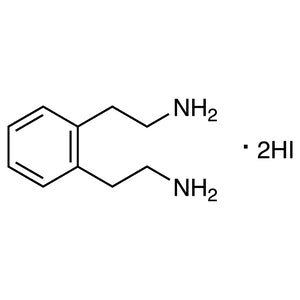
Dihydroiodide TCI B6569
Regular price From Rp 1.988.700,00Regular priceRp 1.405.950,00Sale price From Rp 1.988.700,00 -
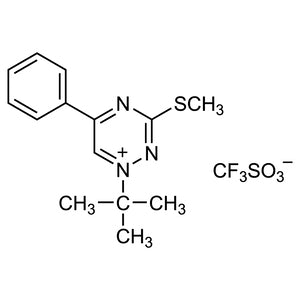
Trifluoromethanesulfonate TCI B7003
Regular price From Rp 1.988.700,00Regular priceRp 1.405.950,00Sale price From Rp 1.988.700,00