TCI S0890 7803-58-9 Sulfamide is a chemical compound widely used as a foundational material in laboratory settings. It serves as a versatile building block in various chemical reactions, contributing to the synthesis of complex organic molecules. Its simple molecular structure plays a crucial role in enabling chemical transformations, making it an essential component in both academic and industrial research. This compound is particularly valued for its ability to participate in substitution, coupling, and reduction reactions, thereby supporting a broad range of synthetic strategies.
The chemical stability and controlled reactivity of sulfamide make it a preferred choice for researchers. Its ability to interact with different functional groups allows for the creation of diverse chemical structures, both heterocyclic and non-heterocyclic. This adaptability is key to its popularity among chemists working on drug development, material science, and chemical engineering. The compound's predictable behavior under various reaction conditions ensures reliable results, enhancing its appeal in laboratory environments.
In Indonesian laboratories, sulfamide is extensively used in both fundamental and applied chemical research. It is commonly integrated into projects focused on the synthesis of organic compounds, especially those with pharmaceutical or industrial applications. Its widespread use reflects its importance as a flexible and reliable reagent in the pursuit of scientific innovation and discovery.
- Organic synthesis projects benefit from sulfamide's ability to participate in substitution and coupling reactions, enabling the creation of complex molecular structures.
- Pharmaceutical research utilizes sulfamide for the development of new drugs, as it can be modified to form various functional groups essential for drug efficacy.
- Material science applications leverage sulfamide's reactivity to synthesize polymers and other advanced materials with tailored properties.
- Analytical chemistry experiments use sulfamide as a reagent in the preparation of standard solutions and in chromatographic analysis.
- Industrial chemical processes incorporate sulfamide to produce intermediates used in the manufacturing of dyes, pesticides, and other specialty chemicals.
| Brand | TCI |
|---|---|
| CAS number | 7803-58-9 |
| Molecular formula | — |
| Purity | — |
| Category | Chemistry > Building Blocks > Non-Heterocyclic Building Blocks |
| Pack sizes | Available in various quantities as per standard laboratory supply options |
| Physical form | Solid, typically in powder or crystalline form |
| Storage | Store in a cool, dry place away from moisture and direct sunlight |
Sulfamide should be stored in a cool, dry environment to maintain its chemical stability. It is recommended to keep it in airtight containers to prevent exposure to moisture, which could affect its reactivity. Laboratory personnel should handle the compound with care, using appropriate personal protective equipment such as gloves and safety goggles. While it is generally stable under normal storage conditions, it should be kept away from strong oxidizing agents to avoid potential chemical interactions. Proper labeling of storage containers is essential to ensure safe handling and prevent accidental misuse. Regular inspection of storage conditions helps maintain the integrity of the compound and ensures its suitability for laboratory applications.
—
Product Categories
Produk Terkait
-
TCI B5774 5,10-Bis(4,4,5,5-tetramethyl-1,3,2-dioxaborolan-2-yl)naphtho[1,2-c:5,6-c']bis([1,2,5]oxadiazole)
Regular price Rp 10.307.850,00Regular priceRp 7.224.000,00Sale price Rp 10.307.850,00 -
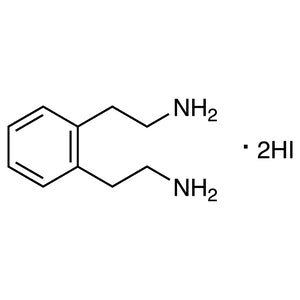
Dihydroiodide TCI B6569
Regular price From Rp 1.988.700,00Regular priceRp 1.405.950,00Sale price From Rp 1.988.700,00 -
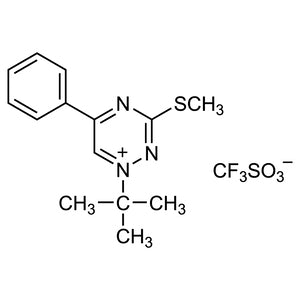
Trifluoromethanesulfonate TCI B7003
Regular price From Rp 1.988.700,00Regular priceRp 1.405.950,00Sale price From Rp 1.988.700,00