Thiophene is a heterocyclic chemical compound featuring an aromatic ring structure containing one sulfur atom. It plays a vital role in laboratory settings as a fundamental building block for the synthesis of complex chemical compounds. Its presence in various scientific fields, including pharmaceuticals, organic materials, and organic chemistry, underscores its importance in research and development. Thiophene is widely used for constructing molecular frameworks that are essential in the development of new drugs and advanced materials. Due to its unique chemical structure, it is a key component in many synthetic pathways.
Thiophene is preferred for its high reactivity, which stems from the sulfur atom in its ring. This reactivity allows for substitution reactions and other critical chemical transformations that are essential in creating new compounds. Its chemical stability under controlled conditions makes it suitable for use in precise experimental environments. However, it is sensitive to oxidation and reacts with other chemicals, requiring careful handling. These properties make it a valuable tool for chemists seeking to manipulate molecular structures with precision.
In Indonesian laboratories, Thiophene is commonly used in organic synthesis and material science research. It is a staple in academic and industrial settings where the development of new compounds is required. Its relatively low boiling and melting points make it easier to handle in experimental processes. The presence of sulfur in its structure gives it unique properties that are not found in typical aromatic compounds, making it indispensable in specialized chemical applications.
TCI brochures (PDF)
- Thiophenes 2026-06-29 · p. 10
Related TCI products
- Organic synthesis is a key application where Thiophene is used to build complex molecular structures, enabling the creation of pharmaceuticals and advanced materials.
- Material science research benefits from Thiophene due to its ability to participate in reactions that form functional organic compounds.
- Pharmaceutical development relies on Thiophene as a building block for synthesizing active pharmaceutical ingredients with specific biological activities.
- Analytical chemistry experiments use Thiophene as a standard compound for testing reaction conditions and chemical behavior.
- Environmental studies incorporate Thiophene to investigate its reactivity and degradation pathways in different chemical environments.
| Brand | TCI |
|---|---|
| CAS number | 110-02-1 |
| Molecular formula | — |
| Purity | — |
| Category | Chemistry > Building Blocks > Heterocyclic Building Blocks |
| Pack sizes | Available in various quantities as per standard laboratory supply |
| Physical form | Liquid |
| Storage | Store in a cool, dark place away from oxidizing agents and direct sunlight |
Thiophene should be stored in a cool, dark environment to maintain its chemical stability. It is recommended to use sealed containers made of glass or inert plastic to prevent contamination and exposure to air. Due to its sensitivity to oxidation, it should be kept away from strong oxidizing agents and reactive substances. Proper ventilation is essential when handling Thiophene to minimize inhalation risks. Laboratory personnel should wear appropriate personal protective equipment, including gloves and safety goggles, when working with this compound. Regular monitoring of storage conditions ensures the integrity and safety of the material during handling and experimentation.
—
Produk Terkait
-
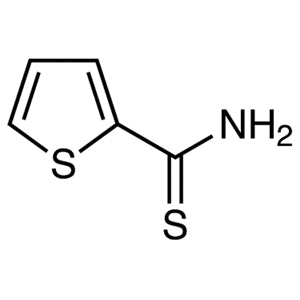
Thiophene-2-carbothioamide TCI T3604
Regular price From Rp 8.613.150,00Regular priceRp 6.038.550,00Sale price From Rp 8.613.150,00 -
Thieno[3,2-b]thiophene-2,5-dicarboxaldehyde TCI T3212
Regular price From Rp 1.351.350,00Regular priceRp 960.750,00Sale price From Rp 1.351.350,00 -
Thieno[2,3-b]thiophene TCI T2729
Regular price From Rp 2.384.550,00Regular priceRp 1.683.150,00Sale price From Rp 2.384.550,00 -
Thieno[3,2-b]thiophene TCI T2513
Regular price From Rp 1.590.750,00Regular priceRp 1.127.700,00Sale price From Rp 1.590.750,00 -
Thiophene-2,5-dicarbaldehyde TCI T2480
Regular price From Rp 1.696.800,00Regular priceRp 1.202.250,00Sale price From Rp 1.696.800,00 -
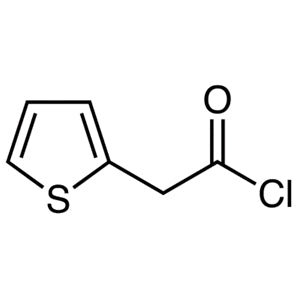
Thiophene-2-acetylChloride TCI T1751
Regular price Rp 1.829.100,00Regular priceRp 1.294.650,00Sale price Rp 1.829.100,00 -
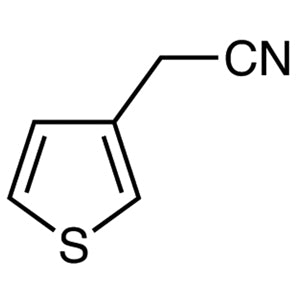
Thiophene-3-acetonitrile TCI T1193
Regular price Rp 1.934.100,00Regular priceRp 1.368.150,00Sale price Rp 1.934.100,00 -
2-(Bromoacetyl)thiophene TCI B5383
Regular price From Rp 1.538.250,00Regular priceRp 1.090.950,00Sale price From Rp 1.538.250,00