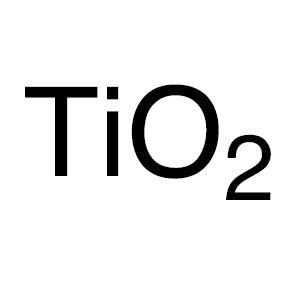
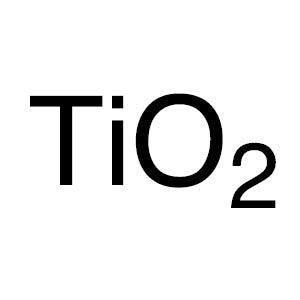
Bis(2,4-pentanedionato)titanium(IV) oxide is a chemical compound widely used in catalytic processes and chemical reactions within laboratory settings. As a titanium complex, it plays a crucial role in facilitating chemical transformations, particularly in organic and inorganic synthesis. Its unique chemical structure allows it to act as an effective catalyst, promoting reactions under various conditions. This compound is especially valuable for researchers working in the field of catalysis and inorganic chemistry due to its versatility and reactivity.
The compound's stability and reactivity make it a preferred choice for many laboratory applications. It exhibits excellent thermal stability, enabling its use in reactions under extreme conditions. Additionally, its ability to bind with various substrates enhances its effectiveness in promoting chemical reactions. The high purity and clean nature of this material ensure reliable results, making it a trusted option for scientific research. These properties contribute to its popularity among chemists and researchers seeking precision in their experiments.
In Indonesian laboratories, this compound is commonly used in research focused on catalysis and inorganic chemistry. It is particularly favored for its performance in redox reactions and synthetic processes. Its reliability and consistent results make it a valuable resource for both academic and industrial research. The compound's properties align well with the needs of laboratories that require high-quality, stable, and reactive materials for their experiments.
TCI brochures (PDF)
- Transition Metal Catalysts 2026-04-10 · p. 4
Related TCI products
- TCI T4118 13463-67-7 Titanium(IV) Oxide, AEROXIDE(regR) P 25
- TCI T4019 1317-80-2 Titanium(IV) Oxide, Rutile (999%, trace metals basis)
- TCI T4018 1317-80-2 Titanium(IV) Oxide, Rutile (9999%, trace metals basis)
- TCI T4017 1317-70-0 Titanium(IV) Oxide, Anatase
- TCI T4010 1344-54-3 Titanium(III) Oxide
- TCI T4009 12137-20-1 Titanium(II) Oxide
- Catalytic reactions in organic synthesis due to its ability to facilitate bond formation and breakage.
- Redox reactions where titanium-based compounds are essential for electron transfer processes.
- Inorganic chemistry experiments requiring stable and reactive catalysts for complex synthesis.
- Research in transition metal complexes, leveraging its unique coordination chemistry properties.
- Industrial chemical processes that demand high-performance catalysts under extreme conditions.
| Brand | TCI |
|---|---|
| CAS number | 14024-64-7 |
| Molecular formula | — |
| Purity | — |
| Category | Chemistry > Catalysis and Inorganic Chemistry > Transition Elements |
| Pack sizes | Available in various quantities as per standard laboratory supply |
| Physical form | Solid powder |
| Storage | Store in a cool, dry place away from moisture and direct sunlight |
This compound should be stored in a cool, dry environment to maintain its chemical integrity and stability. It is recommended to use airtight containers to prevent exposure to moisture and air, which could affect its performance. Due to its reactivity, it should be handled with care, using appropriate personal protective equipment. Storage away from incompatible substances is essential to ensure safety. Regular monitoring of storage conditions will help maintain the compound's effectiveness for laboratory use. Proper labeling and safe handling practices are crucial to prevent any potential hazards in the laboratory setting.
—
Product Categories
Produk Terkait
-
Titanium(IV)Oxide,AEROXIDE(regR)P25 TCI T4118
Regular price Rp 1.220.100,00Regular priceRp 852.600,00Sale price Rp 1.220.100,00 -
Titanium(IV)Oxide,Rutile(999%,tracemetalsbasis) TCI T4019
Regular price From Rp 1.696.800,00Regular priceRp 1.186.500,00Sale price From Rp 1.696.800,00 -
Titanium(IV)Oxide,Rutile(9999%,tracemetalsbasis) TCI T4018
Regular price From Rp 3.419.850,00Regular priceRp 2.390.850,00Sale price From Rp 3.419.850,00 -
Titanium(IV)Oxide,Anatase TCI T4017
Regular price From Rp 795.900,00Regular priceRp 556.500,00Sale price From Rp 795.900,00 -
Titanium(III)Oxide TCI T4010
Regular price From Rp 2.942.100,00Regular priceRp 2.056.950,00Sale price From Rp 2.942.100,00 -
Titanium(II)Oxide TCI T4009
Regular price From Rp 2.809.800,00Regular priceRp 1.964.550,00Sale price From Rp 2.809.800,00 -
Titanium(IV)Oxide TCI T3930
Regular price From Rp 505.050,00Regular priceRp 352.800,00Sale price From Rp 505.050,00 -
Bis[tris(2,4-pentanedionato)titanium(IV)]Hexachlorotitanate(IV) TCI B0855
Regular price Rp 2.094.750,00Regular priceRp 1.464.750,00Sale price Rp 2.094.750,00