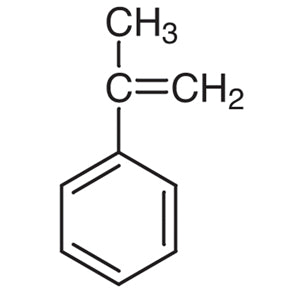
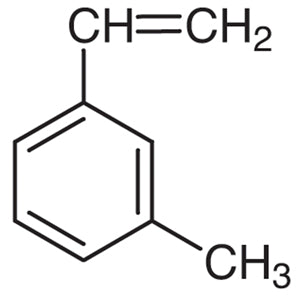
2,4,6-Trimethylstyrene (stabilized with TBC) is a chemical compound widely used in scientific and industrial applications, particularly in the fields of materials science and polymer chemistry. This material serves as a monomer in the synthesis of various polymers, such as polystyrene and related polymers, which exhibit specific mechanical and chemical properties. In laboratory settings, it plays a crucial role in studying polymerization reactions and the development of new materials with broad applications. Its presence in research helps scientists explore the behavior of organic compounds under different reaction conditions.
The compound's chemical stability and resistance to oxidation and degradation make it a preferred choice for laboratory use. The stabilization with TBC ensures that it remains chemically inert for extended periods, reducing the risk of unwanted reactions. This stability is essential for experiments requiring high chemical consistency. Additionally, its solubility in organic solvents simplifies handling and manipulation, making it a versatile reagent for various synthetic processes. These properties contribute to its reliability and efficiency in both academic and industrial research environments.
In Indonesian laboratories, 2,4,6-Trimethylstyrene is commonly used in material science and polymer chemistry research. Educational and research institutions frequently employ this compound to develop new materials with potential applications in industries such as electronics, construction, and biomedical engineering. Its availability and performance make it an essential component in the chemical toolkit of Indonesian scientific communities.
TCI brochures (PDF)
- Biomaterials Research Reagents 2025-02-19 · p. 14
- Monomers 2025-05-28 · p. 15
Related TCI products
- TCI M0429 98-83-9 alpha-Methylstyrene (stabilized with TBC)
- TCI M0428 622-97-9 4-Methylstyrene (stabilized with TBC)
- TCI M0260 100-80-1 3-Methylstyrene (stabilized with TBC)
- TCI M0259 611-15-4 2-Methylstyrene (stabilized with TBC)
- TCI B1877 1746-23-2 4-tert-Butylstyrene (stabilized with TBC)
- TCI V0059 1075-49-6 4-Vinylbenzoic Acid (stabilized with BHT)
- Polymer synthesis and modification: This compound is ideal for creating and modifying polymers due to its reactivity and stability, enabling the production of materials with tailored properties.
- Research on polymerization mechanisms: Its role as a monomer allows scientists to study the kinetics and mechanisms of polymerization reactions under controlled conditions.
- Development of new composite materials: The compound's chemical properties make it suitable for blending with other materials to create advanced composites with enhanced performance.
- Organic synthesis experiments: Its solubility in organic solvents and chemical stability make it a valuable reagent in a wide range of synthetic reactions.
- Teaching and training in polymer chemistry: It is commonly used in academic settings to demonstrate polymerization processes and chemical behavior in undergraduate and graduate courses.
| Brand | TCI |
|---|---|
| CAS number | 769-25-5 |
| Molecular formula | — |
| Purity | — |
| Category | Materials Science > Polymer/Macromolecule Reagents > Monomers |
| Pack sizes | Available in various sizes as per supplier specifications |
| Physical form | Liquid |
| Storage | Store in a cool, dark place away from heat and direct sunlight |
This compound should be stored in a cool, dark location, away from heat and direct sunlight to maintain its chemical stability. It is recommended to use appropriate containers that are resistant to chemical reactions, such as glass or high-density polyethylene vessels. Due to its potential reactivity, it should be handled in a well-ventilated area, and personal protective equipment, including gloves and safety goggles, should be worn at all times. Avoid contact with incompatible substances, and ensure that the storage area is secure to prevent accidental exposure. Proper labeling and storage practices are essential to ensure safety and maintain the integrity of the material during handling and use.
—
Product Categories
Produk Terkait
-
alpha-Methylstyrene(stabilizedwithTBC) TCI M0429
Regular price From Rp 477.750,00Regular priceRp 333.900,00Sale price From Rp 477.750,00 -
4-Methylstyrene(stabilizedwithTBC) TCI M0428
Regular price From Rp 955.500,00Regular priceRp 667.800,00Sale price From Rp 955.500,00 -
3-Methylstyrene(stabilizedwithTBC) TCI M0260
Regular price Rp 2.889.600,00Regular priceRp 2.020.200,00Sale price Rp 2.889.600,00 -
2-Methylstyrene(stabilizedwithTBC) TCI M0259
Regular price Rp 5.009.550,00Regular priceRp 3.502.800,00Sale price Rp 5.009.550,00 -
4-tert-Butylstyrene(stabilizedwithTBC) TCI B1877
Regular price From Rp 530.250,00Regular priceRp 370.650,00Sale price From Rp 530.250,00 -
4-VinylbenzoicAcid(stabilizedwithBHT) TCI V0059
Regular price From Rp 822.150,00Regular priceRp 590.100,00Sale price From Rp 822.150,00 -
VinyltolueneMonomer(m-andp-mixture)(stabilizedwithTBC) TCI V0028
Regular price From Rp 452.550,00Regular priceRp 316.050,00Sale price From Rp 452.550,00 -
4-tert-Butoxystyrene(stabilizedwithTBC) TCI B1443
Regular price From Rp 1.749.300,00Regular priceRp 1.223.250,00Sale price From Rp 1.749.300,00