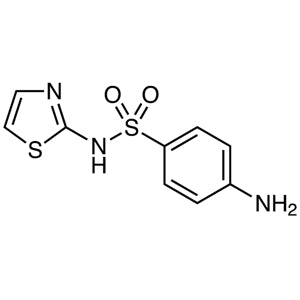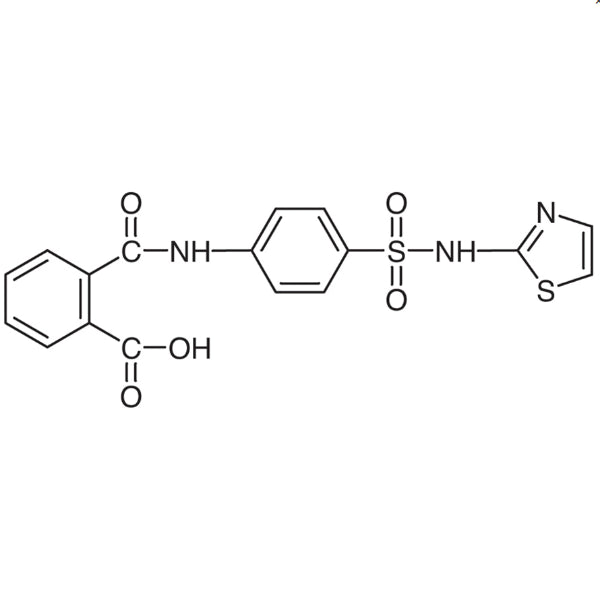
Phthalylsulfathiazole is a chemical compound widely used in laboratory settings, particularly in the fields of biochemistry and medicinal chemistry. It is a key reagent in antibiotic research and the development of pharmacological compounds. Due to its significant antibacterial activity, it plays a crucial role in various scientific investigations aimed at understanding microbial resistance and improving therapeutic agents. This compound is commonly employed in research laboratories for its versatility and reliability in chemical processes.
Phthalylsulfathiazole is valued for its chemical stability under specific conditions and its solubility in organic solvents such as ethyl acetate and acetone. These properties make it ideal for use in a wide range of laboratory procedures, including chemical reactions and quantitative analysis. Its resistance to oxidation further enhances its usability, allowing for extended storage and consistent performance. These characteristics contribute to its popularity among researchers and laboratory professionals.
In Indonesian laboratories, phthalylsulfathiazole is an essential material for pharmaceutical and biomedical research. It is frequently used in academic and industrial settings to support studies on antibiotic mechanisms and drug development. Its availability and reliability make it a preferred choice for institutions and researchers seeking to advance their scientific work in the field of medicinal chemistry.
TCI brochures (PDF)
- Antimicrobials and Antitumor Agents for Research and Experimental Use 2025-04-24 · p. 6
- Pharmaceutical Ingredients for Research and Experimental Use 2026-03-09 · p. 7
- Bacterial Sensitivity Testing: Phthalylsulfathiazole is used to assess the effectiveness of antibiotics against various bacterial strains, aiding in the development of new therapeutic agents.
- Antibiotic Efficacy Evaluation: This compound supports research into how different antibiotics interact with microbial organisms, helping to determine optimal dosages and treatment strategies.
- Pharmaceutical Compound Synthesis: Its chemical properties make it suitable for the synthesis of complex pharmaceutical compounds, contributing to drug development efforts.
- Quantitative Chemical Analysis: Due to its solubility and stability, it is often used in analytical procedures requiring precise measurements and controlled reactions.
- Microbial Resistance Studies: It plays a role in investigating how bacteria develop resistance to antibiotics, supporting the search for more effective treatments.
| Brand | TCI |
|---|---|
| CAS number | 85-73-4 |
| Molecular formula | — |
| Purity | — |
| Category | Life Science > Biochemicals and Reagents > Antibiotics |
| Pack sizes | Available in standard laboratory quantities |
| Physical form | Solid powder |
| Storage | Store in a cool, dry place away from direct sunlight |
Phthalylsulfathiazole should be stored in a cool, dry environment to maintain its chemical stability and prevent degradation. It is recommended to keep it in a sealed container to minimize exposure to moisture and air. Due to its resistance to oxidation, it does not require refrigeration but should be protected from prolonged exposure to light. Laboratory personnel should handle the compound with care, using appropriate personal protective equipment when necessary. Proper labeling and storage conditions ensure the compound remains effective for its intended applications. Regular inspection of storage conditions helps maintain the integrity of the material for extended use in research settings.
—
Product Categories
- Biochemicals and ReagentsAntibioticsAntibiotics (Chemical Structure Class)
- Biochemicals and ReagentsPharmaceutical Research Reagents (for Experimental Use)Antimicrobial Ingredients (for Research and Experimental Use)
- MicrobiologyAntibioticsAntibiotics (Chemical Structure Class)
- Pharmaceutical Development and Drug Discovery ResearchPharmaceutical Research Reagents (for Experimental Use)Antimicrobial Ingredients (for Research and Experimental Use)
- Pharmaceutical Development and Drug Discovery ResearchAntibioticsAntibiotics (Chemical Structure Class)
Produk Terkait
-
Sulfathiazole TCI S0272
Regular price From Rp 505.050,00Regular price -
4-AminosalicylicAcid TCI A0420
Regular price From Rp 769.650,00Regular price -
Sodium4-AminosalicylateDihydrate TCI A0423
Regular price From Rp 875.700,00Regular price -
Wortmannin TCI W0007
Regular price Rp 11.580.450,00Regular price -
ValganciclovirHydrochloride TCI V0158
Regular price From Rp 1.565.550,00Regular price -
ValnemulinHydrochloride TCI V0144
Regular price From Rp 4.929.750,00Regular price -
Sulfamerazine TCI U0176
Regular price From Rp 2.359.350,00Regular price -
SulfadiazineSodium TCI U0171
Regular price Rp 1.167.600,00Regular price