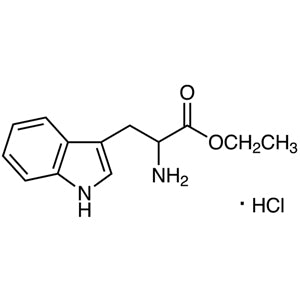
DL-Tryptophan Ethyl Ester Hydrochloride is a chemical compound widely used in laboratory settings for its unique reactivity and structural properties. As an ester derivative of tryptophan, it plays a crucial role in chemical and biochemical experiments, particularly in peptide chemistry. This compound is commonly employed in research involving the synthesis of bioactive molecules, making it an essential tool for scientists working in biotechnology and pharmaceutical development. Its ability to participate in specific chemical reactions under controlled conditions makes it highly versatile in laboratory applications.
The compound’s chemical properties, including its stability and controlled reactivity, make it a preferred choice for researchers. It exhibits solubility in certain organic solvents, which simplifies its handling and manipulation during experimental procedures. These characteristics allow for precise control over reaction conditions, enhancing the accuracy and reproducibility of laboratory results. Additionally, its molecular structure supports its use in various analytical techniques, contributing to its popularity in both academic and industrial research environments.
In Indonesian laboratories, DL-Tryptophan Ethyl Ester Hydrochloride is frequently used in scientific research across multiple disciplines. It is particularly valuable in pharmaceutical and molecular biology studies, where its role in synthesizing bioactive compounds is critical. Institutions and research centers in Indonesia rely on this compound for advancing their work in drug development, nutritional studies, and biochemical analysis. Its consistent performance and reliability make it a trusted material in the scientific community.
TCI brochures (PDF)
- Amino Acids and Peptide Synthesis Reagents 2025-08-14 · p. 28
Related TCI products
- TCI T2981 2899-28-7 L-Tryptophan Ethyl Ester Hydrochloride
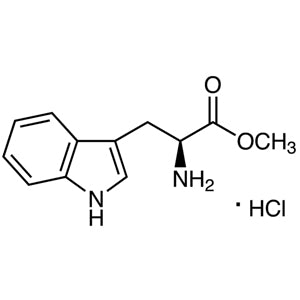
- TCI T2442 14907-27-8 D-Tryptophan Methyl Ester Hydrochloride
- TCI T1657 7524-52-9 L-Tryptophan Methyl Ester Hydrochloride
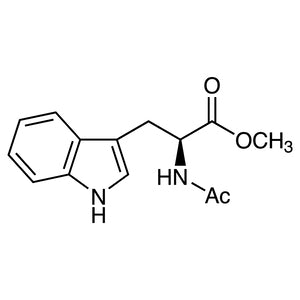
- TCI A3486 2824-57-9 Methyl N-Acetyl-L-tryptophanate
- TCI A0122 2382-80-1 N-Acetyl-L-tryptophan Ethyl Ester
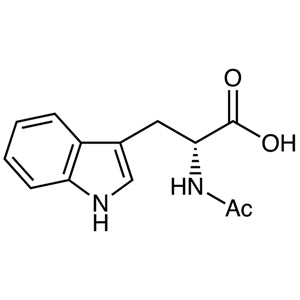
- TCI A0119 2280-01-5 N-Acetyl-D-tryptophan
- Peptide Synthesis: This compound is ideal for synthesizing bioactive peptides due to its reactivity and structural compatibility with peptide chains.
- Biochemical Research: It supports studies on protein interactions and enzymatic reactions, offering a stable and controllable reagent for experiments.
- Drug Development: Its role in creating compounds with biological activity makes it a key component in pharmaceutical research and development.
- Nutritional Studies: It is used in analyzing the metabolic pathways of amino acid derivatives, contributing to understanding dietary and health-related research.
- Organic Chemistry Experiments: Its solubility and reactivity make it suitable for a wide range of organic synthesis reactions in laboratory settings.
| Brand | TCI |
|---|---|
| CAS number | 6519-67-1 |
| Molecular formula | — |
| Purity | — |
| Category | Chemistry > Chemical Biology > Peptide Chemistry |
| Pack sizes | Available in various quantities as per standard laboratory supply |
| Physical form | Solid powder |
| Storage | Store in a cool, dry place away from moisture and light |
DL-Tryptophan Ethyl Ester Hydrochloride should be stored in a cool, dry environment to maintain its chemical stability. It is recommended to keep the compound in a tightly sealed container to prevent exposure to moisture and air, which could affect its reactivity. Suitable storage conditions include a controlled room temperature, typically between 15°C and 25°C, with low humidity levels. Laboratory personnel should handle the compound with care, using appropriate personal protective equipment such as gloves and safety goggles. It is important to ensure that the compound is stored away from incompatible substances to avoid any potential chemical interactions. Proper labeling and storage practices help maintain the integrity and safety of the material in the laboratory setting.
—
Product Categories
Produk Terkait
-
L-TryptophanEthylEsterHydrochloride TCI T2981
Regular price Rp 955.500,00Regular price -
D-TryptophanMethylEsterHydrochloride TCI T2442
Regular price From Rp 610.050,00Regular price -
L-TryptophanMethylEsterHydrochloride TCI T1657
Regular price Rp 848.400,00Regular price -
MethylN-Acetyl-L-tryptophanate TCI A3486
Regular price From Rp 1.776.600,00Regular price -
N-Acetyl-L-tryptophanEthylEster TCI A0122
Regular price Rp 1.140.300,00Regular price -
N-Acetyl-D-tryptophan TCI A0119
Regular price From Rp 769.650,00Regular price -
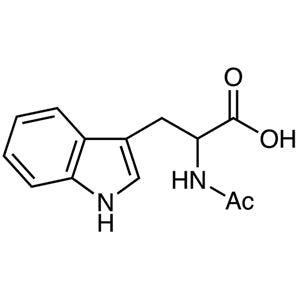
N-Acetyl-DL-tryptophan TCI A0120
Regular price From Rp 637.350,00Regular price -
N-Acetyl-L-tryptophan TCI A0121
Regular price From Rp 477.750,00Regular price