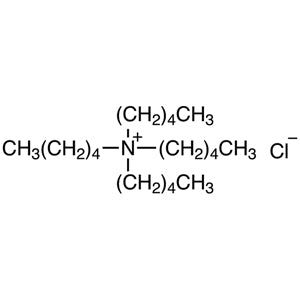
Trioctylmethylammonium Chloride (R=C8-C10), with CAS number 63393-96-4, is a phase-transfer catalyst widely used in chemical reactions to accelerate the transfer of ions or molecules between different phases. This material plays a crucial role in laboratory settings where reactions require interaction between aqueous and organic phases. Its unique structure enables it to act as a mediator, overcoming solubility limitations and facilitating otherwise difficult chemical reactions. By bridging two distinct phases, it enhances reaction efficiency and reduces the need for excessive catalysts or prolonged reaction times.
One of the key properties that make this material a preferred choice is its stability and reusability under controlled laboratory conditions. It maintains its effectiveness over multiple uses, making it a cost-effective and reliable option for researchers. Additionally, its ability to reduce the need for other catalysts and shorten reaction times makes it highly desirable in synthetic chemistry applications. The material is also non-toxic and safe to handle under standard laboratory protocols, ensuring a balance between performance and safety.
In Indonesian laboratories, this phase-transfer catalyst is commonly used in organic synthesis and catalytic research. It is particularly favored in studies involving interfacial reactions, such as the production of chemical compounds and analytical procedures. Its versatility and efficiency make it a staple in both academic and industrial research settings, supporting a wide range of chemical processes and applications.
TCI brochures (PDF)
- Metal Extractants for Lithium Ion Battery Recycling 2024-01-16 · p. 1
- Quaternary Ammonium Salts 2025-11-10 · p. 5
Related TCI products
- TCI B1689 69221-14-3 N-Benzylcinchoninium Chloride [Chiral Phase-Transfer Catalyst]
- TCI B1684 77481-82-4 N-Benzylquinidinium Chloride [Chiral Phase-Transfer Catalyst]
- TCI B1683 69257-04-1 N-Benzylcinchonidinium Chloride [Chiral Phase-Transfer Catalyst]
- TCI A0208 139-08-2 Benzyldimethyltetradecylammonium Chloride
- TCI T4175 1516-27-4 N,N,N-Trimethylprop-2-en-1-aminium Chloride
- TCI T2873 56375-79-2 Tributylmethylammonium Chloride (ca. 75% in water)
- Organic synthesis reactions benefit from this catalyst as it enhances the efficiency of interfacial reactions between aqueous and organic phases.
- It is ideal for catalytic processes that require phase transfer, enabling reactions that would otherwise be limited by solubility issues.
- In analytical chemistry, it aids in the separation and detection of compounds by facilitating interactions between different phases.
- It supports the development of new chemical compounds by improving reaction rates and reducing the need for additional reagents.
- Its stability and reusability make it suitable for long-term research projects involving repeated chemical transformations.
| Brand | TCI |
|---|---|
| CAS number | 63393-96-4 |
| Molecular formula | — |
| Purity | — |
| Category | Chemistry > Synthetic Reagents > Phase Transfer Catalysts |
| Pack sizes | Available in various quantities as per standard laboratory requirements |
| Physical form | Solid powder |
| Storage | Store in a cool, dry place away from moisture and direct sunlight |
This material should be stored in a cool, dry environment to maintain its chemical integrity and effectiveness. It is recommended to use airtight containers to prevent moisture absorption, which could affect its performance. Handling should be done with appropriate personal protective equipment, such as gloves and safety goggles, to ensure safety during use. The material is non-hazardous under normal conditions but should be kept away from incompatible substances. It is stable under standard laboratory storage conditions and does not require special refrigeration. Regular inspection of storage containers is advised to ensure they remain sealed and free from contamination.
—
Produk Terkait
-
N-BenzylcinchoniniumChloride[ChiralPhase-TransferCatalyst] TCI B1689
Regular price Rp 1.801.800,00Regular priceRp 1.275.750,00Sale price Rp 1.801.800,00 -
N-BenzylquinidiniumChloride[ChiralPhase-TransferCatalyst] TCI B1684
Regular price Rp 8.770.650,00Regular priceRp 6.148.800,00Sale price Rp 8.770.650,00 -
N-BenzylcinchonidiniumChloride[ChiralPhase-TransferCatalyst] TCI B1683
Regular price Rp 3.975.300,00Regular priceRp 2.795.100,00Sale price Rp 3.975.300,00 -
BenzyldimethyltetradecylammoniumChloride TCI A0208
Regular price From Rp 662.550,00Regular priceRp 478.800,00Sale price From Rp 662.550,00 -
N,N,N-Trimethylprop-2-en-1-aminiumChloride TCI T4175
Regular price From Rp 1.538.250,00Regular priceRp 1.090.950,00Sale price From Rp 1.538.250,00 -
TributylmethylammoniumChloride(ca.75%inwater) TCI T2873
Regular price From Rp 900.900,00Regular priceRp 645.750,00Sale price From Rp 900.900,00 -
TetrapropylammoniumChloride TCI T2106
Regular price Rp 1.908.900,00Regular priceRp 1.350.300,00Sale price Rp 1.908.900,00 -
TetraamylammoniumChloride TCI T1433
Regular price From Rp 3.551.100,00Regular priceRp 2.499.000,00Sale price From Rp 3.551.100,00