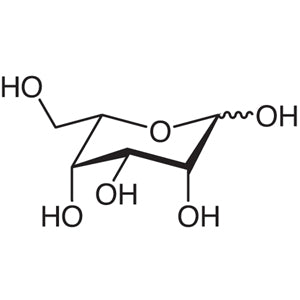
D-(+)-Talose is a naturally occurring sugar belonging to the group of monosaccharides. It plays a crucial role in laboratory settings, particularly in chemical and biological research. This compound is widely used in studies focused on the structure and function of carbohydrates, offering a valuable tool for understanding molecular interactions and biochemical processes. Its unique chemical properties make it an essential component in various experimental protocols, supporting both fundamental and applied research in the field of glycoscience.
D-(+)-Talose is preferred due to its stable chemical properties and ability to interact with a wide range of reagents. Its solubility in organic solvents simplifies purification and analysis procedures, making it highly versatile for laboratory use. The compound’s consistent physical and chemical characteristics ensure reliable results in experiments, which is vital for scientific reproducibility. Additionally, its structural similarity to glucose allows for comparative studies, enhancing its utility in both academic and industrial research environments.
In Indonesian laboratories, D-(+)-Talose is commonly used by researchers in universities and research institutions. It is frequently employed in molecular interaction studies, drug development, and analytical chemistry. Its availability and reliability make it a go-to material for scientists working on complex chemical synthesis and enzymatic reactions. Its role in supporting diverse research areas underscores its importance in the scientific community across Indonesia.
TCI brochures (PDF)
- Enzymatic Reaction Studies: D-(+)-Talose serves as a substrate for enzymatic reactions, enabling researchers to investigate enzyme kinetics and substrate specificity in biochemical processes.
- Glycoscience Research: Its structural similarity to glucose makes it ideal for studying carbohydrate metabolism and glycosylation pathways in biological systems.
- Drug Development: It is used in the synthesis of complex organic compounds, supporting the development of pharmaceuticals and bioactive molecules.
- Molecular Interaction Analysis: Due to its chemical stability and solubility, it is suitable for experiments involving molecular binding and interaction studies.
- Analytical Chemistry: Its solubility in organic solvents facilitates separation and analysis techniques such as chromatography and spectroscopy.
| Brand | TCI |
|---|---|
| CAS number | 2595-98-4 |
| Molecular formula | — |
| Purity | — |
| Category | Chemistry > Chemical Biology > Glycoscience |
| Pack sizes | Available in various quantities as per supplier specifications |
| Physical form | Powder |
| Storage | Store in a cool, dry place away from moisture and light |
D-(+)-Talose should be stored in a cool, dry environment to maintain its chemical stability and prevent degradation. It is recommended to keep the material in a sealed container to avoid exposure to moisture and air, which can affect its purity and usability. Due to its organic nature, it should be handled in a well-ventilated area to minimize inhalation risks. Laboratory personnel should wear appropriate personal protective equipment, such as gloves and safety goggles, when handling this compound. Proper storage and handling ensure the material remains effective for research applications and maintains its integrity over time.
—
Produk Terkait
-
L-(-)-Talose TCI T1767
Regular price Rp 10.122.000,00Regular priceRp 7.093.800,00Sale price Rp 10.122.000,00 -
D-Talitol TCI T1398
Regular price Rp 4.796.400,00Regular priceRp 3.369.450,00Sale price Rp 4.796.400,00 -
L-Tagatose TCI T2535
Regular price Rp 3.763.200,00Regular priceRp 2.647.050,00Sale price Rp 3.763.200,00 -
D-Tagatose TCI T1501
Regular price From Rp 1.776.600,00Regular priceRp 1.257.900,00Sale price From Rp 1.776.600,00 -
Icariin TCI I0862
Regular price From Rp 1.881.600,00Regular priceRp 1.331.400,00Sale price From Rp 1.881.600,00 -
D-(-)-Arabinose TCI A0513
Regular price From Rp 1.192.800,00Regular priceRp 849.450,00Sale price From Rp 1.192.800,00 -
DL-Arabinose TCI A0514
Regular price From Rp 1.272.600,00Regular priceRp 905.100,00Sale price From Rp 1.272.600,00 -
L-(+)-Arabinose TCI A0515
Regular price From Rp 1.167.600,00Regular priceRp 831.600,00Sale price From Rp 1.167.600,00