Thiocyanuric Acid (TCI T0935), with the CAS number 638-16-4, is a chemical compound widely used in laboratory settings for its versatility in organic synthesis. It serves as a key building block in the creation of heterocyclic compounds, which are essential in pharmaceutical and industrial applications. Its unique chemical structure allows it to participate in various reaction mechanisms, making it a valuable tool for researchers working on complex molecular designs. In the lab, Thiocyanuric Acid is often employed in substitution and coupling reactions, contributing to the development of new chemical entities and enhancing the efficiency of synthetic pathways.
The chemical properties of Thiocyanuric Acid make it a preferred choice for many synthetic processes. It exhibits chemical stability under controlled conditions, although it is highly sensitive to moisture and air exposure. This sensitivity necessitates careful handling and storage to maintain its reactivity and effectiveness. Its ability to engage in reactions such as Friedel-Crafts, substitution, and heterocyclic formation highlights its importance in organic chemistry. These characteristics make it a reliable and essential reagent for both academic and industrial research.
In Indonesian laboratories, Thiocyanuric Acid is commonly used in pure and applied chemical research. It is frequently found in chemical, pharmaceutical, and industrial laboratories, where it supports the development of new compounds and materials. Local researchers rely on this compound for its predictable behavior and effectiveness in various synthetic protocols, making it a staple in the chemical supply chain of the region.
- Organic synthesis of heterocyclic compounds due to its unique chemical structure and reactivity.
- Facilitating substitution and coupling reactions in the development of complex molecular structures.
- Supporting pharmaceutical research in the creation of drug molecules with specific functional groups.
- Enhancing the efficiency of chemical processes in industrial laboratories through its versatile reactivity.
- Being a key reagent in the synthesis of materials used in polymer and coating industries.
| Brand | TCI |
|---|---|
| CAS number | 638-16-4 |
| Molecular formula | — |
| Purity | — |
| Category | Chemistry > Building Blocks > Heterocyclic Building Blocks |
| Pack sizes | Available in various quantities as per supplier specifications |
| Physical form | Solid |
| Storage | Requires dry, cool, and well-ventilated conditions |
Thiocyanuric Acid should be stored in a dry, cool, and well-ventilated area to prevent moisture and air exposure, which can degrade its reactivity. It is recommended to use airtight containers made of glass or high-density polyethylene to maintain its chemical integrity. Due to its sensitivity, it should be handled with care using appropriate personal protective equipment such as gloves and safety goggles. Avoid direct contact with skin and inhalation of vapors. Ensure proper ventilation in the workspace to minimize exposure risks. Regular monitoring of storage conditions is essential to maintain the compound's effectiveness and safety in laboratory settings.
—
Produk Terkait
-
TCI B5774 5,10-Bis(4,4,5,5-tetramethyl-1,3,2-dioxaborolan-2-yl)naphtho[1,2-c:5,6-c']bis([1,2,5]oxadiazole)
Regular price Rp 10.307.850,00Regular priceRp 7.224.000,00Sale price Rp 10.307.850,00 -
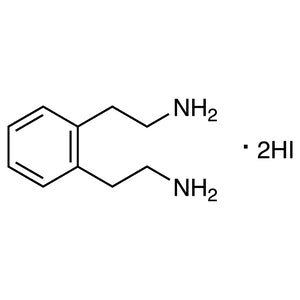
Dihydroiodide TCI B6569
Regular price From Rp 1.988.700,00Regular priceRp 1.405.950,00Sale price From Rp 1.988.700,00 -
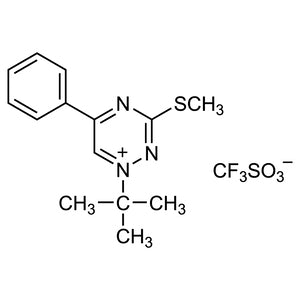
Trifluoromethanesulfonate TCI B7003
Regular price From Rp 1.988.700,00Regular priceRp 1.405.950,00Sale price From Rp 1.988.700,00