

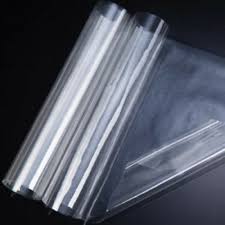
Nafion Membrane 117 (20 x 20 cm) from Yunji is a proton exchange membrane made from a perfluorosulfonic acid polymer, a material widely used in electrochemistry and energy research. The membrane works as a solid electrolyte and as a separator between two electrode compartments. Hydrogen ions can pass through it, while gases and electrons are held back. In the laboratory, Nafion is a core component of fuel cells, water electrolyzers, redox flow batteries and many research electrochemical cells.
Researchers choose Nafion because it pairs good proton conductivity when hydrated with high chemical resistance. Its fluorinated polymer backbone holds up in harsh oxidative and acidic environments, and the sulfonic acid groups on its side chains provide the pathways for proton transport. The 117 grade is one of the thicker variants in the Nafion family. This makes it mechanically robust and tends to reduce crossover of fuel or active species through the membrane. The 20 x 20 cm sheet gives you room to cut pieces that match the dimensions of your test cells.
Renewable energy research in Indonesia keeps growing, from green hydrogen production and fuel cells to energy storage systems. University electrochemistry groups, government research institutes and industrial R&D laboratories need dependable membrane materials to build and test prototype cells. A full Nafion 117 sheet lets a team prepare several membrane pieces for repeated experiments, compare cell configurations, and replace membranes between test runs. It suits both teaching laboratories and advanced research projects working on clean energy conversion and storage.
- Proton exchange membrane fuel cells: the membrane carries protons from anode to cathode while keeping hydrogen and oxygen apart, which makes it the central component of membrane electrode assemblies.
- Water electrolysis for hydrogen production: its chemical resistance and proton conductivity let it separate hydrogen and oxygen evolution compartments in research electrolyzers under acidic, oxidative conditions.
- Redox flow battery research: the membrane divides the two electrolyte reservoirs and allows charge-balancing ion transport, while the thicker 117 grade helps limit crossover of active species.
- General electrochemical cell studies: researchers use it as a separator in H-type and divided cells so that products formed at each electrode stay in their own compartment during experiments.
- Membrane and materials research: the sheet works as a reference or baseline membrane when comparing newly developed ion exchange materials, coatings or composite membranes in performance and durability testing.
| Brand | Yunji |
|---|---|
| CAS number | — |
| Molecular formula | — |
| Purity | — |
| Category | Yunji |
| Pack sizes | — |
| Physical form | flat polymer membrane sheet that can be cut to the required cell dimensions |
| Storage | keep flat, clean and protected from dust and contamination in a sealed package |
- Product: Nafion Membrane 117, perfluorosulfonic acid proton exchange membrane
- Sheet size: 20 x 20 cm
Store the membrane flat in its original packaging or a clean sealed bag, at room temperature, away from direct sunlight, heat sources, dust and chemical vapors. Avoid folding, creasing or placing heavy objects on the sheet, since physical damage can create pinholes that compromise cell performance. Handle the membrane with clean gloves and tweezers to prevent contamination from skin oils. Cut it with clean, sharp tools on a clean surface. Follow your laboratory's established procedure for any pretreatment or hydration before use, and dispose of used membranes according to local laboratory waste regulations.
—
Produk Terkait
-
YJ Electrolyte LiPF6 for Lithium-ion Battery R&D
Regular price From Rp 3.639.300,00Regular price -
YJ Carbon Super P For Lithium Ion Batteries
Regular price From Rp 55.125,00Regular price -
YJ 1 M NaCLO4 in EC:DEC 1:1 v/v
Regular price Rp 4.533.900,00Regular price -
YJ PVDF Binder (25 gr)
Regular price Rp 611.887,50Regular price -
YJ Cu Foil 9 um (200 x 1000 mm)
Regular price Rp 2.073.750,00Regular price -
YJ Sagger 410 mL (150*150*40) mm
Regular price Rp 1.086.750,00Regular price -
YJ Cylinder Cell Semi-Automatic Winding Machine
Regular price Rp 400.429.575,00Regular price -
YJ Three-layer single-door vacuum oven
Regular price Rp 200.737.845,00Regular price


