

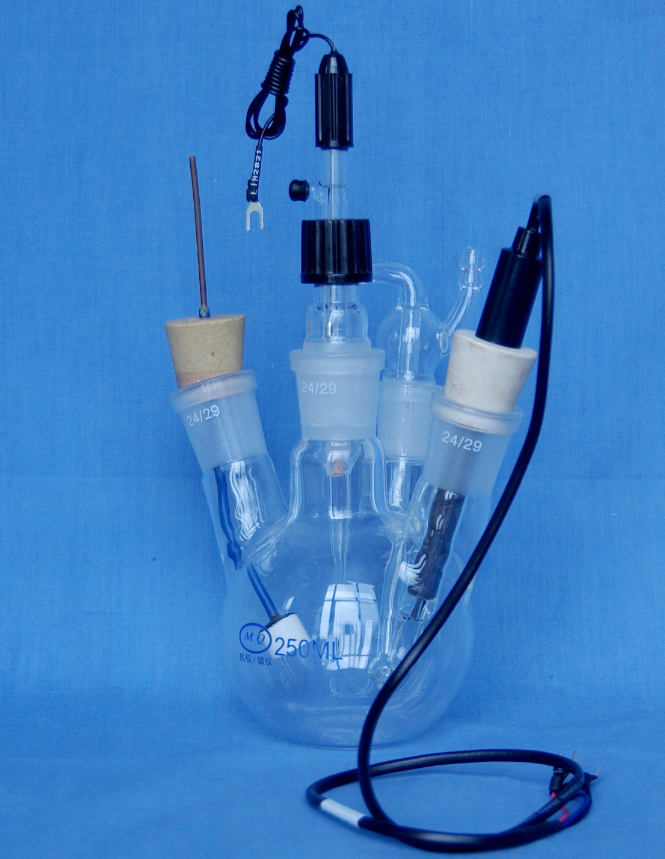
The CS930 Corrosion Cell, 5 ports is a laboratory instrument designed for measuring corrosion rates on various types of metals and materials. It is an essential tool in electrochemical corrosion testing, providing accurate and efficient results in contaminated or changing environments. This device plays a crucial role in material research, industrial manufacturing, and product quality testing by enabling the analysis of corrosion behavior under controlled conditions. Its 500mL capacity allows for simultaneous testing of multiple samples, significantly speeding up the analysis process. The CS930 Corrosion Cell is built with precision and reliability, ensuring consistent and accurate measurements. It is particularly useful in environments where corrosion is a critical factor, such as in chemical processing or environmental monitoring.
The CS930 Corrosion Cell is preferred due to its ergonomic design and ease of use, making it accessible for both experienced and novice researchers. It includes all necessary electrodes in one package, eliminating the need for additional components and reducing setup time. The construction material is resistant to corrosion and chemical exposure, ensuring durability and long-term performance. Its ability to deliver consistent and reliable results makes it a trusted choice in laboratories requiring precise corrosion data. The device is also designed to minimize measurement errors, enhancing the accuracy of experimental outcomes.
In Indonesian laboratories, the CS930 Corrosion Cell is widely used in material research, product quality testing, and technological development. It is particularly relevant in industries such as construction, manufacturing, and environmental science. Its versatility and reliability make it an essential tool for researchers and engineers seeking to understand and mitigate corrosion effects in various applications. The device supports both academic and industrial research, contributing to the advancement of material science and engineering practices in Indonesia.
Related products
- CS310M Single channel models (ordinary benchtope type) (±2A,±10V)
- CS350M CORRRTEST SINGLE CHANNEL MODELS EIS / POTENTIOSTAT / GALVANOSTAT
- CS900 Saturated Calomel Electrode
- CS901 Ag/AgCl reference electrode "Ø4mm/Ø6mm 3.5M KCl refilling solution"
- CS902 Hg/HgO reference electrode
- CS903 Mercury/Mercurous sulfate electrode
- Material Research: The CS930 Corrosion Cell is ideal for studying the corrosion behavior of different metals and alloys, enabling researchers to evaluate material performance under various conditions.
- Industrial Manufacturing: It is used to assess the durability of materials used in manufacturing processes, ensuring that products meet quality and safety standards.
- Product Quality Testing: This device supports the evaluation of corrosion resistance in consumer goods, helping manufacturers ensure product longevity and reliability.
- Environmental Monitoring: It is used to measure the impact of environmental factors on metal surfaces, aiding in the development of protective coatings and corrosion prevention strategies.
- Educational Institutions: The CS930 Corrosion Cell is a valuable tool for teaching electrochemical corrosion principles, supporting both undergraduate and postgraduate research in material science.
| Brand | Corrtest |
|---|---|
| CAS number | — |
| Molecular formula | — |
| Purity | — |
| Category | Corrtest |
| Pack sizes | 500mL |
| Physical form | Corrosion Cell with integrated electrodes |
| Storage | Store in a cool, dry place away from direct sunlight and moisture |
The CS930 Corrosion Cell should be stored in a cool, dry environment to prevent damage from humidity and temperature fluctuations. It is recommended to keep the device in a sealed container to protect it from dust and contaminants. Regular inspection of the electrodes and internal components is advised to ensure optimal performance. Avoid exposing the corrosion cell to extreme temperatures or corrosive substances that could degrade its functionality. Proper handling and storage are essential to maintain the accuracy and longevity of the instrument. Always ensure that the device is cleaned and maintained according to the manufacturer's guidelines to ensure reliable results in laboratory testing.
—
Produk Terkait
-
CS310M Single channel models (ordinary benchtope type) (±2A,±10V)
Regular price Rp 129.438.000,00Regular price -
CS350M CORRRTEST SINGLE CHANNEL MODELS EIS / POTENTIOSTAT / GALVANOSTAT
Regular price Rp 167.884.000,00Regular price -
CS900 Saturated Calomel Electrode
Regular price Rp 2.066.000,00Regular price -
CS901 Ag/AgCl reference electrode "Ø4mm/Ø6mm 3.5M KCl refilling solution"
Regular price Rp 2.149.000,00Regular price -
CS902 Hg/HgO reference electrode
Regular price Rp 3.526.000,00Regular price -
CS903 Mercury/Mercurous sulfate electrode
Regular price Rp 2.341.000,00Regular price -
CS905 Non-aqueous Ag/Ag+ reference electrode
Regular price Rp 2.149.000,00Regular price -
CS910 Platinum conductivity electrode
Regular price Rp 3.030.000,00Regular price


