

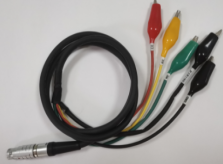
The CS952 Electrode Cable from Corrtest connects an electrochemical instrument, such as a potentiostat or electrochemical workstation, to the electrodes in an electrochemical cell. During electrochemical measurements, this cable carries the potential and current signals between the instrument and the working electrode, reference electrode, and counter electrode. Because cable quality affects how clean and accurate the recorded data is, it plays a significant role in both electrochemistry and corrosion laboratories, where reliable signal transfer is needed for meaningful results.
A good electrode cable has to provide a stable electrical connection and resist noise interference, because electrochemical measurements often involve very small currents. Using a cable from the same manufacturer as the instrument, in this case Corrtest, helps ensure that the connectors and configuration match the Corrtest instrument in use. This avoids the compatibility uncertainty that can come with generic cables. The CS952 is also useful as a replacement part when an existing cable becomes worn, broken, or corroded after exposure to electrolyte solutions and chemical vapours in the laboratory.
In Indonesia, the CS952 is relevant to corrosion laboratories at engineering universities, to materials and energy research institutions, and to other laboratories that run Corrtest electrochemical instruments for routine testing or research. Laboratories that depend on continuous electrochemical work benefit from keeping a matching spare cable available, so that a damaged or degraded cable does not interrupt ongoing experiments, student practicals, or research projects while a replacement is sourced.
Related products
- CS310M Single channel models (ordinary benchtope type) (±2A,±10V)
- CS350M CORRRTEST SINGLE CHANNEL MODELS EIS / POTENTIOSTAT / GALVANOSTAT
- CS900 Saturated Calomel Electrode
- CS901 Ag/AgCl reference electrode "Ø4mm/Ø6mm 3.5M KCl refilling solution"
- CS902 Hg/HgO reference electrode
- CS903 Mercury/Mercurous sulfate electrode
- Corrosion testing: the cable connects the Corrtest instrument to the electrodes in a corrosion cell and carries the potential and current signals needed for reliable corrosion measurements.
- Potentiostat and electrochemical workstation connection: as a Corrtest cable, it is designed to match the connectors and configuration of Corrtest instruments, which reduces compatibility problems during setup.
- Low-current electrochemical measurements: a stable connection that resists noise interference is important when signals are very small, and that is the job this cable does in the measurement chain.
- Three-electrode cell setups: the cable links the instrument to the working, reference, and counter electrodes, so each electrode's signal reaches the instrument through a dedicated, consistent connection.
- Replacement of worn or damaged cables: laboratories can use the CS952 to replace cables that are worn, broken, or corroded from exposure to electrolytes and chemical vapours, which restores reliable data acquisition.
| Brand | Corrtest |
|---|---|
| CAS number | not applicable (instrument accessory) |
| Molecular formula | — |
| Purity | — |
| Category | Corrtest |
| Pack sizes | — |
| Physical form | electrode cable for connecting an electrochemical instrument to cell electrodes |
| Storage | keep dry, clean, and away from electrolyte solutions and corrosive vapours when not in use |
- Product: CS952 Electrode Cable
Store the CS952 Electrode Cable in a clean, dry place at normal room conditions, away from electrolyte solutions, acids, and chemical vapours that could corrode the connectors or clips. A closed drawer, cabinet, or the instrument's accessory case is a suitable place to keep it. Coil the cable loosely without sharp bends or kinks, and do not pull on it by the leads. Before each measurement, check the connectors and insulation for wear, damage, or corrosion. After use, wipe any splashed solution off the clips and leads and let them dry fully. Keep the cable connections dry during experiments, and follow standard laboratory electrical safety practice when connecting it to or disconnecting it from the instrument.
—
Produk Terkait
-
CS310M Single channel models (ordinary benchtope type) (±2A,±10V)
Regular price Rp 129.438.000,00Regular price -
CS350M CORRRTEST SINGLE CHANNEL MODELS EIS / POTENTIOSTAT / GALVANOSTAT
Regular price Rp 167.884.000,00Regular price -
CS900 Saturated Calomel Electrode
Regular price Rp 2.066.000,00Regular price -
CS901 Ag/AgCl reference electrode "Ø4mm/Ø6mm 3.5M KCl refilling solution"
Regular price Rp 2.149.000,00Regular price -
CS902 Hg/HgO reference electrode
Regular price Rp 3.526.000,00Regular price -
CS903 Mercury/Mercurous sulfate electrode
Regular price Rp 2.341.000,00Regular price -
CS905 Non-aqueous Ag/Ag+ reference electrode
Regular price Rp 2.149.000,00Regular price -
CS910 Platinum conductivity electrode
Regular price Rp 3.030.000,00Regular price


