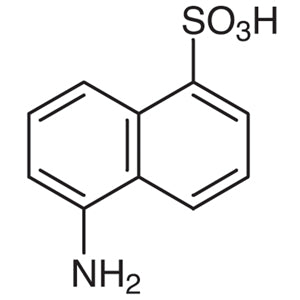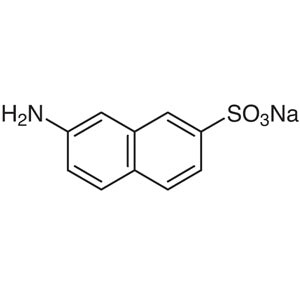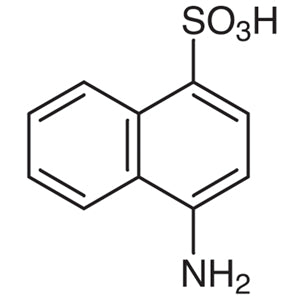
4-Amino-1-naphthalenesulfonic Acid is a versatile chemical compound widely used in organic synthesis reactions within laboratory settings. This compound features an amino group and a sulfonic acid group attached to a naphthalene ring, making it a valuable building block for creating complex molecules. Its structural characteristics enable it to participate in various chemical reactions, making it essential for researchers working in synthetic chemistry. Due to its reactivity and stability, it is commonly used in the development of dyes, pharmaceuticals, and industrial chemicals.
The compound's chemical properties, including its ability to react with a wide range of reagents such as acids, bases, and organic solvents, make it a preferred choice for synthetic chemists. Its stability under different reaction conditions allows for consistent results in laboratory experiments. Additionally, its ability to form bonds with various functional groups enhances its applicability in diverse chemical processes. These features make it a reliable and efficient material for chemical synthesis in both academic and industrial environments.
In Indonesian laboratories, 4-Amino-1-naphthalenesulfonic Acid is frequently used in research projects related to organic chemistry. Its availability and chemical versatility make it a standard component in many experimental setups. Researchers in Indonesia rely on this compound for its predictable behavior and compatibility with various synthetic pathways. Its role in creating new compounds with specific properties supports ongoing scientific advancements in the region.
Related TCI products
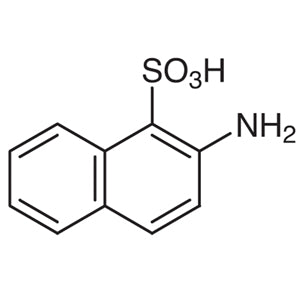
- TCI A0343 81-16-3 2-Amino-1-naphthalenesulfonic Acid
- TCI A0346 119-79-9 5-Amino-2-naphthalenesulfonic Acid
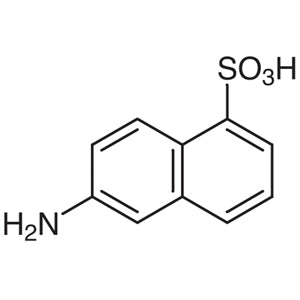
- TCI A0347 81-05-0 6-Amino-1-naphthalenesulfonic Acid
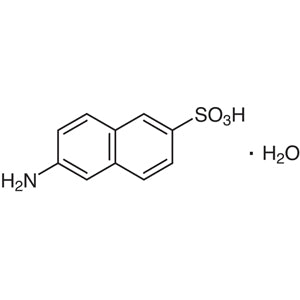
- TCI A0348 93-00-5 6-Amino-2-naphthalenesulfonic Acid Monohydrate
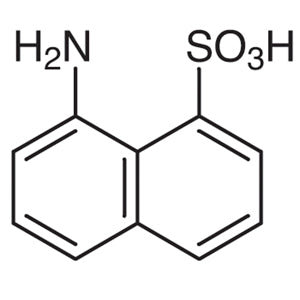
- TCI A0350 82-75-7 8-Amino-1-naphthalenesulfonic Acid
- TCI A0356 119-28-8 8-Amino-2-naphthalenesulfonic Acid
- Organic synthesis is a primary application where this compound serves as a key building block for creating complex molecules due to its reactivity and structural versatility.
- Dye development benefits from its ability to participate in reactions that produce colored compounds, making it essential for the creation of synthetic dyes.
- Pharmaceutical research utilizes this compound for the synthesis of drug molecules, as its functional groups can be modified to achieve desired pharmacological properties.
- Industrial chemical production relies on this compound for the manufacture of various chemical products, including surfactants and intermediates.
- Analytical chemistry uses this compound as a reference material due to its stability and predictable chemical behavior in various experimental conditions.
| Brand | TCI |
|---|---|
| CAS number | 84-86-6 |
| Molecular formula | — |
| Purity | — |
| Category | Chemistry > Building Blocks > Non-Heterocyclic Building Blocks |
| Pack sizes | Available in various quantities as per supplier specifications |
| Physical form | Solid powder |
| Storage | Store in a cool, dry place away from moisture and direct sunlight |
This compound should be stored in a cool, dry environment to maintain its chemical stability. It is recommended to keep it in a sealed container to prevent exposure to moisture and air. Due to its chemical reactivity, it should be handled with appropriate personal protective equipment, such as gloves and safety goggles. Avoid contact with strong acids or bases to prevent unwanted reactions. Ensure proper ventilation when working with this material to minimize inhalation risks. Regular monitoring of storage conditions is advised to ensure the compound remains in optimal condition for use in laboratory applications.
—
Produk Terkait
-
2-Amino-1-naphthalenesulfonicAcid TCI A0343
Regular price Rp 477.750,00Regular priceRp 333.900,00Sale price Rp 477.750,00 -
5-Amino-2-naphthalenesulfonicAcid TCI A0346
Regular price Rp 717.150,00Regular priceRp 500.850,00Sale price Rp 717.150,00 -
6-Amino-1-naphthalenesulfonicAcid TCI A0347
Regular price Rp 955.500,00Regular priceRp 667.800,00Sale price Rp 955.500,00 -
6-Amino-2-naphthalenesulfonicAcidMonohydrate TCI A0348
Regular price Rp 1.405.950,00Regular priceRp 982.800,00Sale price Rp 1.405.950,00 -
8-Amino-1-naphthalenesulfonicAcid TCI A0350
Regular price Rp 1.008.000,00Regular priceRp 704.550,00Sale price Rp 1.008.000,00 -
8-Amino-2-naphthalenesulfonicAcid TCI A0356
Regular price Rp 1.431.150,00Regular priceRp 1.000.650,00Sale price Rp 1.431.150,00 -
5-Amino-1-naphthalenesulfonicAcid TCI A0345
Regular price Rp 2.016.000,00Regular priceRp 1.409.100,00Sale price Rp 2.016.000,00 -
Sodium7-Amino-2-naphthalenesulfonate TCI A0355
Regular price Rp 1.193.850,00Regular priceRp 834.750,00Sale price Rp 1.193.850,00