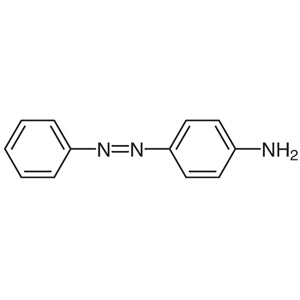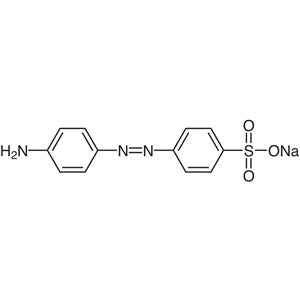
Sodium 4-Aminoazobenzene-4'-sulfonate is a chemical compound widely used in laboratory settings for its versatile applications in organic chemistry and synthetic reactions. This compound serves as a key building block in the synthesis of dyes, pigments, and other chemically reactive substances. Its molecular structure contains an azo group, which acts as a bridge between two aromatic rings, making it highly functional in chemical reactions. Due to its unique chemical properties, it is a valuable reagent in both academic and industrial research environments.
The compound is known for its stability under controlled conditions, yet it remains highly reactive to environmental factors such as temperature and humidity. Its ability to form complexes with various ligands enhances its utility in the synthesis of complex molecules. This reactivity and structural versatility make it an essential material for researchers aiming to achieve precise and specific chemical reactions. Its role in organic chemistry is further supported by its use in pharmaceutical development and colorant production.
In Indonesian laboratories, Sodium 4-Aminoazobenzene-4'-sulfonate is commonly used in organic chemistry research, pigment production, and the development of new chemical compounds. Its application extends to various industries, including pharmaceuticals and dye manufacturing. The compound is a critical component in experiments requiring high reactivity and structural adaptability, making it a preferred choice for scientific investigations in the region.
- Organic synthesis applications benefit from its azo group, enabling the creation of complex aromatic compounds with high reactivity.
- Pigment and dye production relies on its ability to form stable color compounds through chemical reactions with other reagents.
- Pharmaceutical research utilizes its structural versatility for the development of new drug compounds and chemical intermediates.
- Colorant development in the textile and cosmetic industries leverages its chemical reactivity and ability to form chromophores.
- Analytical chemistry experiments use it as a reagent for testing and characterizing chemical reactions and molecular interactions.
| Brand | TCI |
|---|---|
| CAS number | 2491-71-6 |
| Molecular formula | — |
| Purity | — |
| Category | Chemistry > Building Blocks > Non-Heterocyclic Building Blocks |
| Pack sizes | Available in various quantities as per supplier specifications |
| Physical form | Solid (exact form may vary depending on supplier) |
| Storage | Store in a cool, dry place away from direct sunlight and moisture |
Sodium 4-Aminoazobenzene-4'-sulfonate should be stored in a cool, dry environment to maintain its chemical stability. It is recommended to keep the compound in airtight containers to prevent exposure to moisture and air, which can affect its reactivity. Due to its potential chemical reactivity, it should be handled with appropriate personal protective equipment, including gloves and safety goggles. Storage should be in a well-ventilated area, away from incompatible substances such as strong oxidizers. Regular monitoring of storage conditions is advised to ensure the compound remains in optimal condition for laboratory use.
—
Produk Terkait
-
Sodium4-Hydroxyazobenzene-4'-sulfonate TCI H0327
Regular price From Rp 1.140.300,00Regular price -
4-AminoazobenzeneHydrochloride TCI A0771
Regular price Rp 1.405.950,00Regular price -
4-Aminoazobenzene TCI P0141
Regular price From Rp 848.400,00Regular price -
Azobenzene TCI A0565
Regular price From Rp 2.411.850,00Regular price -
4-Amino-4'-dimethylaminoazobenzene TCI A1672
Regular price From Rp 1.829.100,00Regular price -
Azobenzene-4-sulfonylChloride TCI A1050
Regular price Rp 3.472.350,00Regular price -
4'-Nitro-4-dimethylaminoazobenzene TCI N0192
Regular price Rp 2.306.850,00Regular price