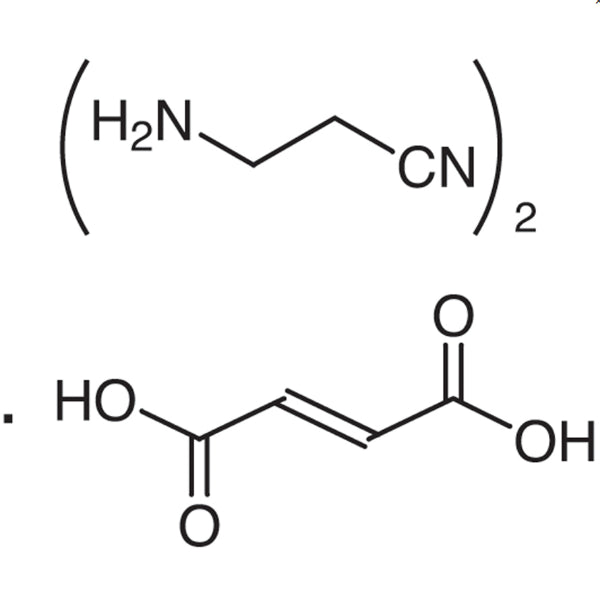
3-Aminopropionitrile Fumarate is a chemical compound widely used as a foundational building block in the synthesis of complex organic molecules. Its unique molecular structure enables participation in various chemical reactions, including nucleophilic and electrophilic reactions, making it a crucial component in chemical laboratories. This compound is particularly valued for its versatility and reactivity, allowing chemists to construct new molecular structures with precision. It plays a vital role in both academic and industrial research settings, supporting the development of novel compounds with specific biological or chemical properties.
The compound is favored for its stability and reactivity, which make it suitable for a wide range of synthetic applications. Its solubility in organic solvents further enhances its usability in laboratory processes, ensuring ease of handling and integration into various reaction protocols. The chemical’s predictable behavior under different reaction conditions contributes to its reliability in both research and production environments. These properties collectively make it a preferred choice for chemists working in diverse fields, including pharmaceutical and organic synthesis.
In Indonesian laboratories, 3-Aminopropionitrile Fumarate is extensively used in scientific research and educational institutions. It supports the development of new compounds and is integral to experiments in pharmacology and organic chemistry. Its availability in various packaging options facilitates its use in both small-scale laboratory settings and larger industrial applications. This compound remains a key tool for advancing chemical research in Indonesia.
Related TCI products
- TCI A0408 151-18-8 3-Aminopropionitrile (stabilized with K2CO3)
- TCI P0514 107-12-0 Propionitrile
- TCI M2312 693-05-0 3-(Methylamino)propionitrile
- TCI A0477 1075-76-9 3-Anilinopropionitrile
- TCI T3421 69774-36-3 alpha,alpha,alpha',alpha'-Tetramethyl-1,3-benzenedipropionitrile
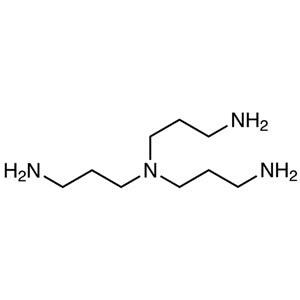
- TCI T1540 4963-47-7 Tris(3-aminopropyl)amine
- Organic synthesis: This compound is ideal for constructing complex organic molecules due to its reactivity and versatility in chemical reactions.
- Pharmaceutical research: It is used in the development of new drugs as a building block for compounds with specific biological activities.
- Academic research: It supports teaching and experimental work in universities and research institutions, aiding in the study of chemical structures and reactions.
- Industrial chemical production: Its solubility and stability make it suitable for use in large-scale chemical manufacturing processes.
- Biochemical studies: It is employed in experiments that require the synthesis of molecules with specific functional groups and reactivity profiles.
| Brand | TCI |
|---|---|
| CAS number | 2079-89-2 |
| Molecular formula | — |
| Purity | — |
| Category | Chemistry > Building Blocks > Non-Heterocyclic Building Blocks |
| Pack sizes | Available in various sizes to suit laboratory and industrial needs |
| Physical form | Solid |
| Storage | Store in a cool, dry place away from moisture and direct sunlight |
3-Aminopropionitrile Fumarate should be stored in a cool, dry environment to maintain its chemical stability. It is recommended to keep the compound in airtight containers to prevent exposure to moisture and air, which could affect its reactivity. Due to its chemical nature, it should be handled in a well-ventilated area, and appropriate personal protective equipment should be worn when working with it. Avoid contact with skin and eyes, and ensure that spillage is cleaned up promptly to prevent any potential hazards. Proper storage and handling are essential to ensure the compound remains effective and safe for use in laboratory settings.
—
Produk Terkait
-
3-Aminopropionitrile(stabilizedwithK2CO3) TCI A0408
Regular price Rp 2.332.050,00Regular price -
Propionitrile TCI P0514
Regular price From Rp 477.750,00Regular price -
3-(Methylamino)propionitrile TCI M2312
Regular price From Rp 1.988.700,00Regular price -
3-Anilinopropionitrile TCI A0477
Regular price From Rp 1.087.800,00Regular price -
alpha,alpha,alpha',alpha'-Tetramethyl-1,3-benzenedipropionitrile TCI T3421
Regular price Rp 2.466.450,00Regular price -
Tris(3-aminopropyl)amine TCI T1540
Regular price From Rp 6.599.250,00Regular price -
3-Benzoylpropionitrile TCI B5378
Regular price Rp 2.359.350,00Regular price -
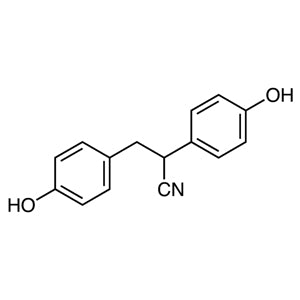
Diarylpropionitrile TCI B4385
Regular price From Rp 2.942.100,00Regular price