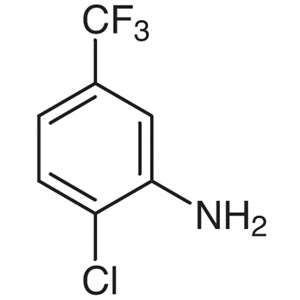
2-Amino-5-nitrobenzotrifluoride is a chemical compound widely used as a foundational building block in organic synthesis. Its unique molecular structure, featuring multiple fluorine and nitro groups, makes it a versatile reagent in laboratory settings. This compound is essential for creating complex organic molecules due to its reactivity and functional group versatility. It is commonly found in chemical libraries and used in research to develop new compounds with specific properties. Its presence in various synthetic pathways highlights its importance in modern chemical research.
The compound’s reactivity is enhanced by the presence of both amino and nitro groups, which influence its electronic properties and make it suitable for a range of chemical transformations. The fluorine atoms contribute to the molecule’s stability and reactivity, making it a preferred choice for synthetic chemists. Its ability to participate in reactions such as nitration, substitution, and Friedel-Crafts reactions further solidifies its role in laboratory applications. The combination of stability and reactivity makes it a reliable reagent for chemical synthesis and modification.
In Indonesian laboratories, 2-Amino-5-nitrobenzotrifluoride is extensively used in organic chemistry research, particularly in pharmaceutical and industrial chemical development. It is a key component in the synthesis of heterocyclic compounds and other complex molecules. Many research institutions and educational facilities in Indonesia rely on this compound for its versatility and effectiveness in chemical synthesis. Its widespread use underscores its importance in advancing chemical research and innovation.
Related TCI products
- TCI B3686 367-67-9 2-Bromo-5-nitrobenzotrifluoride
- TCI B3074 349-03-1 4-Bromo-3-nitrobenzotrifluoride
- TCI B2853 344-38-7 5-Bromo-2-nitrobenzotrifluoride
- TCI A1511 39885-50-2 4-Amino-3-chlorobenzotrifluoride
- TCI A1058 445-03-4 2-Amino-5-chlorobenzotrifluoride
- TCI A0948 121-50-6 3-Amino-4-chlorobenzotrifluoride
- Organic synthesis is a primary application where this compound is used to create complex molecules due to its reactive functional groups.
- Pharmaceutical research benefits from this compound as it is used in the development of new drugs and therapeutic agents.
- Industrial chemical production utilizes this compound for the synthesis of various chemical intermediates and specialty chemicals.
- Heterocyclic compound synthesis relies on this reagent for its ability to participate in multiple reaction pathways.
- Chemical modification processes use this compound to alter molecular structures and introduce new functionalities.
| Brand | TCI |
|---|---|
| CAS number | 121-01-7 |
| Molecular formula | — |
| Purity | — |
| Category | Chemistry > Building Blocks > Non-Heterocyclic Building Blocks |
| Pack sizes | Available in various quantities as per supplier specifications |
| Physical form | Solid |
| Storage | Store in a cool, dry place away from moisture and direct sunlight |
This compound should be stored in a cool, dry environment to maintain its stability and reactivity. It is recommended to keep it in a sealed container to prevent exposure to moisture and air. Due to its chemical nature, it should be handled with appropriate personal protective equipment, such as gloves and safety goggles. It is important to ensure proper ventilation in the laboratory when working with this compound. Avoid contact with incompatible materials to prevent any potential chemical reactions. Regular monitoring of storage conditions will help maintain the compound’s integrity and usability in laboratory applications.
—
Produk Terkait
-
2-Bromo-5-nitrobenzotrifluoride TCI B3686
Regular price From Rp 769.650,00Regular priceRp 537.600,00Sale price From Rp 769.650,00 -
4-Bromo-3-nitrobenzotrifluoride TCI B3074
Regular price From Rp 1.724.100,00Regular priceRp 1.205.400,00Sale price From Rp 1.724.100,00 -
5-Bromo-2-nitrobenzotrifluoride TCI B2853
Regular price From Rp 717.150,00Regular priceRp 500.850,00Sale price From Rp 717.150,00 -
4-Amino-3-chlorobenzotrifluoride TCI A1511
Regular price From Rp 689.850,00Regular priceRp 481.950,00Sale price From Rp 689.850,00 -
2-Amino-5-chlorobenzotrifluoride TCI A1058
Regular price From Rp 955.500,00Regular priceRp 667.800,00Sale price From Rp 955.500,00 -
3-Amino-4-chlorobenzotrifluoride TCI A0948
Regular price From Rp 530.250,00Regular priceRp 370.650,00Sale price From Rp 530.250,00 -
3,5-Dinitrobenzotrifluoride TCI D2699
Regular price From Rp 557.550,00Regular priceRp 389.550,00Sale price From Rp 557.550,00 -
2,4-Dichloro-5-nitrobenzotrifluoride TCI D2213
Regular price Rp 2.094.750,00Regular priceRp 1.464.750,00Sale price Rp 2.094.750,00