Isobutyl Acetoacetate is a chemical compound widely utilized in laboratory settings for the synthesis of complex organic molecules. It serves as a fundamental building block in chemical reactions, particularly in the creation of compounds containing carbonyl and ester functional groups. Its role in organic chemistry is crucial, as it enables the formation of various derivatives through substitution and reduction reactions. This compound is commonly found in chemical laboratories, where it acts as a precursor to a wide range of synthetic pathways. Its versatility makes it an essential reagent for chemists engaged in research and development.
The compound is known for its stable chemical properties and good reactivity, which make it a preferred choice in laboratory applications. It is colorless and has a mild odor, making it easily detectable during chemical processes. Its high boiling point facilitates evaporation and separation during purification steps, enhancing its utility in analytical procedures. Additionally, its resistance to decomposition under normal laboratory conditions ensures reliability in long-term experiments. These characteristics contribute to its widespread use in both academic and industrial research environments.
In Indonesian laboratories, Isobutyl Acetoacetate is frequently used in chemical research, especially in the fields of organic synthesis and analytical chemistry. It is a primary choice for researchers due to its consistent performance and compatibility with various experimental setups. Its availability and reliability make it a standard component in the chemical supply chain, supporting both educational and industrial applications within the country.
- Organic Synthesis: Isobutyl Acetoacetate is widely used in organic synthesis due to its ability to participate in substitution and reduction reactions, making it ideal for the creation of complex organic compounds.
- Analytical Chemistry: Its stable properties and distinct odor make it suitable for use in analytical procedures where precise detection and identification of compounds are required.
- Reagent Preparation: The compound is commonly used in the preparation of other reagents and intermediates, providing a reliable source for further chemical transformations.
- Solvent Applications: Its high boiling point and low reactivity make it a suitable solvent for various chemical reactions, particularly in non-heterocyclic synthesis.
- Research and Development: It is frequently employed in R&D settings to explore new synthetic routes and chemical properties, supporting innovation in chemical sciences.
| Brand | TCI |
|---|---|
| CAS number | 7779-75-1 |
| Molecular formula | — |
| Purity | — |
| Category | Chemistry > Building Blocks > Non-Heterocyclic Building Blocks |
| Pack sizes | Available in various quantities as per standard laboratory supply |
| Physical form | Liquid |
| Storage | Store in a cool, dry place away from direct sunlight and incompatible materials |
Isobutyl Acetoacetate should be stored in a cool, dry environment, away from direct sunlight and sources of heat. It is recommended to use airtight containers made of glass or polyethylene to prevent contamination and evaporation. Due to its flammable nature, it should be kept away from open flames and potential ignition sources. Proper ventilation is essential when handling the compound to minimize inhalation of vapors. It is important to follow standard laboratory safety protocols, including the use of personal protective equipment such as gloves and goggles. Regular monitoring of storage conditions ensures the compound remains stable and safe for use in laboratory applications.
—
Produk Terkait
-
IsopropylAcetoacetate TCI I0826
Regular price From Rp 1.033.200,00Regular priceRp 738.150,00Sale price From Rp 1.033.200,00 -
Ethyl4,4,4-Trichloroacetoacetate TCI T1285
Regular price From Rp 4.081.350,00Regular priceRp 2.869.650,00Sale price From Rp 4.081.350,00 -
Ethyl2-Benzylacetoacetate TCI B2008
Regular price From Rp 662.550,00Regular priceRp 478.800,00Sale price From Rp 662.550,00 -
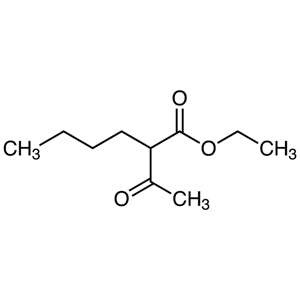
Ethyl2-Butylacetoacetate TCI B0702
Regular price From Rp 1.431.150,00Regular priceRp 1.016.400,00Sale price From Rp 1.431.150,00 -
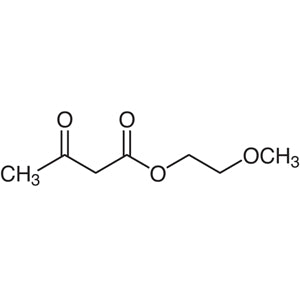
2-MethoxyethylAcetoacetate TCI A1583
Regular price Rp 662.550,00Regular priceRp 478.800,00Sale price Rp 662.550,00 -
LithiumAcetoacetate TCI A1478
Regular price From Rp 3.232.950,00Regular priceRp 2.276.400,00Sale price From Rp 3.232.950,00 -
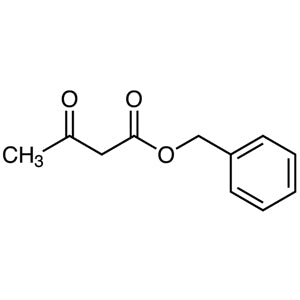
BenzylAcetoacetate TCI A1080
Regular price From Rp 1.220.100,00Regular priceRp 868.350,00Sale price From Rp 1.220.100,00 -
n-OctylAcetoacetate TCI A0915
Regular price Rp 3.419.850,00Regular priceRp 2.406.600,00Sale price Rp 3.419.850,00