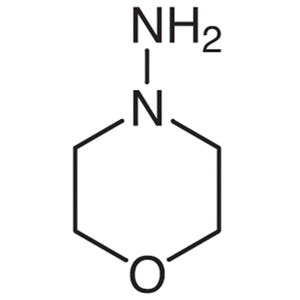
4-Aminomorpholine is a chemical compound widely used in laboratory settings for the synthesis of heterocyclic compounds and various organic molecules. It is a key building block in the field of organic chemistry, particularly in the development of complex molecular structures. Its molecular structure consists of a morpholine ring functionalized with an amino group, making it highly versatile in chemical reactions. This compound plays a crucial role in the creation of pharmaceuticals, industrial chemicals, and analytical reagents. Its stability and reactivity make it a reliable choice for a wide range of experimental applications.
The unique chemical properties of 4-Aminomorpholine, such as its ability to form stable bonds with different functional groups, make it a preferred choice in synthetic chemistry. Its molecular complexity allows it to participate in various reaction mechanisms, enabling the formation of new compounds with diverse applications. The compound’s reactivity under specific conditions makes it ideal for the synthesis of heterocyclic structures, which are fundamental in modern organic chemistry. These characteristics ensure its continued use in both academic and industrial research environments.
In Indonesian laboratories, 4-Aminomorpholine is commonly used in chemical research and the development of new compounds. It is an essential component in the work of researchers and scientists who are exploring innovative chemical pathways. Its availability and reliability make it a standard material in many laboratory setups, supporting both basic and applied research. Its role in the synthesis of complex molecules underscores its importance in the chemical sciences.
Related TCI products
- TCI C2733 1075198-30-9 (1-Cyano-2-ethoxy-2-oxoethylidenaminooxy)dimethylaminomorpholinocarbenium Hexafluorophosphate
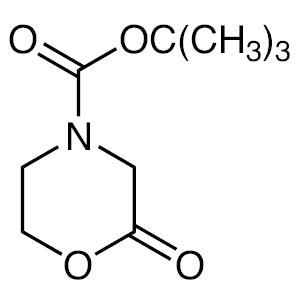
- TCI B6342 1140502-97-1 tert-Butyl 2-Oxomorpholine-4-carboxylate
- TCI T2193 39093-93-1 Thiomorpholine 1,1-Dioxide
- TCI T2050 1894677-16-7 Thiomorpholinoacetic Acid 1',1'-Dioxide Monohydrate
- TCI B2434 26475-66-1 4-Benzylthiomorpholine 1,1-Dioxide
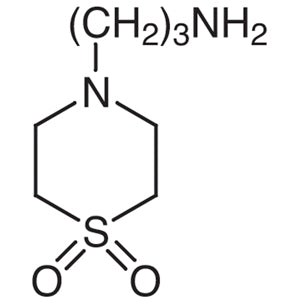
- TCI A1804 90000-25-2 4-(3-Aminopropyl)thiomorpholine 1,1-Dioxide
- Used in the synthesis of heterocyclic compounds due to its ability to form stable bonds with functional groups, enabling the creation of complex molecular structures.
- Applied in pharmaceutical research for the development of new drugs, as it serves as a key intermediate in the synthesis of various medicinal compounds.
- Utilized in industrial chemical production for the manufacture of specialty chemicals, owing to its reactivity and versatility in chemical reactions.
- Employed in analytical chemistry as a reagent for the detection and analysis of various organic compounds in laboratory settings.
- Incorporated in the development of new materials, where its chemical properties contribute to the formation of advanced polymers and functional materials.
| Brand | TCI |
|---|---|
| CAS number | 4319-49-7 |
| Molecular formula | — |
| Purity | — |
| Category | Chemistry > Building Blocks > Heterocyclic Building Blocks |
| Pack sizes | Available in various quantities as per supplier specifications |
| Physical form | Solid, typically in crystalline or powder form |
| Storage | Store in a cool, dry place away from direct sunlight and moisture |
4-Aminomorpholine should be stored in a cool, dry environment to maintain its chemical integrity. It is recommended to keep it in airtight containers to prevent exposure to moisture and air, which can affect its stability. The compound should be stored away from incompatible substances such as strong oxidizing agents to avoid potential chemical reactions. Proper labeling of storage containers is essential for safety and identification. In laboratory settings, it is important to use appropriate personal protective equipment when handling this material. Regular monitoring of storage conditions ensures the compound remains suitable for use in chemical experiments and research.
—
Produk Terkait
-
(1-Cyano-2-ethoxy-2-oxoethylidenaminooxy)dimethylaminomorpholinocarbeniumHexafluorophosphate TCI C2733
Regular price Rp 1.618.050,00Regular priceRp 1.146.600,00Sale price Rp 1.618.050,00 -
tert-Butyl2-Oxomorpholine-4-carboxylate TCI B6342
Regular price Rp 6.811.350,00Regular priceRp 4.778.550,00Sale price Rp 6.811.350,00 -
Thiomorpholine1,1-Dioxide TCI T2193
Regular price Rp 4.611.600,00Regular priceRp 3.240.300,00Sale price Rp 4.611.600,00 -
ThiomorpholinoaceticAcid1',1'-DioxideMonohydrate TCI T2050
Regular price Rp 1.829.100,00Regular priceRp 1.294.650,00Sale price Rp 1.829.100,00 -
4-Benzylthiomorpholine1,1-Dioxide TCI B2434
Regular price Rp 1.749.300,00Regular priceRp 1.239.000,00Sale price Rp 1.749.300,00 -
4-(3-Aminopropyl)thiomorpholine1,1-Dioxide TCI A1804
Regular price Rp 2.359.350,00Regular priceRp 1.665.300,00Sale price Rp 2.359.350,00 -
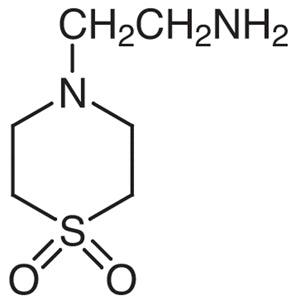
4-(2-Aminoethyl)thiomorpholine1,1-Dioxide TCI A1803
Regular price Rp 2.650.200,00Regular priceRp 1.869.000,00Sale price Rp 2.650.200,00 -
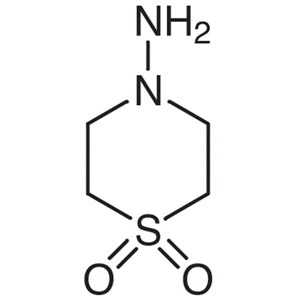
4-Aminothiomorpholine1,1-Dioxide TCI A1798
Regular price Rp 2.199.750,00Regular priceRp 1.554.000,00Sale price Rp 2.199.750,00