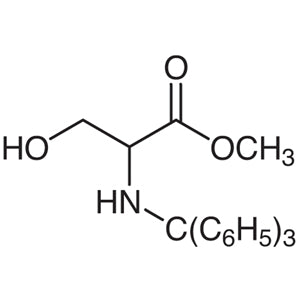
O-Acetyl-L-serine Hydrochloride is a chemical compound widely used in laboratory experiments across chemical and biochemical research. It belongs to the category of peptide chemistry and serves as a key reagent in organic synthesis and biochemical studies. This compound is commonly used as a substrate or reactant in the development of organic compounds and in biochemical research, where it plays a crucial role in functional group modifications and peptide synthesis. Its versatility makes it an essential tool for researchers working in various fields of chemistry and biology.
The compound is known for its stable chemical structure and solubility in organic solvents such as ethyl acetate and acetone, which enhances its usability in a wide range of chemical reactions and synthesis processes. Its high purity ensures reliable and accurate experimental results, making it a preferred choice for laboratories that require precision. Additionally, its chemical stability and solubility properties allow it to be easily incorporated into complex reaction systems without compromising the integrity of the final product.
In Indonesian laboratories, O-Acetyl-L-serine Hydrochloride is frequently utilized in biochemical, pharmacological, and organic chemistry research. It is commonly found in research institutions and universities that conduct experiments requiring specific chemical structures. Its availability in the local market makes it a practical and accessible option for researchers, supporting a wide range of experimental needs in both academic and industrial settings.
TCI brochures (PDF)
- Amino Acids and Peptide Synthesis Reagents 2025-08-14 · p. 30
- Reagents for Biological Research 2025-03-11 · p. 58
Related TCI products
- TCI B3917 18822-58-7 O-tert-Butyl-L-serine
- TCI B0861 4726-96-9 O-Benzyl-L-serine
- TCI T2870 4465-44-5 N-(Triphenylmethyl)-L-serine Methyl Ester
- TCI T2500 13515-76-9 N-(Triphenylmethyl)-DL-serine Methyl Ester
- TCI B4913 51537-21-4 O-tert-Butyl-L-serine tert-Butyl Ester Hydrochloride
- TCI B3168 71989-33-8 O-tert-Butyl-N-[(9H-fluoren-9-ylmethoxy)carbonyl]-L-serine
- Used in biochemical research for functional group modification in peptide synthesis due to its acetyl group that facilitates chemical reactivity.
- Applied in organic synthesis as a building block for the creation of complex organic molecules through acetylation reactions.
- Utilized in pharmacological studies to investigate the behavior of amino acid derivatives in drug development processes.
- Employed in analytical chemistry for the preparation of standard solutions and as a reference material for chemical assays.
- Integrated into biotechnology applications for the development of bioactive compounds and enzyme inhibitors in molecular biology research.
| Brand | TCI |
|---|---|
| CAS number | 66638-22-0 |
| Molecular formula | — |
| Purity | — |
| Category | Chemistry > Chemical Biology > Peptide Chemistry |
| Pack sizes | Available in various quantities as per standard laboratory requirements |
| Physical form | Solid powder |
| Storage | Store in a cool, dry place away from moisture and direct sunlight |
O-Acetyl-L-serine Hydrochloride should be stored in a cool, dry environment to maintain its chemical stability and prevent degradation. It is recommended to keep the compound in a tightly sealed container to avoid exposure to moisture and air, which may affect its purity. Suitable storage conditions include a controlled room temperature, typically between 15°C and 25°C, with low humidity levels. When handling the compound, it is important to use appropriate personal protective equipment such as gloves and safety goggles to ensure laboratory safety. Avoid direct contact with skin or inhalation of vapors, and ensure proper ventilation in the workspace to minimize any potential health risks.
—
Product Categories
Produk Terkait
-
O-tert-Butyl-L-serine TCI B3917
Regular price From Rp 1.060.500,00Regular priceRp 757.050,00Sale price From Rp 1.060.500,00 -
O-Benzyl-L-serine TCI B0861
Regular price From Rp 795.900,00Regular priceRp 572.250,00Sale price From Rp 795.900,00 -
N-(Triphenylmethyl)-L-serineMethylEster TCI T2870
Regular price From Rp 1.431.150,00Regular priceRp 1.016.400,00Sale price From Rp 1.431.150,00 -
N-(Triphenylmethyl)-DL-serineMethylEster TCI T2500
Regular price From Rp 2.650.200,00Regular priceRp 1.869.000,00Sale price From Rp 2.650.200,00 -
O-tert-Butyl-L-serinetert-ButylEsterHydrochloride TCI B4913
Regular price From Rp 1.192.800,00Regular priceRp 849.450,00Sale price From Rp 1.192.800,00 -
O-tert-Butyl-N-[(9H-fluoren-9-ylmethoxy)carbonyl]-L-serine TCI B3168
Regular price From Rp 1.405.950,00Regular priceRp 998.550,00Sale price From Rp 1.405.950,00 -
O-Benzyl-N-(tert-butoxycarbonyl)-D-serine TCI B1863
Regular price From Rp 582.750,00Regular priceRp 423.150,00Sale price From Rp 582.750,00 -
O-tert-Butyl-L-serineMethylEsterHydrochloride TCI B1736
Regular price From Rp 2.782.500,00Regular priceRp 1.961.400,00Sale price From Rp 2.782.500,00