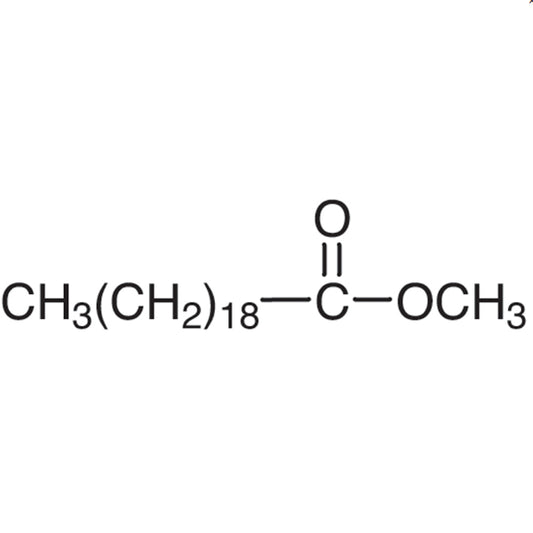

Ethyl Arachidate is a chemical compound widely used in laboratory experiments, particularly in the fields of biochemistry and life sciences. It is an ester formed from arachidic acid and ethanol, possessing a complex molecular structure that makes it a versatile reagent. In the laboratory, Ethyl Arachidate serves as a key component in the synthesis of various compounds or as an additive in chemical reaction mixtures. Its chemical stability and compatibility with multiple substrates make it a reliable choice for scientific research.
The compound’s non-polar nature allows it to dissolve easily in organic solvents such as chloroform or ethyl acetate, making it suitable for reactions requiring non-polar solvents. Additionally, its relatively high melting and boiling points enable its use in high-temperature laboratory conditions. These properties contribute to its effectiveness in maintaining chemical integrity during experiments. The stability of Ethyl Arachidate ensures that it remains functional across a range of experimental settings without significant degradation.
In Indonesian laboratories, Ethyl Arachidate is commonly used in biochemical research and analytical processes. It is often found in academic and industrial research settings where precise chemical reactions and compound synthesis are required. Its availability and consistent performance make it a preferred choice for researchers working in diverse scientific disciplines. The compound’s reliability and adaptability further support its widespread use in both basic and applied research.
TCI brochures (PDF)
- Lipids 2025-12-17 · p. 10
Related TCI products
- Biochemical synthesis where esterification reactions are required due to its stable ester structure.
- Organic solvent-based experiments as it dissolves well in non-polar solvents like chloroform and ethyl acetate.
- Lipid research applications due to its structural similarity to natural lipids and its role in membrane studies.
- Analytical chemistry procedures where it acts as a standard or a component in chromatographic analysis.
- High-temperature reaction setups because of its high melting and boiling points, allowing use in thermally demanding experiments.
| Brand | TCI |
|---|---|
| CAS number | 18281-05-5 |
| Molecular formula | — |
| Purity | — |
| Category | Life Science > Biochemicals and Reagents > Lipids |
| Pack sizes | Available in various quantities as per standard laboratory supply formats |
| Physical form | Solid at room temperature |
| Storage | Store in a cool, dry place away from direct sunlight and moisture |
Ethyl Arachidate should be stored in a cool, dry environment to maintain its chemical stability. It is recommended to keep it in airtight containers to prevent exposure to moisture and air, which could lead to degradation. The compound is non-hazardous under normal conditions but should be handled with care in laboratory settings to avoid contamination. Suitable storage containers include glass or sealed plastic vessels that are resistant to chemical interaction. Regular inspection of storage conditions is advised to ensure the integrity of the material. Proper labeling and safe handling practices are essential to maintain a secure laboratory environment.
—
Product Categories
Produk Terkait
-
MethylArachidate TCI A0900
Regular price From Rp 1.033.200,00Regular priceRp 1.813.350,00Sale price From Rp 1.033.200,00Sale