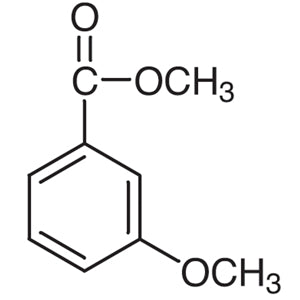
Ethyl p-Anisate is a chemical compound widely used in various laboratory applications, particularly in the synthesis of organic compounds. As a key building block in organic chemistry, it serves as a fundamental reagent for the production of complex molecules containing anisate structures. This compound is commonly employed in esterification and substitution reactions, which are essential steps in the synthesis of organic molecules. Its role in laboratory settings is critical for researchers aiming to develop new compounds or test chemical reactivity under controlled conditions.
Ethyl p-Anisate is valued for its chemical stability and favorable reactivity, making it a preferred choice for many synthetic processes. The molecule’s structure, consisting of an anisate group and an ethyl group, allows it to react effectively with a variety of reagents under different reaction conditions. This versatility enhances its utility in both academic and industrial research environments. Its consistent performance and predictable behavior make it a reliable material for laboratories requiring precision and reliability in chemical synthesis.
In the context of Indonesian laboratories, Ethyl p-Anisate is frequently used in organic chemistry research conducted at universities and research institutions. It plays a vital role in the development of new compounds, testing reactivity, and the synthesis of intermediate compounds. Its availability and reliability make it an essential component in the chemical supply chain supporting scientific innovation in Indonesia.
- Organic synthesis applications benefit from Ethyl p-Anisate due to its role in esterification and substitution reactions, allowing for the creation of complex organic molecules.
- It is ideal for research in pharmaceutical development as it contributes to the synthesis of compounds with therapeutic potential.
- In academic laboratories, Ethyl p-Anisate supports teaching and learning by providing a practical example of chemical reactivity and structural modification.
- It is used in the production of intermediates for industrial chemical processes, offering a reliable and consistent reagent for large-scale synthesis.
- The compound supports analytical chemistry applications by serving as a standard for identifying and quantifying anisate-containing compounds in various samples.
| Brand | TCI |
|---|---|
| CAS number | 94-30-4 |
| Molecular formula | — |
| Purity | — |
| Category | Chemistry > Building Blocks > Non-Heterocyclic Building Blocks |
| Pack sizes | Available in various quantities as per supplier specifications |
| Physical form | Liquid |
| Storage | Store in a cool, dry place away from direct sunlight |
Ethyl p-Anisate should be stored in a cool, dry place away from direct sunlight to maintain its chemical stability. It is recommended to use airtight containers to prevent exposure to moisture and air, which could affect its reactivity. As a liquid, it should be kept in properly sealed glass or plastic containers to avoid evaporation and contamination. Laboratory personnel should handle the compound with care, using appropriate personal protective equipment such as gloves and safety goggles. It is important to ensure good ventilation in the workspace to minimize inhalation of vapors. Ethyl p-Anisate is not classified as hazardous under standard laboratory conditions, but standard safety protocols should still be followed to ensure safe handling and storage.
—
Produk Terkait
-
Methylo-Anisate TCI A0483
Regular price From Rp 1.087.800,00Regular priceRp 775.950,00Sale price From Rp 1.087.800,00 -
Methylm-Anisate TCI A1380
Regular price Rp 2.121.000,00Regular priceRp 1.498.350,00Sale price Rp 2.121.000,00 -
Methylp-Anisate TCI A1125
Regular price From Rp 1.140.300,00Regular priceRp 812.700,00Sale price From Rp 1.140.300,00