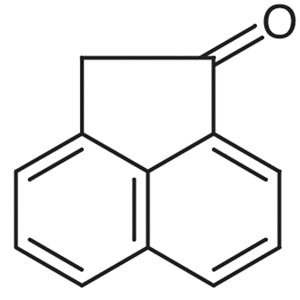
1-Acenaphthenol is a chemical compound widely used as a foundational material in various chemical reactions within laboratory settings. It serves as a key building block in organic chemistry, enabling the synthesis of more complex aromatic compounds. Its presence in aromatic structures makes it a versatile reagent for research and development in chemical synthesis. In the laboratory, it plays a crucial role in the creation of new compounds and the study of molecular structures.
The compound is valued for its stable molecular structure and controlled reactivity, which allows it to be used in a wide range of experimental conditions. It exhibits consistent chemical properties and does not react uncontrollably, making it a reliable choice for precise laboratory work. Its predictable melting and boiling points further enhance its usability in separation and heating processes. These characteristics ensure that it remains a preferred material for organic chemists seeking stability and predictability in their experiments.
In Indonesian laboratories, 1-Acenaphthenol is commonly used in organic chemistry research, particularly in academic institutions and research organizations. It is an essential component in the development of new compounds and the investigation of molecular structures. Its availability and reliability make it a standard item in the chemical supply chain supporting scientific research in Indonesia.
- Synthesis of Complex Aromatic Compounds: 1-Acenaphthenol is ideal for creating intricate aromatic structures due to its stable molecular framework and predictable reactivity.
- Organic Chemistry Research: It is frequently used in studies aimed at understanding molecular behavior and developing new chemical entities.
- Molecular Structure Analysis: Its consistent properties make it suitable for experiments that require precise chemical behavior and controlled reactions.
- Educational Laboratories: It is commonly used in teaching environments to demonstrate fundamental chemical reactions and synthesis techniques.
- Industrial Chemical Development: Its reliability and availability support the creation of new chemical products in research and development settings.
| Brand | TCI |
|---|---|
| CAS number | 6306-07-6 |
| Molecular formula | — |
| Purity | — |
| Category | Chemistry > Building Blocks > Non-Heterocyclic Building Blocks |
| Pack sizes | Available in various quantities as per supplier specifications |
| Physical form | Solid |
| Storage | Store in a cool, dry place away from direct sunlight |
1-Acenaphthenol should be stored in a cool, dry environment to maintain its chemical stability. It is recommended to use airtight containers to prevent moisture absorption and contamination. The compound should be kept away from direct sunlight and heat sources to avoid degradation. In laboratory settings, it is important to handle the material with care, using appropriate personal protective equipment such as gloves and safety goggles. Proper ventilation should be ensured when working with the compound to minimize exposure. Regular monitoring of storage conditions ensures that the material remains in optimal condition for use in chemical experiments.
—
Produk Terkait
-
1-Acenaphthenone TCI A2185
Regular price Rp 2.174.550,00Regular priceRp 1.520.400,00Sale price Rp 2.174.550,00 -
Acenaphthene TCI A0003
Regular price From Rp 769.650,00Regular priceRp 537.600,00Sale price From Rp 769.650,00 -
Acenaphthenequinone TCI A0004
Regular price From Rp 5.274.150,00Regular priceRp 3.703.350,00Sale price From Rp 5.274.150,00 -
2a,3,4,5-Tetrahydroacenaphthene TCI T1249
Regular price Rp 2.942.100,00Regular priceRp 2.056.950,00Sale price Rp 2.942.100,00 -
AcenaphthenequinoneDioxime TCI A0981
Regular price Rp 5.352.900,00Regular priceRp 3.759.000,00Sale price Rp 5.352.900,00 -
3,8-Dimethylacenaphthenequinone TCI D5156
Regular price From Rp 1.670.550,00Regular priceRp 1.167.600,00Sale price From Rp 1.670.550,00