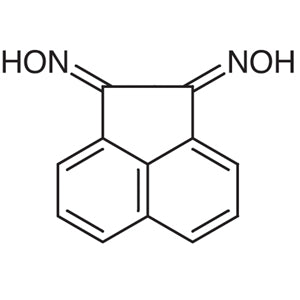
1-Acenaphthenone is a chemical compound widely used in organic reactions for the synthesis of complex molecules. As a building block in chemical research, it plays a crucial role in the development of various organic compounds. Its aromatic structure makes it a versatile reagent in laboratory settings, particularly in the creation of heterocyclic compounds. This compound is commonly utilized in both academic and industrial research due to its stability and controlled reactivity.
The chemical properties of 1-Acenaphthenone make it a preferred choice for laboratory applications. It exhibits consistent chemical behavior and is easy to manipulate under controlled laboratory conditions. Its resistance to degradation and ability to withstand common chemical reactions ensure reliability in experimental processes. Additionally, its non-toxic nature and low reactivity with other substances enhance its safety profile, making it suitable for use in environments requiring high standards of safety and stability.
In Indonesian laboratories, 1-Acenaphthenone is frequently used in chemical research, especially in the field of organic synthesis. It is also an essential tool in chemistry education, supporting both teaching and research activities in academic institutions. Its widespread application underscores its importance in advancing chemical knowledge and innovation within the scientific community.
- Organic Synthesis: 1-Acenaphthenone is ideal for synthesizing complex organic compounds due to its aromatic structure and controlled reactivity.
- Heterocyclic Compound Formation: It serves as a key building block for creating heterocyclic compounds, which are essential in pharmaceutical and material sciences.
- Educational Research: Widely used in academic settings, it supports both teaching and research in chemistry courses and laboratory experiments.
- Stability Testing: Its resistance to degradation makes it suitable for experiments requiring long-term stability and consistency.
- Safety-Driven Experiments: The compound's non-toxic nature and low reactivity make it a preferred choice for experiments requiring a safe and stable environment.
| Brand | TCI |
|---|---|
| CAS number | 2235-15-6 |
| Molecular formula | — |
| Purity | — |
| Category | Chemistry > Building Blocks > Non-Heterocyclic Building Blocks |
| Pack sizes | Available in various quantities as per supplier specifications |
| Physical form | Solid |
| Storage | Store in a cool, dry place away from direct sunlight |
1-Acenaphthenone should be stored in a cool, dry place, away from direct sunlight and sources of heat. It is recommended to use airtight containers to prevent moisture absorption and contamination. Due to its stable nature, it does not require special refrigeration but should be kept in a secure location to avoid accidental exposure. In laboratory settings, it is important to handle the compound with care, using appropriate personal protective equipment such as gloves and safety goggles. Regular monitoring of storage conditions ensures the compound remains in optimal condition for use in research and educational applications.
—
Produk Terkait
-
Acenaphthenequinone TCI A0004
Regular price From Rp 5.274.150,00Regular priceRp 3.703.350,00Sale price From Rp 5.274.150,00 -
1-Acenaphthenol TCI A1057
Regular price Rp 5.352.900,00Regular priceRp 3.743.250,00Sale price Rp 5.352.900,00 -
7,9-Diphenyl-8H-cyclopenta[a]acenaphthylen-8-one TCI D6039
Regular price From Rp 955.500,00Regular priceRp 667.800,00Sale price From Rp 955.500,00 -
Acenaphthene TCI A0003
Regular price From Rp 769.650,00Regular priceRp 537.600,00Sale price From Rp 769.650,00 -
2a,3,4,5-Tetrahydroacenaphthene TCI T1249
Regular price Rp 2.942.100,00Regular priceRp 2.056.950,00Sale price Rp 2.942.100,00 -
AcenaphthenequinoneDioxime TCI A0981
Regular price Rp 5.352.900,00Regular priceRp 3.759.000,00Sale price Rp 5.352.900,00 -
3,8-Dimethylacenaphthenequinone TCI D5156
Regular price From Rp 1.670.550,00Regular priceRp 1.167.600,00Sale price From Rp 1.670.550,00