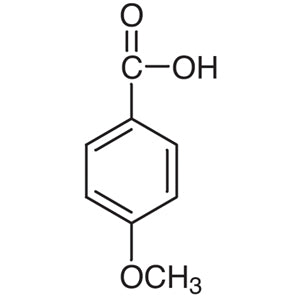
m-Anisic Acid (m-Anisic Acid) is a chemical compound widely used in laboratory settings for the synthesis of complex molecules. It serves as a fundamental building block in organic chemistry, particularly in the creation of aromatic compounds and their derivatives. This material is essential in laboratory processes where the construction of molecular structures is required, making it a versatile reagent in various chemical reactions. Its role extends beyond mere synthesis, as it is also employed in catalytic and substitution reactions, contributing to the development of new chemical entities.
One of the key attributes that make m-Anisic Acid a preferred choice is its chemical stability and reactivity. It can easily interact with a variety of reagents, which makes it suitable for multiple reaction types. Its stability ensures that it maintains its properties under controlled laboratory conditions, while its reactivity allows it to participate in a wide range of chemical transformations. These characteristics are particularly valuable in research environments where precise and predictable chemical behavior is essential. Additionally, its distinct aroma aids in visual identification, which is useful during handling and experimentation.
In Indonesian laboratories, m-Anisic Acid is commonly used in organic chemistry research, especially in academic institutions and research centers. It is frequently found in experiments related to the synthesis of aromatic compounds and the development of industrial chemical products. Its application spans across various fields, including pharmacology and organic chemistry, where it is used to create derivatives and test new compounds. The widespread use of this material reflects its importance in both academic and industrial research settings.
- Synthesis of complex aromatic compounds requiring a reactive building block for molecular structure development.
- Substitution reactions on aromatic chains to produce new chemical entities with desired properties.
- Creation of anisic derivatives in pharmacological research for drug development and compound testing.
- Development of industrial chemical products through controlled chemical transformations and reaction sequences.
- Testing of chemical reactivity and stability in various experimental conditions for research and quality control purposes.
| Brand | TCI |
|---|---|
| CAS number | 586-38-9 |
| Molecular formula | — |
| Purity | — |
| Category | Chemistry > Building Blocks > Non-Heterocyclic Building Blocks |
| Pack sizes | Available in standard laboratory quantities |
| Physical form | Solid |
| Storage | Store in a cool, dry place away from direct sunlight |
m-Anisic Acid should be stored in a cool, dry environment to maintain its chemical stability. It is recommended to keep it in a sealed container to prevent moisture absorption and contamination. Suitable storage containers include glass or plastic vessels with airtight lids. In laboratory settings, it should be handled with appropriate safety measures, such as wearing gloves and protective eyewear. Due to its reactivity, it should be stored away from incompatible substances like strong oxidizers. Regular monitoring of storage conditions ensures the material remains in optimal condition for use in chemical experiments.
—
Produk Terkait
-
o-AnisicAcid TCI A0481
Regular price From Rp 1.140.300,00Regular priceRp 812.700,00Sale price From Rp 1.140.300,00 -
p-AnisicAcid TCI A0482
Regular price Rp 557.550,00Regular priceRp 405.300,00Sale price Rp 557.550,00 -
4-Amino-5-chloro-o-anisicAcid TCI A1237
Regular price Rp 1.538.250,00Regular priceRp 1.090.950,00Sale price Rp 1.538.250,00